

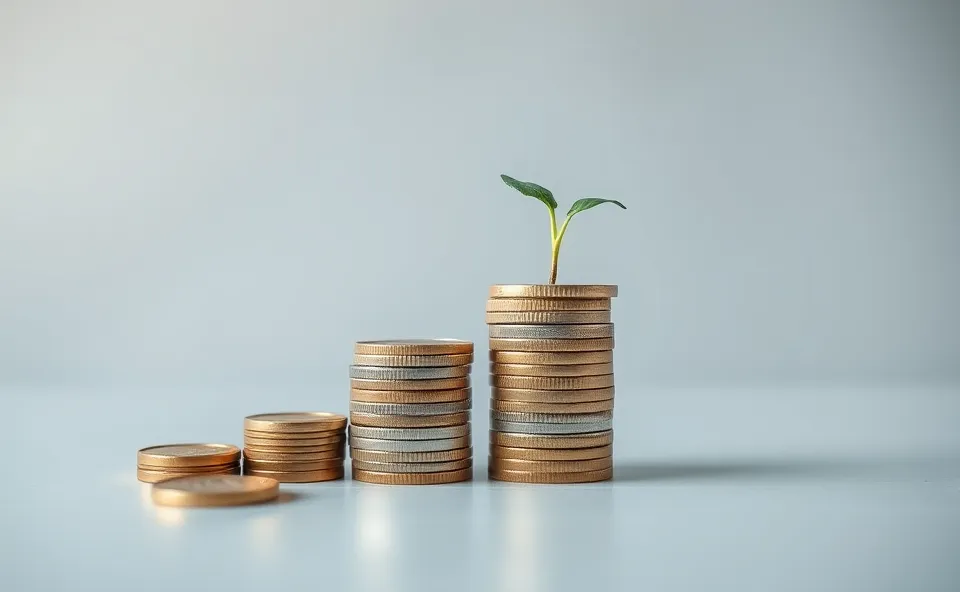
The Magic of Your Money Making More Money
Ever wonder how some people seem to build up their savings so effortlessly? It’s not always about earning a massive salary or winning the lottery. Often, it’s about understanding a powerful concept that can seriously boost your financial journey: compound interest. Think of it as your money working overtime, earning you more money, which then earns even more money. Sounds pretty good, right? Let’s break down what this financial wizardry is all about and how it can be your secret weapon for growing wealth.
Why Are We Talking About Compound Interest Now?
You might be hearing the term “compound interest” more these days, and there’s a good reason for that. In a world where people are constantly looking for smarter ways to manage their money and achieve their long-term savings goals, understanding how to make your money grow is more important than ever. Whether you’re just starting out with a small savings account or thinking about more involved investment returns, grasping the mechanics of compound interest is a fundamental step in effective financial planning. It’s a key component for anyone looking to build wealth over time.
A Quick Look Back: From Simple to Compounding
To really appreciate compound interest, it helps to understand its simpler cousin: simple interest. Imagine you put $100 in a savings account that offers 5% simple interest per year. After the first year, you’d earn $5. That’s 5% of your original $100. If you leave that $100 in the account for a second year, you’d earn another $5, again based on your initial $100. Your total after two years would be $110. It’s straightforward, but it doesn’t really accelerate your savings.
Compound interest takes things to a whole new level. Instead of calculating interest only on your initial deposit, compound interest calculates interest on your initial deposit plus any interest you’ve already earned. So, going back to our $100 example with a 5% annual interest rate, after the first year, you’d still have $105. But here’s where the magic happens: in the second year, you earn 5% not just on the original $100, but on the entire $105. That means you’d earn $5.25 in interest for the second year ($105 x 0.05). Your total after two years would be $110.25.
See the difference? That extra $0.25 might seem tiny at first, but over many years, this “interest on interest” effect is incredibly powerful. The longer your money compounds, the faster it grows. This is the core of how compound interest works and why it’s such a cornerstone of smart saving money strategies.
The Real Impact: Your Money’s Growth Spurt
So, what does this mean for you and your financial planning? It means that compound interest is your best friend when it comes to long-term savings and wealth building. The longer you leave your money to grow, the more significant the impact of compounding becomes.
Let’s illustrate with a slightly larger example. Suppose you save $5,000 and it earns an average annual return of 7%.
- After 10 years: You’d have approximately $9,836. About $4,836 of that is your investment returns earned through compounding.
- After 20 years: Your savings would grow to around $19,308. Now, over $14,000 is from earned interest.
- After 30 years: This is where it really shines. Your initial $5,000 could grow to about $38,061. The vast majority of that, over $33,000, is the power of compound interest at work.
This shows that the earlier you start saving and investing, the more time your money has to benefit from compounding. It transforms saving money from a slow, steady trickle into a powerful snowball effect. This makes it a crucial tool for achieving significant financial growth without necessarily needing to earn an exceptionally high income. It empowers individuals to take control of their financial future and build substantial wealth over their lifetimes.
What’s Next for Your Growing Nest Egg?
The future of compound interest remains bright for savers and investors. As interest rates fluctuate, the core principle of earning interest on your interest will continue to be a driving force in financial growth. For individuals, this means that consistent saving and a commitment to letting your money compound over the long haul are reliable strategies for wealth building.
Even in periods of lower interest rates, the principle of compounding still holds true. It simply means that the growth might be slower, reinforcing the importance of starting early and contributing regularly. As financial products evolve, the ways we can harness compound interest might also expand, but the fundamental concept of your money making more money will remain a key pillar of sound financial planning and a vital element for achieving your long-term savings goals.
Frequently Asked Questions About Compound Interest
What is compound interest and how does it differ from simple interest?
Compound interest is when you earn interest not only on your initial investment but also on the accumulated interest from previous periods. This is different from simple interest, which is only calculated on the original principal amount. The power of compound interest comes from this “interest on interest” effect, which helps your money grow much faster over time.
How does compound interest help you grow wealth?
Compound interest is a fundamental tool for wealth building because it accelerates the growth of your savings and investments exponentially over time. The earnings from your initial investment start generating their own earnings, creating a snowball effect that significantly increases your total capital, especially for long-term savings.
What are the benefits of compound interest for personal savers?
For personal savers, compound interest offers a powerful way to grow their money with less effort than constantly trying to save more from their income. It makes long-term savings more attainable and can lead to substantial financial growth, helping individuals reach goals like retirement or major purchases without needing extremely high interest rates.
How can I maximize the benefits of compound interest in my financial planning?
To maximize compound interest, start saving and investing as early as possible. Contribute regularly to your savings or investment accounts, and choose accounts or investments that offer competitive interest rates or investment returns. The longer your money compounds, the greater the overall growth will be.
Does compound interest apply to savings accounts and investments?
Yes, compound interest is a key feature in many financial products. Savings accounts often compound interest regularly, such as monthly or annually. Investments like stocks or bonds, while not guaranteeing a fixed interest rate, can also experience compound growth through reinvested dividends or capital appreciation, contributing to overall investment returns.











