

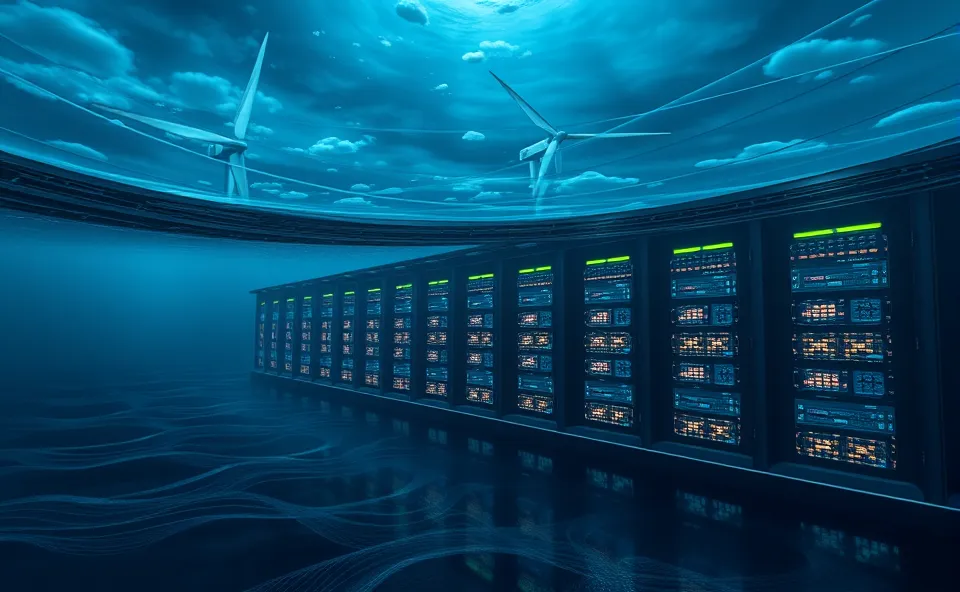
A Data Haven Beneath the Waves
Imagine a giant supercomputer, not in a climate-controlled building on land, but nestled on the seabed, humming away. That’s exactly what China has been up to, and it’s pretty cool. They’ve launched a groundbreaking wind-powered underwater data center. This isn’t just a quirky experiment; it’s a significant leap forward in how we think about housing the immense power needed to run our digital world. Think of it as building a massive digital brain where the ocean itself helps keep things running smoothly.
Why the Buzz Around This Underwater Data Center?
So, why is everyone talking about this wind-powered data center right now? It’s because it tackles two massive challenges we face today: the ever-growing demand for data processing power and the urgent need for sustainable energy solutions. As we rely more and more on cloud computing, AI, and streaming, data centers consume enormous amounts of electricity, often from fossil fuels. This underwater marvel shows a promising path to decoupling data growth from environmental impact. It’s a concrete example of innovative thinking meeting critical global needs, and that’s why it’s capturing attention.
A Look Back: The Seeds of Subsea Data Storage
The idea of putting data centers underwater isn’t entirely new. For a while now, tech companies have been exploring subsea data centers as a way to get closer to users and leverage the natural cooling capabilities of the ocean. We’ve seen projects in shallow waters and even experiments with cooling systems that draw directly from the sea. However, this latest venture by China takes it a step further by integrating it directly with renewable energy. It builds on years of research into subsea infrastructure and the quest for more efficient ways to manage the heat generated by powerful computing systems. The dream of tapping into vast, natural resources for technology has been brewing, and this project is a major realization of that vision.
The Big Picture: What This Means for Us
This wind-powered underwater data center is more than just a cool piece of engineering; it has some serious implications for our digital future and the planet.
- Massive Capacity: This isn’t a small operation. It boasts a substantial 24MW capacity, meaning it can handle a significant chunk of data processing needs. To put that into perspective, that’s enough power to run thousands of homes. This scale is crucial as our digital footprint continues to expand exponentially.
- Nature’s Air Conditioning: One of the biggest challenges for data centers is cooling. They generate a lot of heat, and keeping them cool requires a lot of energy. By placing the data center underwater, they’re using the surrounding ocean as a natural, highly efficient cooling system. This dramatically reduces the energy needed for cooling, making the whole operation much more eco-friendly.
- Powered by the Wind: The “wind-powered” aspect is key. This subsea data center is designed to run on renewable energy generated by offshore wind farms. This is a massive step towards making data infrastructure truly sustainable. It means that the power used to store and process our data can come from clean, abundant sources, significantly reducing its carbon footprint.
- A Boost for Data Infrastructure: This project pushes the boundaries of data infrastructure. It shows that we can build resilient and powerful data centers in locations previously thought impractical. This could lead to new strategies for deploying data centers closer to coastal populations or industries, improving speeds and reducing latency.
- Setting a New Standard for Sustainable Tech: Ultimately, this underwater data center sets a powerful precedent for sustainable tech. It demonstrates that cutting-edge technology and environmental responsibility can go hand in hand. This kind of innovation can inspire further development in renewable energy integration and eco-friendly data solutions.
Looking Ahead: The Future of Underwater Data Centers
What comes next? We’re likely to see more exploration and development in this area. This successful deployment could pave the way for larger and more ambitious subsea data center projects.
- More Offshore Wind Integration: Expect to see even tighter integration between offshore wind farms and data processing facilities. As wind power becomes more widespread, using it to power data infrastructure will become increasingly logical.
- Broader Applications: Beyond just general data storage, these underwater facilities could be ideal for specialized applications that require massive computing power and stable environments, such as scientific research, AI training, or even supporting maritime industries.
- Technological Advancements: We’ll probably see continuous improvements in the design, materials, and cooling systems used for underwater data centers, making them even more robust and efficient.
- Global Expansion: While this is a Chinese initiative, the success could spur similar projects in other coastal nations with strong offshore wind resources, creating a global network of sustainable, subsea data infrastructure.
Common Questions About This Tech
What is an underwater data center?
An underwater data center is a facility designed to house servers and computing equipment beneath the surface of the ocean, utilizing the surrounding water for cooling and often powered by renewable energy sources like offshore wind.
How does a wind-powered data center work underwater?
It typically connects to offshore wind turbines that generate electricity. This renewable energy powers the servers inside the submerged data center. The ocean’s cold water is then used to draw heat away from the equipment, providing a natural and efficient cooling system.
What is the capacity of this particular underwater data center in China?
This specific wind-powered underwater data center has a notable 24MW capacity, indicating its significant scale and ability to handle substantial data processing demands.
What are the benefits of using a subsea data center?
Benefits include natural cooling reducing energy consumption, potential for lower operational costs, reduced land footprint, and proximity to coastal populations or industries for faster data access. Using renewable energy further enhances sustainability.
Is China’s underwater data center a new trend in sustainable tech?
Yes, this project represents a significant advancement and a potential new trend in sustainable tech by combining the advantages of subsea data centers with dedicated wind power, aiming to significantly lower the environmental impact of data infrastructure.











