

A Sudden Halt to Wellington Travel
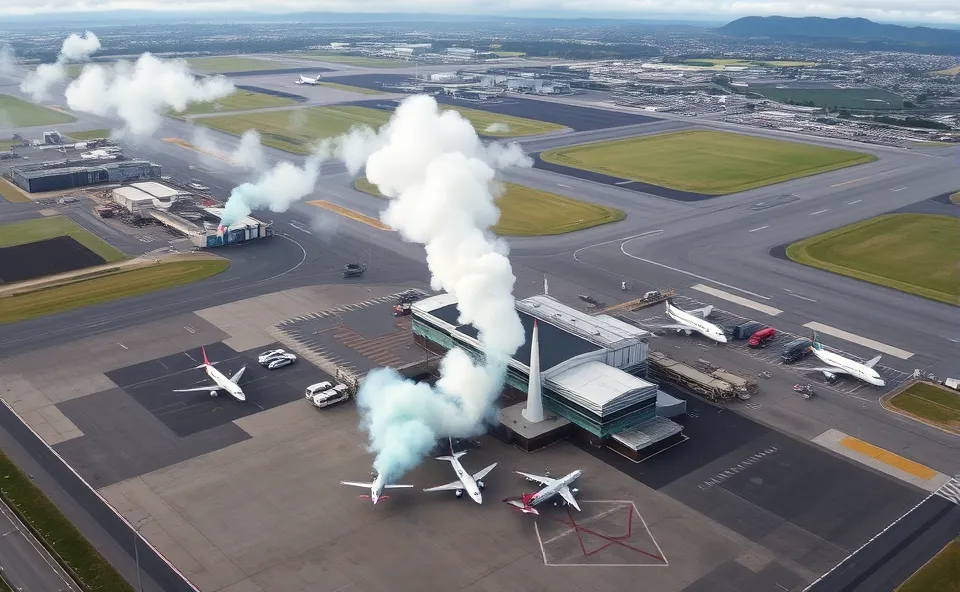
The morning started like any other in the windy capital, with travelers rushing through terminals and planes taxiing toward runways. However, that routine was shattered when a fire emergency broke out at Wellington Airport. Within minutes, the calm atmosphere of the terminal was replaced by the sound of sirens and the sight of thick smoke rising near the airfield. This unexpected event forced a sudden pause in all activities, turning a busy travel day into a scene of confusion and concern.
Emergency services arrived on the scene almost immediately. Firefighters worked quickly to contain the blaze, while airport staff focused on keeping everyone safe. While the actual cause of the fire is still being investigated, the immediate consequence was clear. The airport had to stop most operations to ensure that the fire did not spread and to allow rescue teams enough space to work. For anyone sitting in a departure lounge or waiting for a connecting flight, the situation moved very quickly from normal travel to a complete standstill.
This Wellington Airport fire was not just a local incident. Because Wellington serves as a vital link for the country, any stoppage here has a massive ripple effect. As the smoke cleared, the focus shifted from the fire itself to the growing mountain of flight disruptions that left thousands of people wondering how they would get to their destinations. It was a reminder of how fragile our interconnected transport systems can be when an unexpected crisis hits.
Why This Incident is Dominating the News
If you have been scrolling through your phone today, you have likely seen headlines about this event. There is a very specific reason why this is trending so heavily. It is not just about the fire itself, but the massive amount of travel chaos that followed. When a major hub like Wellington goes dark, it hits people where it hurts: their schedules, their money, and their plans.
People are searching for updates for several practical reasons:
- Real time status updates: Travelers are desperate to know if their specific flight is cancelled or merely experiencing flight delays.
- Safety concerns: Family members and friends of those traveling are looking for news to ensure their loved ones are safe.
- Logistical planning: Business travelers are trying to figure out if they need to book alternative transport like buses or trains.
- Social media movement: Photos and videos of the emergency services and the smoke have gone viral, driving even more eyes to the situation.
In the age of instant information, aviation news travels faster than the planes themselves. The combination of a high stakes fire emergency and the direct impact on thousands of passengers makes this a story that everyone in New Zealand and beyond is watching closely. The uncertainty is what keeps the search volume high. Until the airport operations return to normal, the curiosity and anxiety will continue to drive people to their screens.
Understanding the Importance of Wellington’s Aviation Hub
To understand why this event feels so significant, we have to look at the role Wellington Airport plays in the broader context of New Zealand travel. It is not just a place where people catch flights. It is a critical piece of national infrastructure. For many businesses, Wellington is the heartbeat of government and commerce, and the airport is the main artery that connects the capital to the rest of the country and the world.
Historically, Wellington has always faced unique challenges. The weather in the region can be unpredictable, with high winds often causing minor delays. Because of this, the airport is already a highly managed environment where timing and precision are everything. The airport operations are tightly choreographed to ensure that planes move in and out efficiently despite the elements.
When a major disruption like a fire occurs, it breaks that choreography. Unlike a weather delay, which can sometimes be predicted or managed through gradual adjustments, a fire is a sudden shock to the system. It requires an immediate and total response. This makes the resulting transport disruption much harder to manage because there is no time to prepare. Understanding this context helps us see why a single fire at one airport can feel like a national logistical crisis.
The Wide Impact of the Wellington Airport Fire
The consequences of this event go far beyond a few unhappy passengers sitting in a terminal. The Wellington Airport fire has triggered a chain reaction that touches various sectors of the economy and society. We can look at this impact through a few different lenses.
The Human and Traveler Experience
For the individual traveler, the impact is deeply personal. There is the immediate stress of being stranded, the frustration of missed connections, and the logistical headache of rebooking travel. For many, this means missing important business meetings, family events, or even holiday time. The emotional toll of travel chaos cannot be underestimated, as it turns a routine journey into a source of significant stress.
The Business and Economic Cost
From a business perspective, the impact is even more complex. Airlines face massive costs when they have to cancel flights. They must deal with passenger compensation, the cost of re-routing aircraft, and the logistical nightmare of managing crew schedules that are now completely out of sync. For local businesses in Wellington that rely on the steady flow of visitors and professionals, a sudden drop in arrivals can affect their daily revenue.
Furthermore, there is the impact on the supply chain. Many goods are transported via air freight. A sudden stoppage at a key airport can delay the delivery of time sensitive items, ranging from medical supplies to high value technology components. This creates a micro disruption in the local economy that can take days or even weeks to fully resolve.
The Technological and Operational Strain
Finally, there is the impact on airport operations and technology. Modern airports rely on complex, integrated systems to manage everything from baggage to air traffic control. An emergency situation tests the resilience of these systems. IT teams and operational managers have to work under extreme pressure to reroute data, update passenger information systems, and communicate clearly with various stakeholders. This event serves as a stress test for how well our transport technology can handle a physical crisis.
Looking Ahead at the Recovery Process
As the emergency services finish their immediate work, the focus will move toward recovery and prevention. What happens next is a structured process that will determine how quickly the region returns to normal.
The first priority is the safe reopening of the airport. This involves thorough inspections of the affected areas to ensure there is no structural damage or lingering hazards. Aviation authorities will need to certify that the site is safe before any aircraft are allowed to land or take off again. During this time, airlines will be working around the clock to clear the backlog of passengers caused by the flight delays.
Once the immediate crisis has passed, a more formal investigation will likely take place. This is a standard part of aviation news and safety protocols. Experts will look into the root cause of the fire to see if there were any failures in equipment or procedures. The goal here is not just to find fault, but to find ways to prevent a similar fire emergency from happening in the future.
In the long term, we might see updates to airport infrastructure or improved emergency response technology. This could include better sensor systems to detect heat or smoke earlier, or more advanced communication tools to manage travel chaos more effectively. While the event is a setback, it often acts as a catalyst for making essential systems even more resilient.
Frequently Asked Questions
What is the current status of the Wellington Airport fire?
Emergency services have been working to contain the fire and ensure the site is safe. The current focus is on assessing the damage and determining when airport operations can return to normal levels.
How will the Wellington Airport fire affect my upcoming flight?
If you have a flight scheduled, you should check with your airline immediately. Many passengers are facing flight disruptions, and your airline will be the best source for information regarding cancellations or flight delays.
Are there alternative ways to travel due to the New Zealand airport fire?
Yes, depending on your destination, you may want to look into long distance bus services or rail options. However, keep in mind that the transport disruption may affect these services as well if many people try to use them at once.
What should I do if I am stuck due to flight delays?
Stay in contact with your airline through their mobile app or website. They are responsible for providing updates and, in many cases, managing your rebooking or providing assistance during the travel chaos.
Will Wellington travel be back to normal soon?
Recovery depends on the results of the safety inspections. While airlines are working hard to clear the backlog, it may take some time for the full flight schedule to return to its regular rhythm.











