

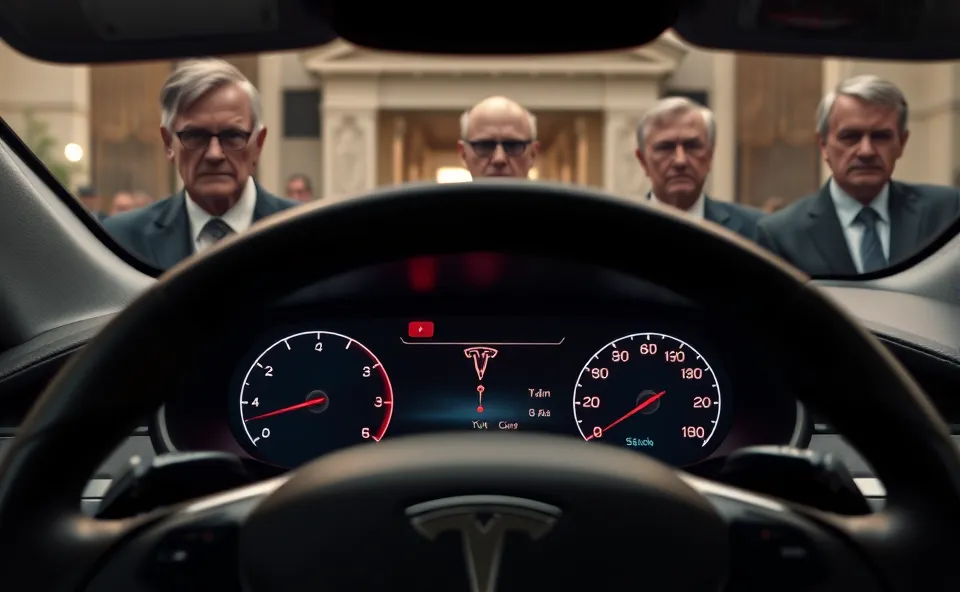
When Does ‘Full Self-Driving’ Actually Feel Safe?
So, you’ve seen the flashy ads and heard the buzz about Tesla’s Full Self-Driving, or FSD. It promises a future where your car handles the driving. But lately, there’s been a bit of a storm brewing, with some big players in Washington raising some serious questions about whether this technology is really ready for the road. U.S. Senators are weighing in, and their concerns are definitely worth paying attention to. It’s not just about cool tech anymore, it’s about vehicle safety.
Why All the Fuss About Tesla FSD Right Now?
The reason this is suddenly a hot topic is because of recent actions by a group of U.S. Senators. They’ve formally expressed their worries to Tesla, pointing to the massive amount of miles driven with FSD engaged and, crucially, the limitations they still see. This isn’t just a minor observation; it’s a direct call to action and a sign of increasing regulatory scrutiny on advanced driver assistance systems. The sheer scale of data Tesla has collected through its FSD system is immense, and now, it seems, that data is under a microscope, raising questions about the Tesla FSD safety problem.
A Quick Look Back: The Road to Tesla FSD
To understand why we’re here, let’s rewind a bit. Tesla has been talking about its vision for full self-driving for years. What started as advanced cruise control and lane-keeping assistance has evolved into what Tesla calls Full Self-Driving Capability. It’s important to remember that, despite the name, FSD is currently considered a driver assistance system, not true autonomous driving. Drivers are still expected to pay attention and be ready to take over at any moment. This distinction is absolutely critical. Over time, Tesla has rolled out updates, adding more features and collecting data from millions of Teslas on the road. The system learns and improves with every mile driven, which is part of its appeal, but it also means the stakes get higher as more people rely on it.
What Does This Mean for All of Us?
This situation has ripples for a lot of people. For Tesla owners who use or are considering FSD, it means a closer look at how the system performs and what the actual safety record is. The U.S. Senators’ concerns suggest that the gap between the promise of FSD and the reality on the road might be wider than some thought. For the broader automotive industry, it highlights the challenges of developing and deploying advanced autonomous driving technologies. There’s a delicate balance between innovation and ensuring that new systems are rigorously tested and safe. This increased regulatory scrutiny could also influence how other companies approach their self-driving cars and driver assistance features. Ultimately, it’s about building trust in vehicle safety. The crash data and real-world performance are becoming central to the conversation about Tesla technology.
Navigating the Road Ahead for Tesla FSD
So, what’s next? It’s hard to say exactly, but we can expect continued attention from regulators. The U.S. Senators have opened a door, and it’s likely that agencies like the National Highway Traffic Safety Administration NHTSA will continue their investigations into Tesla’s driver assistance systems. For Tesla, this might mean more pressure to provide transparency about FSD’s performance, safety data, and how it handles complex driving scenarios. They might also need to be clearer about the capabilities and limitations of the system. For consumers, it’s a good reminder to be informed about the technology in their vehicles and to always prioritize safety by staying attentive, even when using advanced driver assistance features. The future of autonomous driving hinges on resolving these safety questions.
Frequently Asked Questions About Tesla FSD Safety
What are the main U.S. Senators’ concerns about Tesla FSD?
The primary concerns raised by U.S. Senators about Tesla FSD revolve around its safety. They are worried about the system’s current limitations despite accumulating extensive mileage on public roads. Their questions aim to understand if the technology is truly as safe as it could be and if drivers fully comprehend its capabilities and when they need to intervene.
Is Tesla FSD truly “self-driving”?
Currently, Tesla FSD is classified as a driver assistance system, not a fully autonomous driving system. This means that while it can perform many driving tasks, the driver must remain attentive, keep their hands on the wheel, and be prepared to take immediate control at any time. The name “Full Self-Driving” can be misleading, and this distinction is a key part of the ongoing discussions regarding vehicle safety.
What kind of data does Tesla collect for its FSD system?
Tesla collects a vast amount of data from its vehicles equipped with FSD, including information about driving behavior, road conditions, sensor inputs, and system performance. This data is used to train and improve the FSD algorithms. The extensive mileage driven by Teslas worldwide provides a large dataset for analysis, but it also means that potential issues with the Tesla FSD safety problem are encountered frequently.
How is NHTSA involved in the safety of Tesla’s FSD?
The National Highway Traffic Safety Administration NHTSA is the U.S. government agency responsible for vehicle safety. NHTSA has been actively investigating Tesla’s driver assistance systems, including FSD, particularly following reports of crashes where FSD may have been engaged. Their involvement signifies the increasing regulatory scrutiny on autonomous driving and driver assistance technologies.
What should drivers know about the Tesla FSD safety problem?
Drivers should be aware that despite its name, Tesla FSD requires constant driver supervision. They should understand its limitations, know when to disengage the system, and always prioritize safe driving practices. The ongoing discussions and investigations highlight that while the technology is advancing, it’s not yet a substitute for a fully attentive human driver. Staying informed about automotive news and the capabilities of their vehicle is crucial.











