

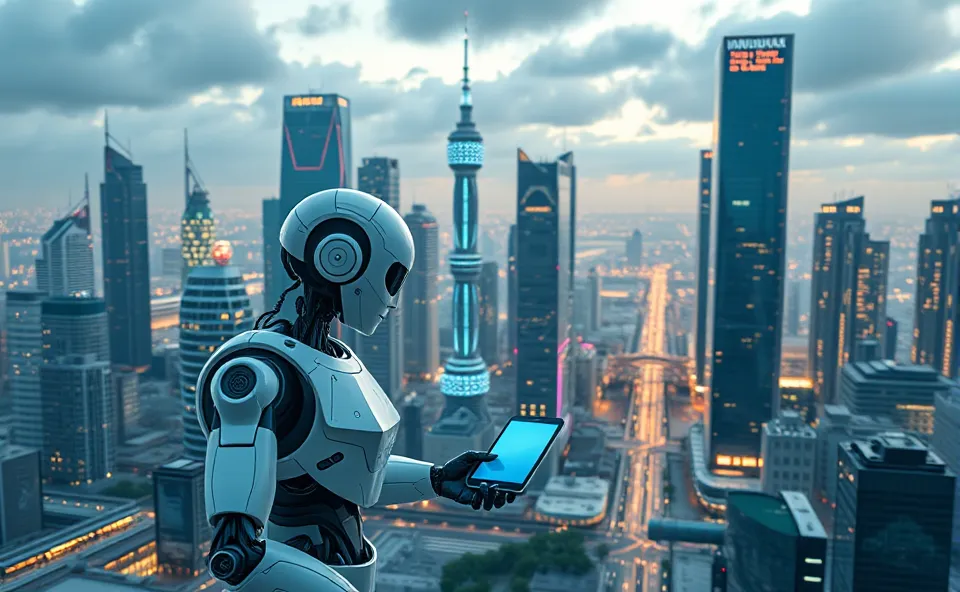
You know how sometimes a really big idea comes along and makes you rethink everything? Well, something like that is brewing, and it involves Jeff Bezos and his new AI startup, Prometheus. This isn’t just about chatbots getting smarter; we’re talking about AI actually changing the way we interact with the physical world around us. And guess what? That’s sparking a lot of chatter about a potential labor shortage and, surprisingly, more jobs. Let’s unpack this.
Bezos’ Next Big Bet: AI for the Real World
So, what exactly is Prometheus? Think of it as an AI company focused on the tangible. Instead of just processing information or writing code, Prometheus aims to bring AI into the physical realm. This could mean AI controlling robots that build things, AI managing complex logistics in warehouses, or even AI systems that optimize energy grids. The core idea is to use artificial intelligence to fundamentally reengineer how we construct, manage, and interact with physical environments. This is a huge leap from what many AI companies are doing now, which is often more software focused.
Why Everyone’s Talking About AI and Jobs Right Now
The buzz around Prometheus and its potential impact on jobs isn’t coming out of nowhere. It’s happening because we’re at a tipping point. We’ve seen automation chip away at certain tasks for years, but this new wave of AI, especially when applied to the physical world, could accelerate that process dramatically. People are searching for insights into the AI labor shortage because they’re seeing headlines and hearing whispers about how advanced AI could automate jobs that were once thought to be safe, like those in manufacturing, construction, and even some service industries. At the same time, there’s a parallel conversation about how these very technologies could also create entirely new types of jobs we can’t even fully imagine yet, leading to discussions about the future of work.
A Little History on Automation and Our Economy
To really get this, it helps to remember where we’ve been. For decades, technology has been changing the job market. Think about the Industrial Revolution, where machines took over many manual tasks. Then came computers and the internet, which transformed office work and created new digital industries. Amazon, Jeff Bezos’ previous venture, itself is a prime example of how technology can reshape industries and labor. It pioneered e-commerce and revolutionized logistics, often through automation. Each of these shifts led to anxieties about job losses, but also eventually resulted in new roles and economic growth. Prometheus, with its focus on physical world AI, represents the next chapter in this ongoing story of technological evolution and its effect on employment.
The Ripple Effect: What This Means for Us All
The implications of Prometheus and its approach to AI are pretty far reaching. For businesses, this could mean unprecedented levels of efficiency and productivity. Imagine factories that run with minimal human oversight, construction sites where robots do the heavy lifting and precision work, or supply chains that are flawlessly managed by AI. This efficiency could lower costs and lead to new products and services we haven’t seen before. For the individual worker, it’s a mixed bag. Some current jobs might become obsolete as AI takes over repetitive or physically demanding tasks. This is where the talk of a labor shortage in certain sectors could emerge, as fewer people are needed for traditional roles.
However, and this is a crucial point, this doesn’t necessarily mean mass unemployment. Instead, it points towards a significant shift. New jobs will likely emerge in areas like:
- AI system design and maintenance
- Robot programming and supervision
- Data analysis for AI performance
- Ethical AI oversight and regulation
- Creative and service roles that require uniquely human skills
This is what people mean when they talk about the “new economy.” It’s an economy where human ingenuity and AI capabilities work in tandem, creating a synergy that can drive innovation and economic expansion. The challenge will be in retraining and adapting our workforce to these evolving demands.
Looking Ahead: The Future of AI and Our Work
What’s next? If Prometheus succeeds in reengineering the physical world with AI, we can expect to see a steady increase in automation across various industries. This could lead to a period where certain traditional jobs are in decline, creating the labor shortage phenomenon. However, this same advancement will fuel the creation of new job categories. We’ll likely see an increased demand for skills that complement AI, rather than compete with it. Think about the skills that AI struggles with: critical thinking, complex problem solving, emotional intelligence, creativity, and nuanced human interaction. These will become even more valuable.
The transition won’t be instant, and it won’t be without its challenges. It will require proactive measures from governments, educational institutions, and businesses to prepare people for this future of work. Investing in lifelong learning and adaptable skill development will be key. The ultimate outcome hinges on how well we can integrate AI into our society in a way that benefits everyone, fostering job creation alongside technological progress.
Your Burning Questions About AI, Jeff Bezos, and the Job Market
What exactly is Jeff Bezos’ new AI startup Prometheus aiming to do?
Prometheus is designed to apply artificial intelligence to the physical world, aiming to reengineer how we build, manage, and interact with tangible things like factories, infrastructure, and logistics. This goes beyond typical AI applications focused on data and software.
How will AI like Prometheus potentially cause a labor shortage?
As AI and automation become more sophisticated in handling physical tasks, there’s a possibility that fewer human workers will be needed for certain traditional jobs. This could lead to a shortage of labor in those specific sectors as demand for human input decreases.
If AI causes a labor shortage, where will new jobs come from?
While some jobs may be automated, the advancement of AI, including projects like Prometheus, is expected to create entirely new job roles. These will likely be in areas such as AI development, maintenance, oversight, data analysis related to AI performance, and roles that require uniquely human skills like creativity and complex problem solving, contributing to job creation in the new economy.
Is this a completely new idea, or is it building on past automation trends?
This is an evolution of past automation trends. We’ve seen automation impact jobs since the Industrial Revolution and through the digital age. However, Prometheus’ focus on directly reengineering the physical world with AI represents a significant acceleration and a new frontier in the future of work.
What can individuals do to prepare for the impact of AI on the job market?
Preparing involves focusing on developing skills that AI can’t easily replicate. This includes critical thinking, creativity, emotional intelligence, and complex problem solving. Continuous learning and acquiring new skills, particularly those that complement AI technologies, will be vital for navigating the changing landscape and ensuring continued relevance in the evolving job market.











