

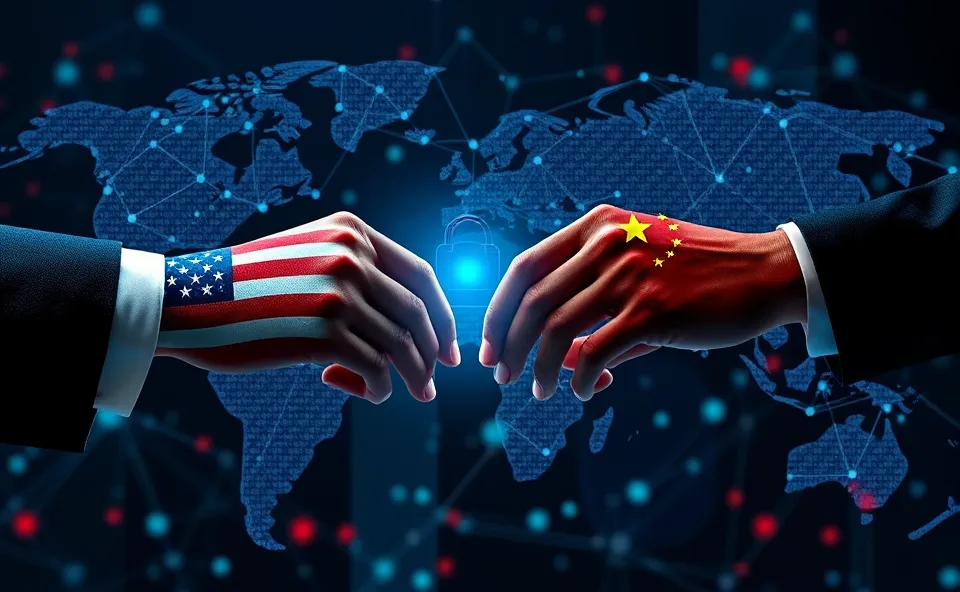
The AI Race and Why We Need a Global Pause Button
Hey there! Let’s talk about something that’s bubbling up fast: artificial intelligence and the urgent need for rules. Specifically, imagine a world where the two biggest tech players, the US and China, decided to hit the brakes on a potential AI arms race. This idea, a sort of technological disarmament pact, is becoming a hot topic because it could seriously change the game for international security.
Why Everyone’s Talking About AI Regulation Now
So, why is AI regulation suddenly on everyone’s lips? It’s not just about the latest cool AI tool. The rapid advancements in AI have brought us to a crossroads. Think about it: AI is getting incredibly powerful, capable of things we only dreamed of a few years ago. This power, while promising amazing benefits, also brings significant risks. As AI development accelerates, especially in areas with military applications, the urgency to establish some form of global AI governance grows. Countries are watching each other, and the fear of falling behind or, worse, being outmatched, is a powerful motivator for discussions about control and safety. The primary concern revolves around how this powerful technology could be used, and the potential for unintended consequences or malicious exploitation. This is why the idea of AI regulation, and particularly a focus on US China AI cooperation, is trending.
A Quick Look Back: The AI Landscape Before the Storm
To understand where we are, it helps to remember how we got here. For decades, AI was mostly a research topic, a fascinating field of study. We saw steady progress, with breakthroughs here and there. Then, something shifted. Suddenly, AI started showing up everywhere, from our smartphones to complex industrial systems. The development accelerated dramatically, fueled by massive data sets and incredible computing power. This rapid evolution caught many by surprise. Countries began to see AI not just as a scientific endeavor but as a critical component of economic and military strength. The competition became palpable, especially between the US and China, two nations with vast technological capabilities and ambitions. This competitive environment naturally leads to questions about AI ethics and the responsible development of AI. The absence of clear international norms created a vacuum, leaving the future of AI and its impact on global stability uncertain.
What This Could Mean for All of Us
The implications of this push for AI regulation, especially any potential US China agreement, are huge. For individuals, it could mean more trust in the AI systems we interact with daily, knowing that there are safeguards in place. Businesses that rely on AI for everything from customer service to product development would benefit from a clearer, more predictable environment. Think about AI ethics becoming a standard, not an afterthought. For the technology itself, it could mean a more focused approach on beneficial AI, rather than a mad dash towards ever more powerful, potentially dangerous, applications. This could foster a more collaborative approach to AI governance, encouraging shared standards and best practices. On a larger scale, it’s about promoting global stability. A technological disarmament pact, particularly concerning AI, could significantly reduce tensions and the risk of an AI arms race. This would allow us to focus on harnessing AI’s positive potential for humanity without the looming shadow of conflict.
What Comes Next? The Path Forward
Looking ahead, the path for AI regulation is complex but necessary. The conversation is moving beyond abstract ideas to concrete proposals. We might see international bodies playing a more significant role in setting guidelines. A key focus will likely be on transparency and accountability in AI development and deployment. For the US and China, the challenge is immense. Building trust and finding common ground on something as sensitive as AI technology requires immense diplomatic effort. This could pave the way for other nations to join similar initiatives, creating a more robust framework for AI governance worldwide. The goal isn’t to stifle innovation, but to steer it in a direction that benefits everyone and safeguards international security. The future of AI depends on these crucial conversations happening now.
Frequently Asked Questions About AI Regulation and Global Security
What is the urgency behind AI regulation discussions?
The rapid advancement of AI technology, especially in areas with dual use capabilities, creates an urgent need for global AI regulation to prevent misuse and ensure international security. This includes addressing the potential for an AI arms race.
How could a US China technological disarmament pact enhance global security?
An agreement between the US and China on AI could reduce mistrust and competition, lessening the chances of an AI arms race. This would allow for greater focus on AI ethics and responsible AI governance, contributing to global stability and international security.
What are the key challenges in implementing AI governance globally?
Key challenges include differing national interests, the rapid pace of AI development, and the difficulty in enforcing international agreements. Establishing shared understanding and trust is crucial for effective AI governance.
Why is AI ethics a critical component of AI regulation?
AI ethics is vital because it ensures that AI systems are developed and used in ways that are fair, unbiased, and do not harm individuals or society. It’s a core part of responsible AI development and global stability.
What role does tech diplomacy play in navigating the future of AI?
Tech diplomacy is essential for facilitating dialogue and cooperation between nations on AI. It helps build consensus on AI regulation, promotes transparency, and can lead to agreements that foster international security and manage the risks associated with the future of AI.











