

The New Way to Start a Food Business
Imagine you have a great idea for a burger brand. You know exactly how the sauce should taste and how the branding should look. In the past, you would need a huge amount of money to rent a building, buy expensive ovens, and hire a full staff of chefs. Most people with great ideas never started because the risk was too high. That is all changing because of how AI and robotic kitchens are transforming the industry.
We are seeing the rise of something called restaurant factories. These are massive, automated hubs where the actual cooking is handled by machines. Instead of building your own kitchen, you can essentially rent space in one of these high tech hubs. You provide the vision and the recipes, and the automation handles the rest. This allows anyone to launch a virtual food brand without ever touching a frying pan.
Companies like Wonder, led by Marc Lore, are pushing this vision forward. They are not just delivering food. They are building a system where professional grade meals are prepared in automated environments and delivered fast. This shift means the barrier to entry for entrepreneurship in the food world has dropped significantly. You no longer need to be a master chef to own a successful restaurant. You just need a great concept and the right tech partner.
Why Everyone is Talking About Food Tech Right Now
You might wonder why this is blowing up currently. The answer lies in the convergence of a few different technologies. First, generative AI has made the creative side of business incredibly easy. In the past, you would spend thousands of dollars on a branding agency to create a logo, a menu, and a marketing plan. Now, you can use AI to brainstorm a unique brand identity and design a menu in a few hours.
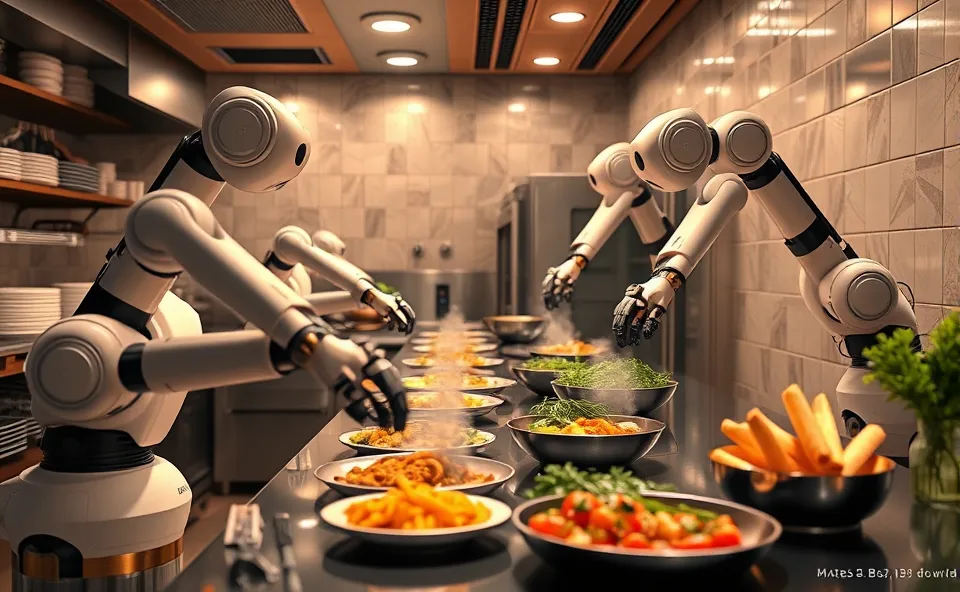
At the same time, the physical hardware has finally caught up. Robotic kitchens are no longer just clunky arms moving blocks around. They can now flip burgers, toss salads, and maintain precise temperatures that human chefs sometimes struggle to keep consistent over a long shift. When you combine the creative power of AI with the physical power of automation, you get a system where a brand can be born and scaled almost instantly.
There is also a huge practical reason for this trend. The restaurant industry has struggled with labor shortages for years. Finding reliable staff to work in hot, stressful kitchens is hard. By moving the production to automated factories, the industry solves the labor problem while increasing speed and safety. People are searching for these solutions because they represent a way to make money and innovate without the traditional headaches of managing a physical storefront.
How We Got to the Automated Kitchen
To understand where we are going, it helps to look at where we started. For decades, the only way to sell food was to have a dining room where people sat down. Then came the era of fast food, which standardized the process but still required huge teams of people. The first big shift toward the modern era was the rise of delivery apps. This created a demand for food that was designed specifically to travel well.
This demand led to the creation of ghost kitchens. These were essentially shared warehouse spaces where different brands could rent a small kitchen area. While this was a step forward, it was still very manual. You still had to hire cooks, manage inventory, and deal with the chaos of a busy kitchen. Ghost kitchens removed the dining room, but they did not remove the struggle of production.
The move toward restaurant factories is the natural next step. We have moved from the dining room, to the shared kitchen, and now to the automated hub. This evolution is driven by the desire for more efficiency and less waste. By centralizing production in a robotic environment, the cost of making a meal drops, and the quality becomes predictable. We are moving away from the artisan model for mass market food and toward a high tech manufacturing model.
What This Means for the Future of Business
The impact of this shift is massive. For the average person, it means that the food industry is now open for business in a way it has never been before. Someone with a background in marketing or data analysis can now enter the food space. They can use data to see what people in a specific neighborhood are craving, use AI to design a brand that appeals to those people, and use a robotic kitchen to fulfill the orders.
For the customers, this means more variety and better consistency. We will likely see a surge of hyper niche brands. Instead of just a generic pizza place, you might see a brand that only does one specific type of regional sourdough pizza, powered by a factory that can handle that complexity perfectly every time.
This also changes the economics of restaurants. The traditional model involves huge overhead costs. The new model is based on scalability. If a virtual brand becomes a hit in one city, the owner can expand it to ten other cities almost overnight by simply plugging their recipes into other robotic hubs. The risk of failure is lower because you are not signing a ten year lease on a building you might not be able to afford.
- Lower Startup Costs: No need for expensive kitchen equipment or real estate.
- Consistency: Robots do not have bad days, meaning the food tastes the same every time.
- Rapid Scaling: Brands can grow across multiple cities without building new kitchens.
- Creative Freedom: Owners can focus on the brand and flavor rather than the plumbing and payroll.
Where the Food Industry Goes From Here
Looking ahead, we can expect these automated systems to become even more personalized. We are moving toward a world where food tech integrates with our personal health data. Imagine an AI that knows your nutritional needs for the day and automatically suggests a meal from a virtual brand that hits your exact macro goals. That meal is then prepared by a robot and delivered to your door in minutes.
We will also see a shift in how we think about chefs. The role of the chef will move from the kitchen line to the design studio. Instead of spending twelve hours a day cooking, the top culinary minds will act as architects. They will design the flavor profiles and the logic that the robots follow. The human element will shift from the act of cooking to the art of creation.
Eventually, these robotic hubs will likely integrate with autonomous delivery drones or vehicles. This creates a completely closed loop of automation. From the moment you click order to the moment the food arrives, no human may have had to touch the product. This is not about replacing the joy of dining out, but about making the everyday act of eating convenient, affordable, and diverse.
Common Questions About AI and Automated Food
Can AI really create a tasty menu for a restaurant?
AI cannot taste food, but it is incredible at analyzing data. It can look at millions of reviews and sales trends to determine which flavor combinations are currently popular. It helps entrepreneurs create menus that are mathematically more likely to succeed by spotting gaps in the market.
Do robotic kitchens make the food taste artificial?
Not at all. In fact, robotic kitchens often produce more consistent results than humans. Robots follow a recipe with perfect precision, ensuring that every ingredient is added at the exact right second and cooked at the exact right temperature.
Is it actually easy to start a virtual food brand?
It is much easier than it used to be. By using automation for the cooking and AI for the branding, the hardest parts of the business are handled. The owner focuses on the concept and the marketing, while the factory handles the logistics.
Will this technology put traditional chefs out of work?
It will change their jobs rather than eliminate them. While the routine tasks of chopping and frying will be handled by robots, the need for creative flavor development and menu engineering will grow. Chefs will become the designers of the food systems.
What is the difference between a ghost kitchen and a robotic kitchen?
A ghost kitchen is just a kitchen without a dining room where humans still do the cooking. A robotic kitchen uses automation to prepare the food, reducing the need for manual labor and increasing the speed and consistency of production.











