

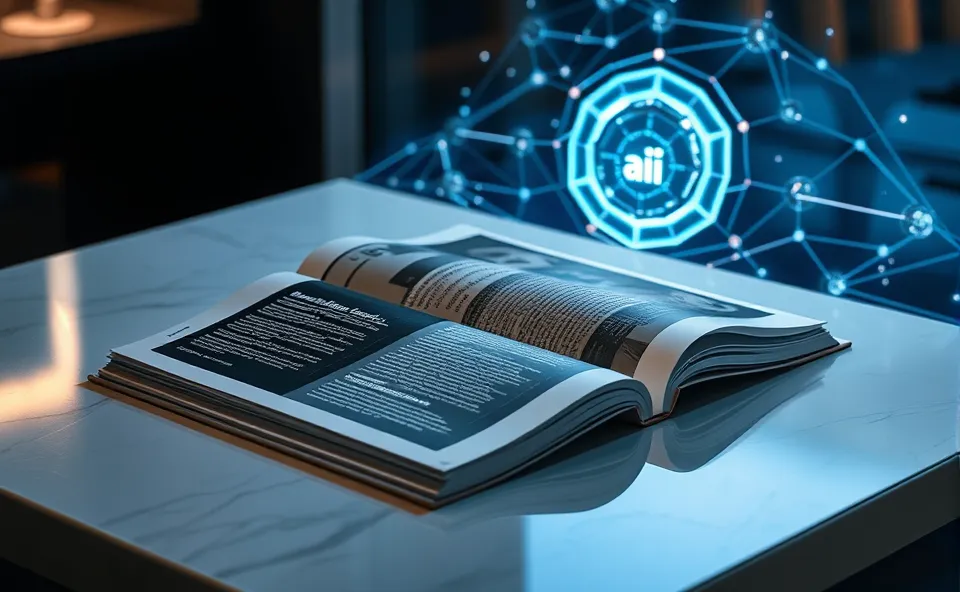
Finding Our Feet in a Sea of Pixels
Have you ever felt like you’re drowning in endless streams of digital stuff? From social media feeds to news headlines, it’s a constant flood. Well, it turns out Edward Enninful, the former editor of British Vogue, has been thinking a lot about this, and he’s pointed to something surprisingly old school as a way to cope: physical media. It’s like he’s saying, in a world buzzing with AI content overload, maybe it’s time to embrace the tangible.
Why the Buzz About Tangible Now?
This idea is catching on because we’re all starting to feel it, this digital fatigue. We spend so much time looking at screens, and increasingly, a lot of what we see is generated by AI. It’s fast, it’s everywhere, but sometimes it lacks a certain soul. Enninful’s perspective taps into a growing desire for something more real, more substantial. When everything feels a bit artificial, the weight of a magazine in your hands, the smell of the paper, the carefully curated images – it offers a different kind of experience. It’s a welcome break from the constant scroll and a response to the overwhelming amount of AI-generated content that can leave us feeling disconnected.
A Look Back: From Print to the Digital Dawn
For decades, print was king. Newspapers delivered the morning news, magazines offered aspirational lifestyle content, and books were our portals to other worlds. Then came the internet, and everything changed. Digital content exploded, promising instant access and endless variety. Businesses shifted their focus, advertising dollars followed, and many physical publications struggled to keep up. We got used to quick clicks, fleeting trends, and the constant hum of online activity. This digital revolution brought incredible innovation, but it also paved the way for the current content saturation we’re experiencing, where distinguishing the human touch from the machine becomes increasingly challenging.
The Real Deal in a Virtual World
So, what does Edward Enninful’s championing of physical media mean for us and for the businesses that create content? For users, it’s about reclaiming focus and a deeper engagement. Holding a beautifully designed magazine or a well-bound book offers a concentrated experience, free from the distractions of notifications and pop-up ads. It encourages slower consumption and a more mindful appreciation of the content. For businesses, especially those in the luxury media space, this is a significant signal. It suggests that physical products are not just relics of the past but can be powerful differentiators in a crowded digital landscape. Investing in high-quality physical publishing can create a sense of exclusivity and lasting value that digital alone often struggles to replicate. It taps into the idea of human-centric design, emphasizing craftsmanship and deliberate creation over sheer volume. This shift means that brands might re-evaluate their content strategies, perhaps seeing physical media as a premium offering that complements their digital presence, rather than being replaced by it. It’s about offering a tactile and sensory experience that AI content, for all its capabilities, can’t fully replicate.
What Lies Ahead for Our Tangible Treasures?
Looking forward, we might see a more balanced approach emerge. Instead of a complete swing back to print, it’s likely that physical media will carve out its niche as a premium, intentional choice. Think of beautifully produced magazines that are treated as collector’s items, or books that are cherished for their design and permanence. Businesses that understand the value of this tactile experience will likely thrive. They’ll focus on creating physical products that offer a unique sensory and emotional connection, something that stands out against the backdrop of constant AI content. This doesn’t mean digital will disappear, far from it. Instead, we could see a more harmonious coexistence, where digital content provides breadth and accessibility, while physical media offers depth, quality, and a grounded, human touch. It’s a future where we can consciously choose our engagement, opting for the quick scan online or the deep dive with a physical object.
Frequently Asked Questions
What is Edward Enninful’s view on AI content overload?
Edward Enninful sees physical media as a valuable antidote to the overwhelming amount of AI-generated digital content. He suggests that tangible items offer a more grounded and human experience in a world saturated with digital creations.
How does physical media contrast with AI-generated content?
Physical media, like magazines and books, offers a tactile, sensory experience with a perceived permanence and human touch. In contrast, AI-generated content is often purely digital, instantly accessible, and can sometimes lack the depth or intentionality found in curated physical publications, contributing to content saturation.
What is the appeal of physical media in the age of digital fatigue?
The appeal of physical media lies in its ability to provide a break from screen time and digital fatigue. Its tactile nature and the focused experience it offers can feel more substantial and less overwhelming compared to the constant stream of digital information and AI content.
How might businesses leverage the resurgence of physical media?
Businesses, particularly in luxury media, can leverage the resurgence of physical media by creating high-quality, beautifully designed products that offer a premium experience. This can differentiate them from digital offerings and appeal to consumers seeking tactile media and a sense of lasting value.
Is physical media making a comeback due to AI content overload?
Yes, there’s a growing appreciation for physical media as a response to AI content overload and digital fatigue. It’s seen as a way to connect with content in a more meaningful and less ephemeral way, highlighting the enduring appeal of tactile media.











