

Understanding the Sudden Collapse of an Airline
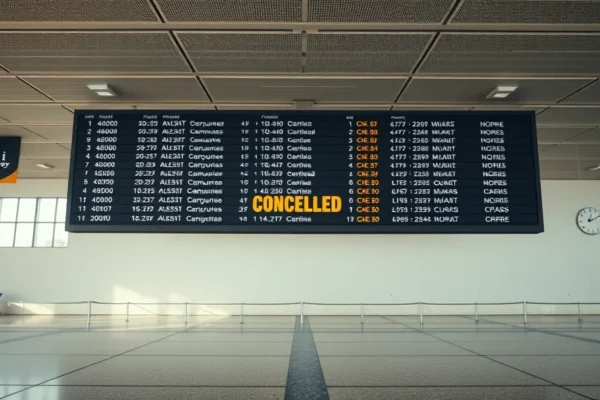
When you wake up to find that your flight has been grounded and the airline’s website has completely vanished, it feels like a digital disappearance act. This sudden event is often the visible result of an airline bankruptcy. In the simplest terms, bankruptcy is a legal process that happens when a company can no longer meet its financial obligations. This means the money the company owes to its lenders, suppliers, and employees is more than the money it has available to pay them.
Think of it like a household that has fallen into deep debt. Imagine a family that has many credit card bills and a large mortgage, but their monthly income is no longer enough to cover even the basic groceries or electricity. Eventually, they may have to declare bankruptcy to settle their debts through a court-supervised process. For a massive corporation like an airline, the scale is much larger, involving billions of dollars, but the underlying concept of being unable to pay the bills is the same.
Understanding this concept is vital for anyone who uses travel services. When a company enters this state, the rules of how you get your money back change instantly. Knowing the difference between a company that is just having a bad month and one facing total business failure can help you make more informed decisions about where you spend your money.
The Step by Step Path to an Airline Closure
An airline closure rarely happens without warning, even if it feels sudden to the public. There is usually a period of financial distress that happens behind the scenes long before the canceled flights appear on your screen. Let us look at the typical progression of this event.
First, the company experiences a cash flow problem. Cash flow is the movement of money into and out of a business. An airline needs a constant stream of cash to pay for fuel, aircraft leases, and staff wages. If a company’s cash flow becomes negative—meaning more money is leaving the company than entering it—they begin to struggle. For example, imagine a small cafe that sees its customers disappear for three months. The cafe still has to pay rent every month, but without sales, it starts using its savings to pay those bills.
Second, the company enters a state of high debt. To keep the planes flying, a struggling airline might borrow more money. This creates a cycle where the company is working harder just to pay interest on old debt rather than investing in new planes or better service. In the aviation news, this is often described as a company being “over-leveraged,” which simply means they have taken on too much debt relative to the value of what they own.
Third, the legal filing occurs. When the company realizes it cannot survive, it files for bankruptcy in a court of law. This is the turning point. Depending on the type of bankruptcy, the airline might try to reorganize its debt to stay in business, or it might decide to stop all operations entirely. If they choose to stop, you see the immediate travel disruption. The planes are grounded, the staff is sent home, and the online booking systems are turned off to prevent more people from buying tickets that the company can never honor.
Why a Sudden Collapse Matters to You and the Economy
The impact of an airline bankruptcy extends far beyond the passengers sitting in an airport terminal. It creates a ripple effect that touches personal finances and the broader economy.
On a personal level, the most immediate impact is the loss of money and time. When flight cancellations occur due to a company’s collapse, travelers are often left stranded. If you purchased a ticket with cash or a debit card, recovering those funds can be a long and difficult legal process. However, if you used a credit card, you may have more protection through a process called a chargeback, where your bank helps you recover the money from the merchant.
On an economic level, a major airline industry failure can affect several sectors:
- Employment: Thousands of pilots, flight attendants, and ground crews may suddenly lose their livelihoods, affecting local economies.
- Supply Chains: Many businesses rely on air cargo to move goods across the world. A sudden shutdown can delay everything from electronics to medical supplies.
- Market Stability: Large-scale business failure can cause uncertainty in the stock market, particularly for other companies in the travel industry.
While most people are negatively affected, sometimes a bankruptcy allows a company to “reset.” By shedding old, expensive debts, a company can sometimes emerge as a leaner, more efficient business. This is a rare “pro” in a situation that is otherwise very difficult for consumers.
The Historical Context of Airline Volatility
The airline industry has always been known for being “cyclical” and high-risk. This means the industry goes through intense periods of growth followed by intense periods of decline. Historically, airlines are extremely sensitive to external shocks that they cannot control.
According to historical data from aviation analysts, factors such as sudden spikes in oil prices, global health crises, or major geopolitical shifts have frequently triggered financial distress in the sector. For instance, during the global economic downturns of the past, many airlines found that even though people still wanted to travel, they no longer had the disposable income to do so. This led to a massive wave of airline closure events throughout the late 20th and early 21st centuries.
In the past, an airline might have stayed afloat for years through government bailouts. Today, the global economy is more interconnected, and the speed at which news travels means that a company’s financial distress can lead to a total collapse in consumer confidence almost overnight. This speed is why we see the “disappearing website” phenomenon so often in modern aviation news.
Practical Implications for Your Financial Life
While you cannot control when an airline goes bankrupt, you can change how you prepare for the risk. Here are some ways to think about your financial decisions when dealing with high-risk industries.
One common misconception is that an airline will automatically refund your money if they go out of business. In reality, if a company is undergoing liquidation—the process of selling all assets to pay back creditors—you are often at the bottom of the list to get paid. Creditors like banks and the government usually get their money first.
To protect yourself, consider these two actionable insights:
- Use Credit, Not Debit: When booking expensive travel, using a credit card provides an extra layer of consumer protection. Most major credit card issuers have policies to help you dispute charges for services that were never provided.
- Monitor Industry Trends: While you don’t need to be a professional analyst, keeping an eye on aviation news regarding rising fuel costs or high debt levels in the travel industry can give you a sense of which carriers might be at risk.
Connecting the Dots to Other Financial Concepts
To fully understand why an airline bankruptcy happens, it helps to connect it to other economic ideas. For example, understanding liquidity is essential. Liquidity refers to how quickly an asset can be turned into cash. An airline owns many valuable assets, like planes, but those planes are “illiquid” because you cannot quickly sell a Boeing 747 to pay a staff member’s weekly wage. A company can be “wealthy” in terms of assets but still go bankrupt because it lacks liquidity.
Additionally, studying debt-to-equity ratios can help you understand the health of a company. This is a measurement used to compare how much a company owes to how much it actually owns. Understanding these concepts helps you see that bankruptcy is often not a single event, but the end result of a long-term imbalance in a company’s financial structure.
Common Questions About Airline Bankruptcy
How do I know if an airline bankruptcy is coming?
It is difficult to know for certain, but signs of financial distress include constant delays, rumors of layoffs, or news reports about the company struggling to pay its fuel suppliers. Monitoring aviation news can provide early warnings.
What happens to my money when there are canceled flights?
If the airline is still operating, they are legally required to offer refunds or rebooking. However, in a total airline closure, you may need to contact your credit card company to initiate a dispute to recover your funds.
Why does the website disappear during an airline closure?
When a company faces sudden business failure, they often shut down their digital presence to prevent new customers from booking flights that the company cannot fulfill, which can lead to further legal complications.
How does an airline bankruptcy affect the wider travel industry?
A major airline bankruptcy can cause widespread travel disruption, increase ticket prices for competitors, and cause uncertainty for hotels, car rental companies, and other businesses that rely on travelers.
Can I get a refund if my flight is canceled due to the airline’s finances?
Yes, you are generally entitled to a refund, but the ease of getting it depends on whether the company is reorganizing to stay in business or completely shutting down. Using a credit card is the safest way to ensure you can fight for that refund.
Is an airline bankruptcy the same as a business failure?
Bankruptcy is the specific legal process used to manage a business failure. It is the formal way a company tells the world it cannot pay its debts and asks a court to help manage the outcome.
This is educational content, not financial advice. Financial situations vary; consult a professional for personal advice. Financial outcomes depend on individual circumstances and the specific legalities of each bankruptcy case.











