

When Airlines Grounded: What Happens When an Air Operator Certificate Disappears
Imagine you’ve got a flight booked, bags packed, and you’re excitedly counting down the days. Then, suddenly, you get a notification: your airline has ceased operations. It’s a traveler’s worst nightmare, and often the root cause is the revocation of an airline’s Air Operator Certificate, or AOC. This isn’t just a minor hiccup; it’s the aviation equivalent of a business license being permanently taken away. It means the airline can no longer legally fly planes and carry passengers. It’s a serious situation with ripple effects felt far beyond the tarmac.
Why This Topic is Taking Off in Online Searches
You might be wondering why you’re seeing more chatter about an airline license revoked or an airline shutdown. Several factors can bring these issues to the forefront. Sometimes, it’s a single, high-profile airline collapse that makes headlines, prompting people to understand the underlying mechanics of aviation regulation. Other times, it’s a broader trend within the travel industry, like economic pressures or evolving safety standards, that make the stability of airlines a more common concern. When an AOC is revoked, it’s a stark reminder of the strict oversight in the aviation world and the potential consequences when those standards aren’t met. This naturally leads to increased interest in what an AOC revoked truly signifies and the wider implications of an airline shutdown.
The Backbone of Safe Flying: What is an AOC?
To truly grasp why an AOC revocation is so critical, we need to understand what it is. Think of the Air Operator Certificate as an airline’s permission slip from the government, specifically aviation authorities like the FAA in the United States or EASA in Europe. It’s not just a piece of paper; it’s a testament that the airline has met incredibly rigorous standards for safety, operational procedures, maintenance, training, and financial fitness. It proves they have the necessary airline resources and management systems in place to operate flights safely and reliably. Without a valid AOC, an airline is essentially grounded. It’s the absolute foundation upon which an airline’s entire operation is built.
The process of obtaining and maintaining an AOC is continuous. Airlines are subjected to regular safety audits and inspections. Aviation regulation is designed to be proactive, aiming to prevent issues before they become critical. However, when an airline repeatedly fails to meet these stringent requirements, or when a severe safety lapse occurs, the authorities can decide to revoke the AOC. This is not a decision taken lightly, as it has significant consequences. It usually follows a period where the airline has been given opportunities to correct deficiencies, but has failed to do so effectively.
The Grounding Effect: What Happens When the AOC is Gone?
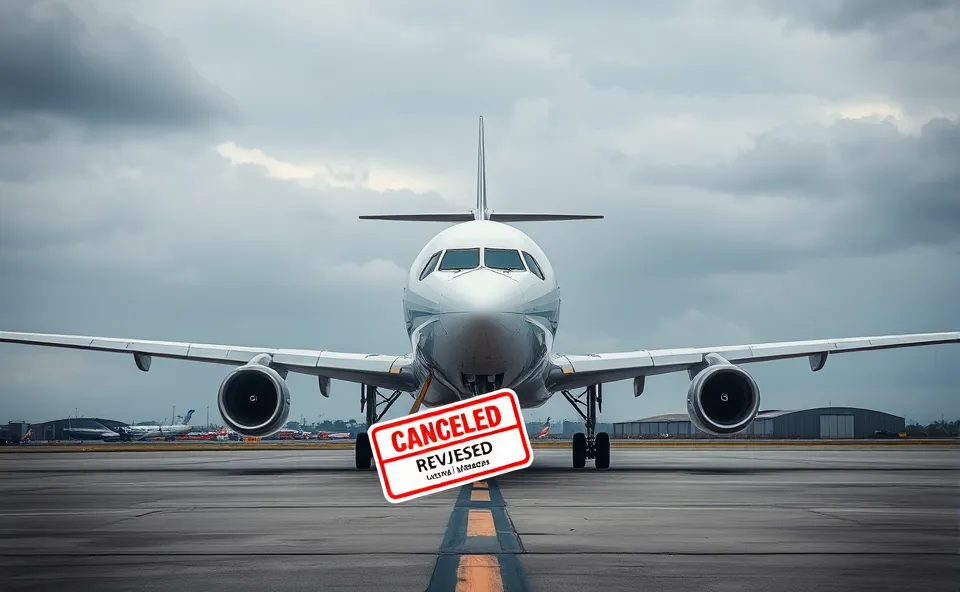
The immediate impact of an airline license revoked is, quite simply, paralysis. The airline can no longer operate any flights. All its grounded planes are literally stuck on the ground. This has a domino effect, starting with the passengers. Thousands, sometimes tens of thousands, of travelers might find their upcoming flights suddenly cancelled. This leads to a scramble for alternative travel arrangements, often at higher prices, and significant disruption to personal and business plans. Passenger rights become a huge concern, with questions arising about refunds, rebookings, and compensation.
For the airline itself, it’s an existential crisis. An AOC revoked signals the end of the road for most airlines. They cannot generate revenue, their staff are furloughed or laid off, and their assets, including aircraft, are left idle. This often quickly leads to a spiral towards airline bankruptcy. The operational complexities of running an airline are immense, and being unable to fly makes resolving these issues nearly impossible. The travel industry as a whole feels the shockwaves, as other carriers might face increased demand and operational strain, and the overall capacity within the market decreases. The ripple effect on associated businesses, like catering services, ground handling, and maintenance providers, is also substantial.
Looking Ahead: What Does This Mean for the Skies?
When an airline collapses due to its AOC being revoked, it often opens up opportunities for stronger, more stable airlines to absorb routes or gain market share. The aviation regulation framework also tends to learn from such events, potentially leading to tighter oversight or updated compliance requirements. For passengers, it reinforces the importance of understanding airline financial health and booking with established carriers, especially when purchasing non-refundable tickets. It also highlights the need for robust consumer protection policies within the travel industry.
The future outlook often involves consolidation within the airline sector. We might see fewer, but potentially larger and more resilient, airlines operating. There’s also a continued focus on technological advancements that can improve safety and efficiency, helping airlines maintain their AOCs and avoid the pitfalls that lead to an airline shutdown. The stringent nature of aviation regulation means that while disruptions can be severe, the system is designed to prioritize safety above all else. The focus remains on ensuring that only those airlines meeting the highest standards continue to fly, safeguarding the flying public.
Your Questions Answered About Airline Shutdowns
What is the primary reason an airline might have its AOC revoked?
The most common reasons for an air operator certificate revocation revolve around failing to meet stringent safety standards. This can include issues with aircraft maintenance, inadequate pilot training, poor operational procedures, or a general inability to demonstrate the necessary airline resources to operate safely. Repeated violations or a single, severe safety lapse can trigger this drastic action.
What are the immediate consequences for passengers if an airline license is revoked?
If an airline license revoked, the immediate impact for passengers is flight cancellations. All scheduled flights are immediately stopped. Passengers will need to make alternative travel arrangements, and often face challenges in securing refunds or rebooking through other airlines. Understanding passenger rights in such situations becomes crucial.
How does an airline shutdown affect the broader travel industry?
An airline shutdown, particularly one resulting from an AOC revoked, can have a significant travel industry impact. It reduces competition, potentially leading to higher fares. It can also strain the resources of other airlines as they try to accommodate displaced passengers. Businesses that rely on the grounded airline, like airport services and suppliers, also suffer.
What happens to an airline’s planes when its AOC is revoked?
When an air operator certificate is revoked, the airline’s planes are grounded and cannot be flown. These grounded planes are typically parked at airports. The airline’s financial situation, which often contributes to the AOC revocation, will determine what happens next. They might be repossessed by leasing companies, sold off, or stored indefinitely, contributing to the overall airline collapse.
Is there a difference between an airline bankruptcy and an airline license revoked?
While often related, an airline bankruptcy and an airline license revoked are distinct. An airline bankruptcy is a legal process for a company unable to pay its debts. An airline license revoked, specifically the AOC revoked, means the airline has lost its legal permission to fly due to safety or operational deficiencies. Often, the financial troubles leading to bankruptcy can also compromise safety and operational standards, leading to the AOC revocation as well.











