

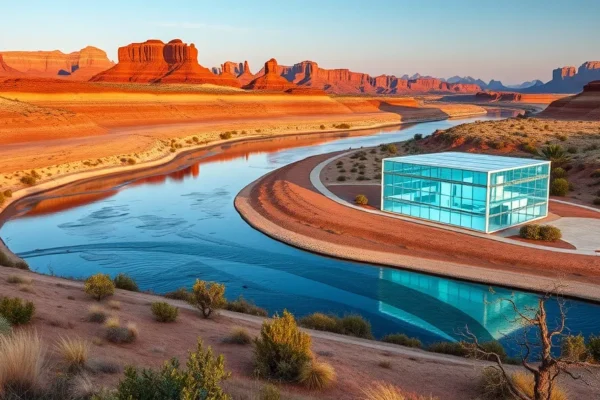
Amazon’s Water Pledge and the Data Center Dilemma
Amazon, the e-commerce and cloud computing giant, has recently made a significant commitment to water conservation. The company announced a $20 million investment aimed at protecting and restoring the Colorado River Basin. This initiative is part of Amazon’s broader goal to be “water positive” by 2030. This means Amazon aims to replenish more water than it consumes in its operations. While this sounds like a noble step, it arrives amidst ongoing scrutiny regarding the substantial water usage of data centers, particularly in regions facing increasing water scarcity. Understanding this initiative requires looking at both the ambition and the underlying technological realities.
The Promise of Water Positivity
Amazon’s pledge focuses on tangible conservation projects within the Colorado River Basin, a crucial water source for millions in the Western United States. The initiative, detailed in a company announcement on October 26, 2023, aims to support projects that restore natural water systems, improve water efficiency, and enhance water storage. The overarching goal is to not only offset Amazon’s water footprint but to actively contribute to improving water availability in stressed regions. This move is significant as it places a major technology player directly in the conversation about critical natural resources, signaling a potential shift in how large corporations address their environmental impact beyond carbon emissions. The company’s commitment to being water positive by 2030 is ambitious, pushing them to innovate and invest in solutions that go beyond mere mitigation.
How Data Centers Use Water
To grasp the significance of Amazon’s water pledge, it’s essential to understand why data centers are such large water consumers. Data centers are essentially massive buildings filled with computers that power everything from online shopping and streaming services to the cloud infrastructure of countless businesses, including Amazon’s own AWS (Amazon Web Services). These computers generate a tremendous amount of heat. To keep them from overheating and malfunctioning, sophisticated cooling systems are employed.
One of the most common and effective cooling methods is evaporative cooling. Think of it like a swamp cooler you might use in a hot, dry climate. Water is used to cool the air, and as the water evaporates, it absorbs heat. This process requires a continuous supply of water. Data centers use vast quantities of water for this purpose, especially in warmer regions where cooling demands are higher. While not as direct as drinking water, this industrial water use can put a strain on local water supplies, particularly in areas already experiencing shortages, such as parts of the Western US.
Water in Action: Current Projects and Challenges
Amazon’s $20 million commitment is being channeled through partnerships with organizations like the Colorado River Basin Collaborative. The projects are designed to have a measurable impact on water availability and ecosystem health. Examples include restoring meadows and wetlands that naturally store and filter water, improving irrigation efficiency on farms to reduce agricultural water waste, and supporting watershed management efforts. These are not abstract goals; they represent real-world interventions aimed at improving the water cycle in a region facing chronic drought.
The challenge lies in the scale of both the problem and Amazon’s own water consumption. Tech companies, driven by the ever-increasing demand for digital services and cloud computing, are building more data centers. Each new facility adds to the overall water demand. While Amazon is investing in conservation, the net effect on regional water resources depends on the balance between their consumption and their restoration efforts. The company has stated its intention to transparently report on its water use and progress towards its water positive goal, which is a crucial step in building trust and accountability.
A Competitive Landscape of Corporate Sustainability
Amazon is not alone in facing scrutiny over its water footprint. Many major tech companies, including Google, Microsoft, and Meta, operate massive data center portfolios and are increasingly being challenged to address their water usage. These companies are also investing in water stewardship and conservation projects. For instance, Google has committed to replenishing 120% of its water usage by 2030, while Microsoft has set a goal to be water positive by 2030, meaning it aims to restore more water than it consumes by that year.
The approaches vary. Some companies are focusing on direct water replenishment projects, while others are exploring more efficient cooling technologies or even water-neutral data center designs. The competition is not just about being environmentally responsible; it’s also about maintaining a positive brand image and attracting customers who are increasingly conscious of corporate environmental impact. Amazon’s $20 million pledge positions it as a significant player in this evolving landscape of corporate sustainability.
Reshaping Industry and User Expectations
Amazon’s water positive goal and its investment in the Colorado River Basin have several implications. For the tech industry, it sets a precedent and raises the bar for other companies to address their water footprint. It signals that water scarcity is becoming as critical a concern as carbon emissions. For the regions like the Colorado River Basin, it offers a potential source of funding and expertise for much-needed conservation and restoration efforts.
However, it also highlights a fundamental tension: the growing demand for digital services versus the finite nature of water resources. As more people rely on cloud services, the water footprint of the underlying infrastructure will continue to be a critical issue. This initiative could reshape how data centers are designed and operated, encouraging the adoption of water-efficient technologies and site selection that prioritizes areas with abundant water resources or where water use can be better managed.
The Hurdles to True Water Positivity
Despite the commendable goals and investments, significant challenges remain. The primary hurdle is accurately measuring and reporting water usage across a global network of data centers. The complexity of data center operations, varying regional water availability, and the impact of different cooling technologies make a universal “water positive” metric difficult to achieve. Furthermore, the effectiveness and long-term impact of conservation projects can be influenced by factors like climate change, policy, and local land use.
There’s also the question of whether conservation efforts can truly keep pace with the exponential growth of data. As data volumes explode and AI workloads demand even more computing power, data centers will likely continue to increase their water consumption. Finding truly innovative cooling solutions that significantly reduce or eliminate water use is an ongoing area of research and development. For example, some companies are exploring advanced air cooling or closed-loop systems that recirculate water more efficiently, but these often come with higher upfront costs or may not be suitable for all climates.
The Future of Water and the Cloud
The trajectory for Amazon and the broader tech industry points towards a greater emphasis on water sustainability. We can expect to see continued investment in water-efficient cooling technologies, such as liquid cooling, which circulates a liquid coolant directly over or near computer components, significantly reducing the need for evaporative cooling. Research into AI-driven water management systems that optimize cooling based on real-time environmental data is also likely to accelerate.
Moreover, companies may increasingly prioritize building new data centers in regions with sustainable water access or where their water use can be offset by local replenishment efforts. The “water positive” goal, while ambitious, is likely to evolve from a corporate aspiration into a standard operating principle as water scarcity becomes an undeniable global challenge. The timeline for these shifts will be influenced by technological advancements, regulatory pressures, and the ongoing evolution of corporate environmental, social, and governance (ESG) standards.
Frequently Asked Questions
What is Amazon’s water positive goal?
Amazon’s water positive goal, announced as part of its broader sustainability commitments, aims for the company to replenish more water than it consumes in its operations by 2030. This involves investing in water restoration and conservation projects.
How do Amazon data centers use water?
Amazon data centers, like others in the tech industry, use water primarily for cooling. Evaporative cooling systems, which release heat by evaporating water, are common and require significant water input, especially in warmer climates.
Is the $20 million investment enough to make Amazon water positive?
The $20 million investment in Colorado River Basin conservation is a substantial commitment towards addressing water scarcity, but whether it is sufficient to achieve a global “water positive” status depends on Amazon’s total water consumption and the long-term impact of the funded projects. Detailed reporting on their net water balance will be crucial to assess this.
Who else is focused on tech company water footprint?
Major tech companies like Google, Microsoft, and Meta are also actively addressing their water usage, setting their own water stewardship goals and investing in related projects. This signifies a broader industry trend towards greater water accountability.
What are the risks associated with high Amazon water use?
The primary risk is the strain on local water resources, particularly in water-scarce regions like the Western US. This can lead to increased competition for water, impact ecosystems, and potentially affect local communities.
When will Amazon’s water positive goal be achieved?
Amazon has set a target of 2030 to become water positive. The actual achievement will depend on the successful implementation and measurable impact of their water replenishment and conservation strategies over the next several years.
This article provides an overview based on publicly available information and industry trends. The long-term effectiveness of Amazon’s water conservation efforts and its journey towards becoming water positive will require ongoing monitoring and transparent reporting.











