

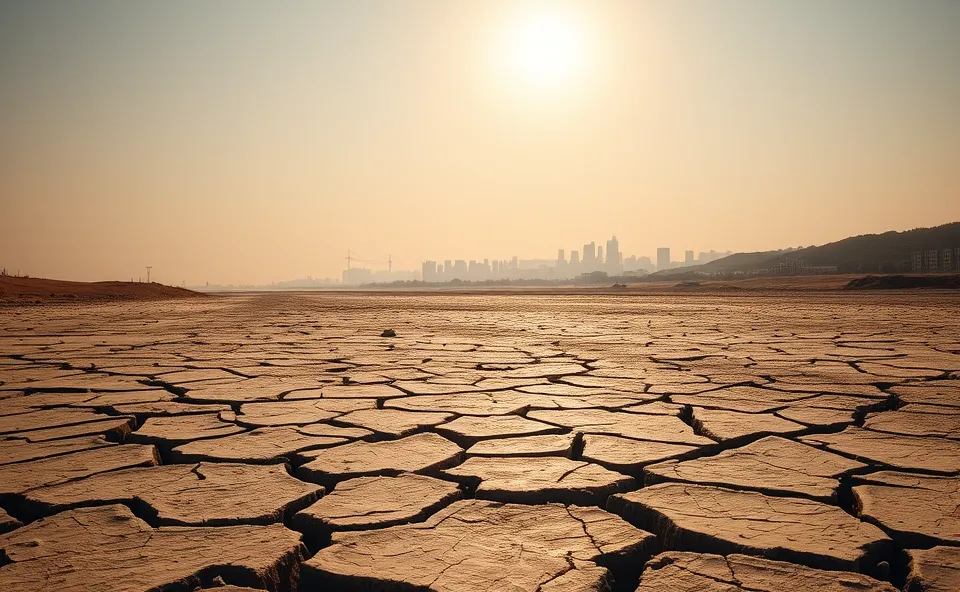
The Reality of Our Drying Taps
Imagine waking up on a sweltering July morning and realizing that the water coming out of your faucet is not just low, but potentially unsafe. For many people across the country, this is no longer a scary story from a movie. It is becoming a real part of life. The US water crisis is not just about a few dry lakes in the desert. It is a growing problem that is hitting cities from the Gulf Coast to the Rocky Mountains.
Right now, we are seeing a worrying trend where our water sources cannot keep up with the demand. In places like Corpus Christi, the situation is particularly stressful. They are dealing with saltwater intrusion, which happens when salt water from the ocean pushes into the fresh water supplies. When that happens, the water becomes undrinkable without very expensive treatment. It is a reminder that water access is not guaranteed, even in coastal cities.
Then you have the Colorado River. This river is basically the lifeline for seven different states and millions of people. It provides water for everything from the lights in Las Vegas to the crops in California. But the river is exhausted. The reservoirs that hold its water are hitting historic lows. We are seeing a cycle where the river simply does not have enough water to reach the ocean, let alone support every city and farm along its path. This is a classic example of water scarcity playing out in real time.
Why Everyone Is Talking About This Right Now
You might wonder why the US water crisis is dominating the conversation this summer specifically. The answer is a mix of extreme weather and a sudden realization that our safety nets are gone. We have had a series of record breaking heatwaves that act like a giant sponge, sucking moisture out of the soil and the air. This creates a feedback loop. The hotter it gets, the more water we use to cool our homes and water our lawns, and the faster our reservoirs dry up.
People are also searching for answers because the restrictions are hitting home. It is one thing to read a report about a drought in a distant state. It is another thing when your local government tells you that you can only water your grass on Tuesdays and Thursdays, or when you see news reports about saltwater creeping into the drinking water of a major city like Corpus Christi. The invisibility of our water infrastructure is finally disappearing. Most of us take for granted that water just appears when we turn a handle, but now we are seeing the cracks in that system.
There is also a growing awareness of how climate change is making these events more frequent. It is not just a one year fluke. The patterns are shifting. The snowpacks in the mountains, which act as natural water towers for the West, are smaller and melting faster. This means there is less water available during the peak of summer when we need it most.
How We Got Into This Position
To understand where we are, we have to look back at how we built our cities. For decades, the US followed a philosophy of growth at any cost. We built massive cities in the middle of deserts and encouraged thirsty crops to grow in arid regions. We relied on the assumption that the rain and snow would always follow a predictable pattern. We essentially spent water we didn’t actually have in the bank.
The Colorado River is the perfect example of this over reach. A century ago, agreements were made to divide the river’s water among states. The problem was that those agreements were based on an unusually wet period. The planners thought the river was much larger and more consistent than it actually is. When the drought hit, those legal contracts stayed the same, but the water disappeared. This created a political and environmental nightmare.
At the same time, our infrastructure has aged. Many of the pipes and treatment plants across the country are decades old. We have leaky systems that waste millions of gallons of water before it even reaches a home. When you combine outdated infrastructure with a changing climate, you get a system that is fragile and prone to collapse. We ignored the warning signs of water scarcity for too long, and now the bill is coming due.
The Ripple Effect on Business and Technology
This crisis is not just an environmental issue. It is a massive economic and technological challenge. Water is a primary input for almost every industry. If you look at the tech sector, the impact is surprising. Data centers, which power the internet and AI, require millions of gallons of water to cool their servers. As these centers expand, they are putting an immense strain on local water supplies.
The manufacturing sector is also feeling the heat. Semiconductor plants, which make the chips for your phone and car, need ultra pure water to function. If a region faces severe water scarcity, these companies might struggle to operate or be forced to move their investments elsewhere. This could disrupt global supply chains and drive up the cost of electronics.
On the positive side, this crisis is driving a wave of technological innovation. We are seeing a surge in new water management tools:
- Smart Irrigation: AI driven systems that analyze soil moisture and weather forecasts to use the absolute minimum amount of water needed for crops.
- Advanced Desalination: New ways to remove salt from ocean water using less energy, which is crucial for cities like Corpus Christi.
- Water Recycling: Technology that treats wastewater to a level where it is safe to drink again, turning a waste product into a resource.
- Leak Detection Sensors: Acoustic sensors and IoT devices that can find a pinhole leak in a city pipe before it becomes a massive burst.
For businesses, the focus is shifting toward water stewardship. Companies are realizing that they cannot grow if their local community is running out of water. This is turning water efficiency from a nice to have feature into a core business strategy.
Looking Ahead at the Water Landscape
So, what happens next? We cannot simply wish the rain back into existence. The future of the US water crisis will likely be defined by adaptation and hard choices. We are going to see a shift in how we value water. For a long time, water was treated as a cheap, infinite resource. In the coming years, it will be treated as the precious asset it actually is.
We can expect more aggressive water management policies. This might mean stricter limits on how much water can be pumped for agriculture or new laws regarding how new homes are built in drought prone areas. We will likely see a massive investment in infrastructure to replace old pipes and build more recycling plants. The goal will be to create a closed loop system where water is used, cleaned, and reused multiple times.
The tension over the Colorado River will likely lead to new legal frameworks. States will have to negotiate more realistically about how to share a shrinking pie. This will be a difficult process, but it is necessary to avoid total systemic failure. While the outlook seems challenging, the pressure of the crisis is finally forcing the innovation we should have started decades ago. The transition will be bumpy, but it will lead to a more resilient way of living.
Common Questions About the Water Situation
What is the main cause of the US water crisis?
The crisis is caused by a combination of climate change, which leads to longer and more intense drought, and poor water management. We have over used our natural sources and relied on outdated infrastructure that cannot handle current demands.
How does the Colorado River impact water scarcity in the West?
The Colorado River provides essential water to seven states for drinking and farming. Because the river levels have dropped so low, there is not enough water to meet the legal requirements of every state, leading to strict rationing and water scarcity for millions of people.
Why is Corpus Christi experiencing water issues?
Corpus Christi is facing environmental issues like saltwater intrusion. This happens when sea levels rise or fresh water levels drop, allowing salt water to seep into the freshwater aquifers and reservoirs, making the water difficult to treat for drinking.
Can technology solve the drought problem?
Technology cannot create more rain, but it can help us use what we have more wisely. Tools like smart irrigation, wastewater recycling, and better leak detection are essential for managing water scarcity and ensuring long term water access.
What can individuals do to help with the US water crisis?
Individuals can reduce their footprint by installing low flow fixtures, landscaping with native plants that require less water, and supporting policies that prioritize infrastructure upgrades and sustainable water management.











