

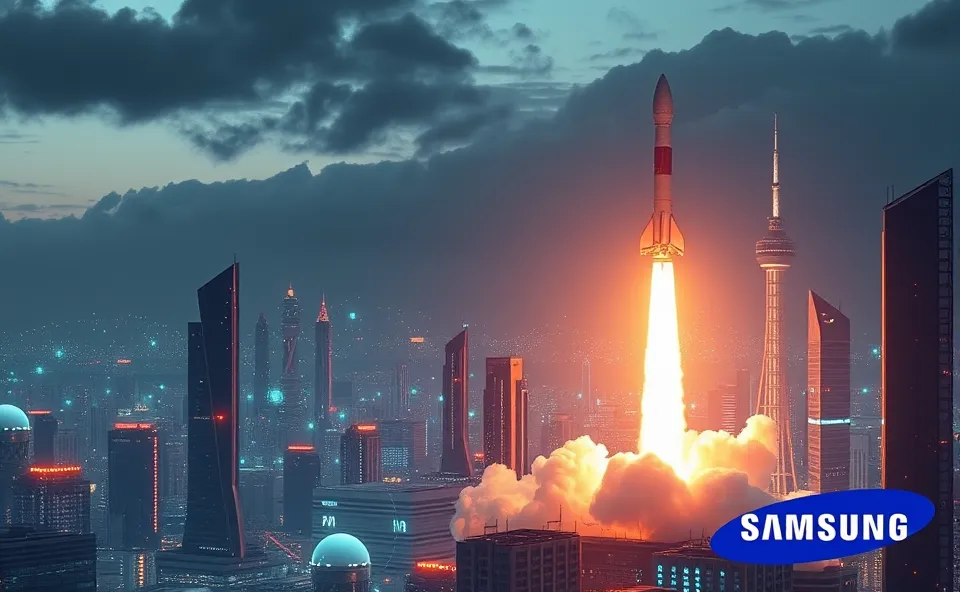
The Big Shift in AI Investment
If you have been following the news lately, you know that artificial intelligence is not just a buzzword anymore. It is the engine driving the entire stock market. Recently, several top analysts have made some bold moves that tell us a lot about where the money is flowing. They are no longer just looking at the companies that make the software. Instead, they are looking at the companies that build the hardware and the infrastructure that makes AI possible.
One of the most surprising moves involves SpaceX. While it is known for rockets, analysts are now giving it an incredibly high target valuation. This is because SpaceX is not just about space. With Starlink, they are building a global communication network that can feed data to AI systems anywhere on Earth. When you combine aerospace capabilities with AI, you get a company that can manage global logistics and data in ways we have never seen before.
Then we have Samsung. For a while, people were worried that Samsung was falling behind in the chip race. However, the mood has shifted. Analysts are now very positive about Samsung because of its role in the semiconductor industry. Specifically, their work on High Bandwidth Memory, or HBM, is critical. AI chips, like the ones from NVIDIA, cannot work without this specialized memory. Samsung is positioned to be the primary supplier for the brains of the AI revolution.
Beyond those two, analysts are also doubling down on a few other key players:
- NVIDIA: They remain the gold standard. Analysts continue to raise their targets because every single AI company needs their GPUs.
- Microsoft: The focus here has shifted to how they turn AI tools into actual profit through their office software.
- Google: Analysts are watching how they integrate AI into search to keep their dominant position in the tech sector.
Why Everyone is Talking About These Moves Now
You might wonder why these specific analyst ratings are trending right now. The simple answer is that we are moving into the second phase of the AI boom. In the first phase, everyone was amazed by chatbots. It was all about the “magic” of artificial intelligence. Now, the novelty has worn off, and the market is asking a hard question: Who is actually making money from this?
Investors are now searching for the “picks and shovels.” During the gold rush, the people who sold the shovels often made more money than the miners. In the AI world, the “shovels” are the semiconductor industry and the data networks. This is why the positive outlook on Samsung and the high targets for SpaceX are such a big deal. They provide the physical tools that allow AI to exist and grow.
There is also a lot of pressure on technology stocks to prove their value. With interest rates and economic shifts, investors are less likely to bet on a “maybe.” They want companies with real assets and clear paths to growth. Seeing analysts shift their focus toward infrastructure suggests that the market is getting more serious about the long term viability of AI.
How We Got to This Point
To understand why SpaceX and Samsung are suddenly in the spotlight, we have to look back at how the tech sector evolved over the last few years. For a long time, the world was focused on the cloud. We moved our files and apps to the internet, and companies like Amazon and Microsoft built massive data centers to hold that information.
Then, generative AI arrived. Suddenly, these data centers needed a massive upgrade. The chips used for regular computing were not fast enough. This created a vacuum that NVIDIA filled, but it also created a desperate need for faster memory. This is where Samsung comes back into the picture. They have the scale to produce the kind of memory that AI requires at a global level.
At the same time, we saw a shift in how we think about connectivity. AI needs data, and it needs that data in real time. Traditional cables and cell towers are great, but they have limits. SpaceX entered the conversation by proving that a constellation of satellites could provide high speed internet to the most remote parts of the planet. By linking the aerospace industry with AI, SpaceX is effectively building a nervous system for the world’s data.
What This Means for the Tech World
These analyst moves are more than just numbers on a screen. They signal a major change in how businesses and markets view technology. First, it means that the AI race is expanding. It is no longer just a battle between software engineers in Silicon Valley. It is now a battle of manufacturing, logistics, and raw materials.
For businesses, this means that the cost of AI might fluctuate based on the health of the semiconductor industry. If Samsung and other chip makers can scale up production, AI tools will become cheaper and more accessible for small businesses. If there is a bottleneck in hardware, only the richest companies will be able to afford the best AI.
For the broader stock market, this indicates a diversification of AI investments. Instead of everyone piling into one or two famous names, the money is spreading out. We are seeing a more balanced approach to investment where infrastructure, hardware, and software are all valued. This generally makes the tech sector more stable because it does not rely on a single point of failure.
The impact on the consumer is also significant. When companies like Samsung and SpaceX succeed in their AI goals, we see it in our gadgets and our connectivity. Better memory chips mean your phone can run AI tasks locally instead of sending everything to a server. Better satellite networks mean your AI assistant works even when you are in the middle of the ocean.
Looking Ahead at the AI Landscape
So, where do we go from here? If we follow the logic of these recent analyst ratings, the next few years will be about integration. We have the models and we have the hardware. Now, the goal is to put them together in a way that feels natural and useful.
We can expect to see more “Edge AI.” This is the idea that AI will happen on your device, not in the cloud. This is where Samsung’s positive outlook becomes even more important. The more powerful the memory chips, the more “intelligence” can fit into a handheld device. This will lead to faster response times and better privacy, as your data will not have to leave your device.
In the aerospace sector, we will likely see AI taking a more active role in managing satellite constellations and space travel. SpaceX will probably continue to use AI to optimize rocket landings and satellite orbits, further increasing its valuation. The bridge between space and AI is still very new, and there is a lot of room for growth.
Ultimately, the market is moving toward a world where AI is invisible. It will be baked into the chips, the satellites, and the software. The companies that control the physical layer of this technology will likely be the ones that hold the most power in the coming decade.
Common Questions About AI and Market Trends
How does AI affect the semiconductor industry?
AI requires a massive amount of computing power and memory. This has forced the semiconductor industry to create new types of chips and high speed memory, such as HBM. Companies that can produce these at scale see a huge increase in demand.
Why is SpaceX considered part of the AI conversation?
SpaceX provides the connectivity through Starlink that allows AI data to move globally. By combining aerospace technology with AI, they can manage complex global networks, making them a key piece of the AI infrastructure.
What are analyst ratings and why do they matter for technology stocks?
Analyst ratings are professional evaluations of a company’s future performance. They matter because they influence where large institutional investors put their money, which can drive the price of technology stocks up or down.
Is the investment in AI sustainable for the long term?
Many experts believe it is, provided that companies move from the “hype” phase to the “utility” phase. The shift toward infrastructure, like the moves seen with Samsung, suggests that the market is building a foundation for long term use.
What is the difference between software AI and hardware AI?
Software AI refers to the models and apps, like chatbots, that we interact with. Hardware AI refers to the physical chips, servers, and satellites that allow those models to run. You cannot have one without the other.











