

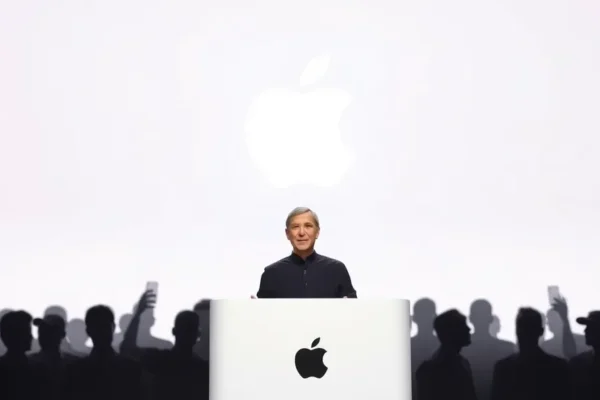
The Future of Leadership at Apple
In the high-stakes world of consumer technology, succession planning is rarely just about replacing an executive. For Apple, the long-rumored transition toward a new era has centered on John Ternus. As a senior vice president of Hardware Engineering, Ternus has emerged as the clear successor to Tim Cook, according to widespread reports from major business outlets like Bloomberg and industry analysts tracking the company’s internal restructuring. While Apple has not set an official date for a departure, the elevation of Ternus signals a definitive shift in how the world’s most valuable company intends to prioritize its future.
This leadership change represents a pivot from the operational and supply-chain-focused leadership of the Tim Cook era toward a future defined by deep technological integration. By elevating an engineer with a proven track record in hardware, Apple is positioning itself to navigate the next decade of hardware-software convergence, particularly as the company faces intense pressure to modernize its strategy around artificial intelligence and proprietary computing components.
Strategic Rationale for the Apple CEO Succession
Why choose an engineer over a logistics or marketing specialist? The answer lies in the evolving nature of Apple’s competitive moat. A moat is a business term describing a company’s ability to maintain a competitive advantage over rivals. For years, Apple’s moat was its supply chain efficiency and retail ecosystem. Today, that moat must be built on technical differentiation.
John Ternus has been instrumental in the success of Apple Silicon, the company’s transition away from Intel processors to its own custom-designed chips. This move allowed Apple to achieve a level of power efficiency and performance integration that competitors struggled to replicate. By making Ternus the face of Apple’s next generation, the company is signaling to investors and the market that its primary strategic focus remains the mastery of the “stack.” The stack refers to the complete integration of hardware, software, and services. In an era where AI processing is moving from the cloud to the device, having a leader who understands the physical constraints and capabilities of chips is not just an advantage; it is a necessity.
The Competitive Landscape of Tech Giants
The tech industry is currently locked in an arms race regarding artificial intelligence. Companies like Nvidia, Google, and Microsoft have dominated the conversation by focusing on data centers and massive cloud computing power. Apple’s approach is fundamentally different: it aims to bring “on-device” intelligence to the masses, prioritizing privacy and local processing over heavy reliance on external servers.
This creates a distinct competitive positioning. While competitors chase scale, Apple is betting on the silicon inside the iPhone and the Mac to provide a unique user experience. If Ternus can successfully lead the development of AI-capable chips that maintain battery life while delivering high-speed processing, Apple may effectively lock its users further into its ecosystem. However, if they fail to match the rapid advancements of cloud-based AI, Apple risks being perceived as a laggard in the most important technological shift of the decade.
Industry Implications of the Shift
The appointment of an engineering-focused CEO is a trend observed across the broader technology sector. When companies reach a level of maturity where software and hardware are inseparable, they often move away from general managers toward specialists who understand the fundamental physics of the product. This signals to the industry that we are moving out of the “service-led” growth period of the 2010s and into a “compute-led” period.
Industry peers are likely to watch this transition closely. If Apple’s hardware-first strategy pays off, we may see Samsung, Xiaomi, and other manufacturers pivot their leadership structures to favor chip-architecture experts over marketing-led CEOs. The broader impact is a hardening of the industry: the gap between companies that can design their own chips and those that must rely on third-party manufacturers will likely widen, leading to increased consolidation among smaller hardware firms that cannot keep pace with the massive R&D budgets required for silicon innovation.
Financial and Operational Realities
From a financial perspective, the shift toward John Ternus represents a commitment to protecting high profit margins. Apple’s ability to maintain industry-leading margins is largely tied to its ability to design its own components, thereby lowering its reliance on third-party chip suppliers like Intel or Qualcomm. According to recent earnings reports, Apple continues to see robust revenue from its hardware segments, even in a saturated global smartphone market.
Operationally, this transition suggests that Apple will continue to reinvest significant portions of its capital expenditure into internal R&D. While this carries high upfront costs, the long-term payoff is a reduced cost of goods sold. Investors should expect continued volatility in capital allocation as Apple navigates the expensive transition into AI-enhanced hardware, but the long-term goal is clearly to maintain a cost advantage that prevents competitors from undercutting them on price while offering comparable performance.
Execution Risks and Real-World Challenges
While the strategy of focusing on hardware expertise is logical, the execution risks are significant. Apple has historically struggled with software-first services when those services have not been perfectly integrated with the underlying hardware. Integrating advanced AI into the iOS ecosystem without sacrificing battery life or privacy is a gargantuan task.
Furthermore, there is the risk of “innovation drift.” If Apple becomes too obsessed with the mechanics of its hardware, it may lose sight of the evolving needs of its consumers. History is littered with tech companies—like Nokia or Blackberry—that had excellent hardware but failed to adapt to changing software and platform paradigms. Additionally, regulatory scrutiny regarding the “walled garden” approach could force Apple to open its ecosystem, potentially weakening the very integration that Ternus’s hardware strategy is designed to protect.
Stakeholder Impacts
For employees, this transition marks a return to a more product-centric culture where engineering decisions take precedence over purely commercial ones. This is likely to boost morale within the R&D teams, as they will see their expertise reflected in the highest levels of company leadership. For partners, such as chip fabricators like TSMC, the continuity of a hardware-focused CEO is a positive sign, suggesting that Apple’s demand for high-end manufacturing will remain steady or grow.
For investors, the market sentiment will likely remain cautious until the first major product launch under Ternus’s leadership provides proof that his vision translates into mass-market success. Customers, meanwhile, will be looking for the “magic”—the seamless experience that Apple is known for—rather than a list of technical specifications. If Apple can maintain that balance, investor confidence should remain high.
Outlook and Expected Milestones
If this strategy succeeds, Apple will secure its position as the premium provider of on-device AI for the next generation of consumers. Success will be measured by market share in the premium smartphone segment and the continued growth of services that rely on advanced hardware, such as augmented reality or high-performance gaming.
Key milestones to monitor include the release of Apple’s next-generation custom silicon chips, performance metrics regarding AI processing on consumer devices, and any shift in the company’s patent filings related to neural processing units. Observers should track these indicators over the next 24 to 36 months to assess whether the transition to a hardware-led leadership team is producing the intended results.
Strategic Questions and Answers
Will John Ternus as the next Apple CEO change the company’s trajectory?
He is likely to deepen the company’s commitment to internal chip innovation rather than pivot the company toward an entirely new business model. This ensures continuity in Apple’s strategy of vertical integration.
Why is hardware expertise so important for Apple right now?
As AI moves from the cloud to the device, the bottleneck for innovation is no longer just data; it is the physical capacity of the hardware to process complex tasks efficiently. Ternus’s background in Apple Silicon is essential to overcoming this bottleneck.
What are the risks of this leadership change?
The primary risk is that a focus on engineering may lead to a neglect of broader software or service opportunities. If the company becomes too inward-looking regarding hardware, it may miss shifts in how users interact with platforms.
How long until we see the results of this transition?
Strategic leadership shifts in massive companies like Apple have long lead times. We can expect to see the full imprint of this shift in product cycles 18 to 36 months from now.
Is there a threat to Apple’s status from this move?
The move itself is a defensive measure to maintain dominance, but it creates a challenge if their proprietary chip technology stalls while competitors continue to innovate in AI and software-defined hardware.
Note: All business outcomes are subject to execution risk, market volatility, and unforeseen changes in the competitive landscape. Predictions regarding leadership transitions and their success are based on current market trends and corporate strategy analysis, not guaranteed results.











