

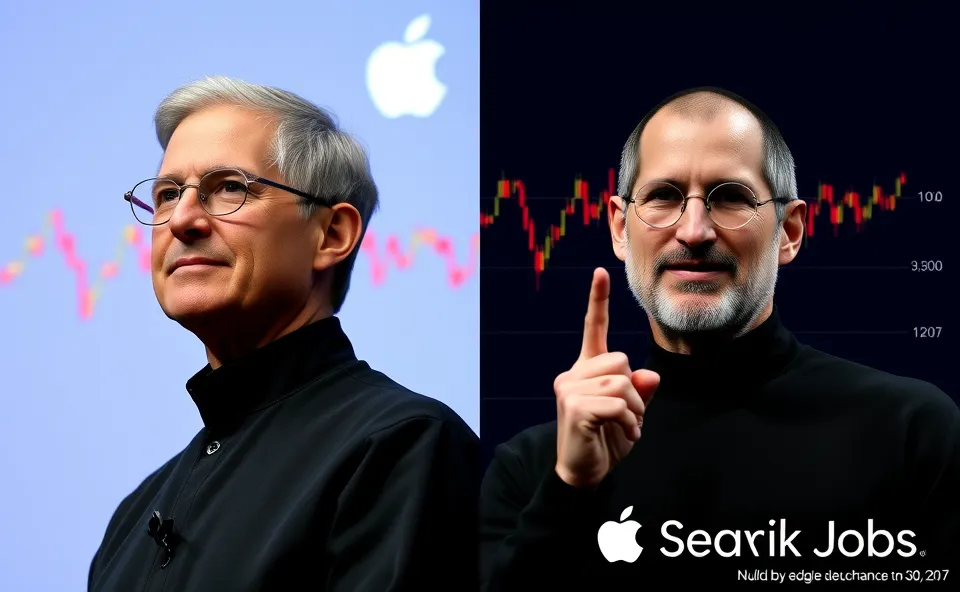
The massive growth of Apple under Tim Cook
When people talk about Apple Inc., they usually think of the sleek designs and the magic of the iPhone. But if you look at the numbers, there is a different kind of magic happening. Since Tim Cook took over as CEO, the Apple stock performance has been nothing short of legendary. While Steve Jobs built the foundation and created the most iconic products in history, Tim Cook turned the company into a financial powerhouse that defies traditional business logic.
In simple terms, Tim Cook took a company that was already successful and scaled it to a size that was previously unimaginable. Under his leadership, the company value jumped from hundreds of billions to trillions of dollars. For anyone holding AAPL shares, the returns have been massive. It was not just about selling more phones. It was about creating a system where every single device connects to a service that makes money every single month.
This growth happened through a mix of smart supply chain management and a huge shift in how the company makes money. Cook focused on making the business efficient. He ensured that Apple could produce millions of devices with almost perfect precision. This operational excellence meant that profit margins stayed high even as the company grew larger.
Why we are still talking about this today
You might wonder why people are still obsessing over the comparison between these two leaders. The reason is simple. We are currently in a massive shift in technology. With the rise of artificial intelligence, everyone is asking if Apple can still innovate. This leads people back to the debate about leadership impact.
Some argue that Steve Jobs was the true innovator and that Tim Cook is just a great manager. Others point to the stock market and say that the numbers do not lie. The current interest in Apple stock performance comes from a place of curiosity. Investors want to know if a company can keep growing when it is already the biggest in the world.
Also, the way we use technology has changed. We no longer just buy a piece of hardware and use it for five years. We subscribe to clouds, music, and apps. This shift to a service based economy is a hallmark of the Cook era. Because the market is now valuing software and recurring revenue more than hardware sales, the conversation about how Tim Cook evolved the business has become more relevant than ever.
The legacy of Steve Jobs and the transition
To understand where we are, we have to look back at where we started. Steve Jobs was the visionary. His CEO tenure was defined by the creation of the iMac, the iPod, the iPhone, and the iPad. He did not just sell products. He changed how humans interact with technology. Under Jobs, the stock returns were incredible because he was creating markets that did not even exist.
However, the Apple of the Jobs era was a different beast. It was a company driven by a singular, brilliant, and often demanding leader. The focus was on the product. If the product was perfect, the money would follow. Jobs proved that a great product is the best marketing tool in the world.
When Tim Cook stepped into the role in 2011, the world expected him to be a placeholder. Many thought it was impossible to replace a founder with such a strong personality. But Cook did not try to be Steve Jobs. Instead, he leaned into his strengths. He was a master of logistics and operations. He understood how to move parts across the globe and how to squeeze every bit of value out of the supply chain. He transitioned the company from a product company to an ecosystem company.
How this leadership shift changed the market
The impact of this change went far beyond just a few balance sheets. It changed how investors look at tech companies. Under Tim Cook, Apple Inc. became the gold standard for financial performance. The company started buying back its own shares and paying dividends, which made it an attractive option for a much wider range of investors.
The real genius was the expansion of the Services wing. Think about it. You buy an iPhone once every few years. But you pay for iCloud storage every month. You pay for Apple Music. You buy apps. By building this ecosystem, Apple ensured that it would make money from you even when you were not buying a new phone.
This had a huge effect on the stock market. It reduced the risk for shareholders. Investors no longer had to worry if the next iPhone would be a hit or a miss. They knew that the millions of people already in the ecosystem would keep paying for services. This stability is a big reason why the Apple stock performance remained so strong even during global economic uncertainty.
Here are a few key ways the leadership impact showed up in the numbers:
- Diversification: Apple stopped relying solely on the iPhone and grew its wearables and services.
- Margin Expansion: Better supply chain management meant higher profits per unit.
- Shareholder Value: Massive stock buybacks increased the value of remaining shares.
- Global Scale: Expanding deeper into markets like China and India.
Looking ahead at the next chapter
So, where does Apple go from here? The company is now in a position where it cannot simply rely on the old playbook. The growth of the smartphone market has slowed down because almost everyone who wants a smartphone already has one. This means the next leap in financial performance will have to come from something new.
The current focus is clearly on AI and spatial computing. The move toward integrating AI into the operating system is the next big bet. If Apple can make AI feel natural and private, it could spark another massive upgrade cycle. People will buy new devices just to access these new features.
We can also expect the company to keep pushing into health and finance. Between the Apple Watch and Apple Pay, the company is already inside our veins and our wallets. The future likely involves more services that make the iPhone the central hub for every part of a person’s life. While it might not be as explosive as the birth of the iPhone, the goal is sustainable, steady growth that keeps the stock price climbing.
Common questions about Apple and its leadership
How did Tim Cook impact Apple stock performance compared to Steve Jobs?
Steve Jobs created the products that made Apple a household name and drove massive early growth. Tim Cook took those products and built a global financial machine. While Jobs provided the vision, Cook provided the scale and the ecosystem, leading to a much higher total market valuation and consistent stock returns.
Which CEO tenure provided better stock returns?
Both were incredibly successful, but in different ways. Jobs provided the explosive growth of a startup becoming a giant. Cook provided the compounding growth of a giant becoming a superpower. In terms of total market cap increase, the Cook era has seen the numbers reach heights that were unthinkable during the Jobs era.
What factors drive the current price of AAPL?
The current price is driven by a mix of iPhone sales, the growth of the Services sector, and investor excitement over AI. The ability of the company to maintain high profit margins and return cash to shareholders through buybacks also plays a huge role.
How does leadership impact the financial performance of a tech giant?
Leadership determines the strategy. A visionary leader like Jobs focuses on disruption and new categories. An operational leader like Cook focuses on efficiency, ecosystem lock-in, and scaling. Both are necessary, but they impact the financial performance in different cycles of a company’s life.
Is the Apple stock performance sustainable in the long run?
Sustainability depends on innovation. As long as Apple can find new ways to add value to its ecosystem, such as through AI or new hardware categories, the company is well positioned. Its massive cash reserves give it a safety net that almost no other company in the world possesses.











