

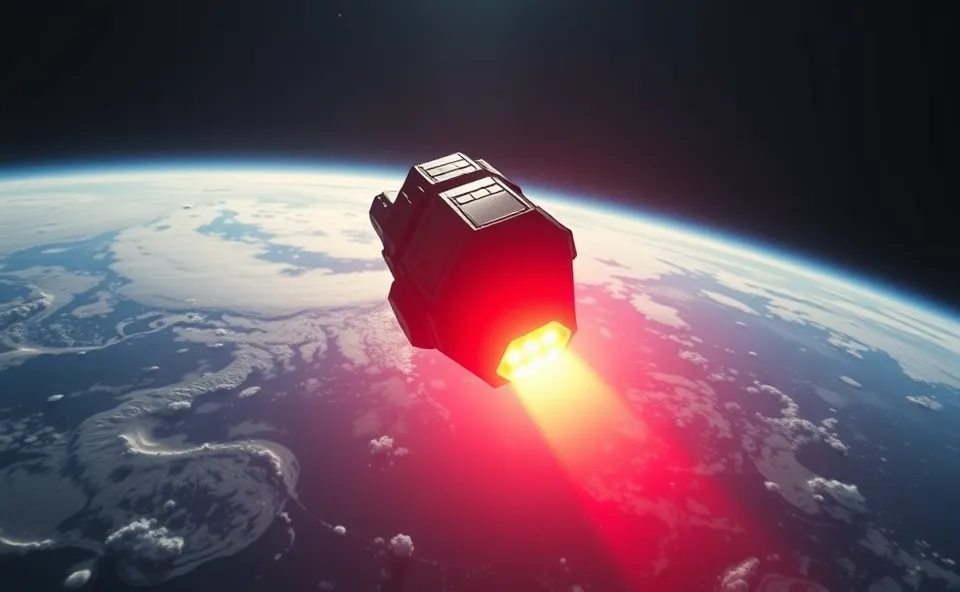
The Fiery Return: Artemis II’s Next Big Challenge
Imagine flying at incredible speeds, faster than any car or plane you’ve ever known, and then plunging back into Earth’s atmosphere. That’s exactly what the Artemis II astronauts will experience during their mission’s reentry phase. It’s the final, and arguably one of the most critical, stages of their journey around the Moon. This isn’t just a dramatic end to a mission; it’s a vital test for the future of our space program.
Why All the Buzz About Reentry Now?
The Artemis program is designed to send humans back to the Moon and eventually to Mars. Artemis II is the first crewed mission, a huge milestone. People are keenly interested because it’s the next step, the one where we see astronauts actually travel around the Moon and come back. The reentry is the ultimate proof of concept for the Orion spacecraft’s ability to safely bring a crew home from deep space. It’s the moment of truth after months and years of planning and development. The success of this reentry will pave the way for longer and more ambitious lunar missions, making it a hot topic for anyone following space exploration.
A Look Back: Building Towards This Moment
To understand the significance of Artemis II’s reentry, we need a little background. For decades, NASA and other space agencies have been perfecting the art of spacecraft reentry. Think about the Mercury, Gemini, and Apollo programs; each had its own challenges returning to Earth. Then came the Space Shuttle program, which reentered countless times, giving us invaluable data on atmospheric entry. However, the Artemis program is different. The Orion spacecraft is designed for missions farther from Earth than ever before. This means the reentry speeds for Artemis II will be significantly higher than what the Shuttle experienced. This higher speed generates intense heat and pressure, requiring advanced engineering and robust systems to protect the astronauts inside. The Artemis program is a direct continuation of this legacy, aiming to push the boundaries further than we have before.
The Stakes Are Sky High: What This Means for Us
For the average person, the success of the Artemis II reentry means that the dream of regular trips to the Moon is closer than ever. It signifies a renewed commitment to space exploration and a belief in our ability to achieve ambitious goals. For technology, this reentry is a massive validation. The heat shields, navigation systems, and life support all need to perform flawlessly under extreme conditions. If successful, it proves that the technology developed for the Artemis program is robust enough for deep space missions. This could spur further innovation in materials science, aerospace engineering, and even technologies that find their way into our everyday lives. Businesses involved in aerospace, from established giants to innovative startups, are watching closely. A successful reentry boosts confidence in the commercial viability of future space ventures, potentially leading to more investment and growth in the space economy.
Looking Ahead: The Next Giant Leap
The successful reentry of Artemis II is not an endpoint; it’s a powerful launchpad for what comes next. It will give NASA and its partners the confidence to proceed with Artemis III, the mission planned to land astronauts on the lunar surface. Imagine humans walking on the Moon again, perhaps near the lunar South Pole, exploring new terrain and conducting groundbreaking science. Following that, the Artemis program aims to establish a sustained human presence on the Moon with the Lunar Gateway and build the infrastructure needed for eventual missions to Mars. Each successful reentry builds a ladder, step by step, towards these ambitious long-term goals. It’s about demonstrating that we can not only go to these distant places but also return safely, which is fundamental for any long-duration space program future.
Your Questions Answered
What is the primary goal of the Artemis program reentry phase?
The primary goal of the Artemis program reentry phase, particularly for missions like Artemis II, is to safely return the astronauts and the Orion spacecraft from their journey around the Moon back to Earth. It’s the ultimate test of the spacecraft’s ability to withstand the extreme conditions of atmospheric entry after a deep space mission.
How is the Artemis II spacecraft reentry different from past missions?
The Artemis II spacecraft reentry is different due to the higher speeds the Orion capsule will achieve. Because it’s traveling from farther away than previous crewed missions, it enters Earth’s atmosphere at a much faster velocity. This generates significantly more heat and demands more from the spacecraft’s heat shield and structural integrity.
What are the main risks involved in spacecraft reentry for the Artemis program?
The main risks in spacecraft reentry for the Artemis program are related to the extreme heat generated during high-speed atmospheric entry, potential issues with the heat shield integrity, navigation errors that could lead to incorrect trajectory, and the stresses placed on the spacecraft’s structure. Safely decelerating from orbital or translunar velocities requires precise control and robust systems.
Why is a successful reentry crucial for the future of the space program?
A successful reentry is crucial for the future of the space program because it proves the safety and reliability of the spacecraft and its systems for returning crews from deep space. Mission success hinges on safe returns, and demonstrating this capability is essential for public support, continued funding, and enabling future, more complex lunar missions and eventual Mars exploration.
How does orbital mechanics play a role in Artemis mission reentry?
Orbital mechanics plays a fundamental role in Artemis mission reentry. Engineers must precisely calculate the trajectory needed to enter the atmosphere at the correct angle and speed. This involves understanding the gravitational pull of Earth and the Moon, the spacecraft’s velocity, and how atmospheric drag will affect its descent to ensure a safe and controlled landing or splashdown.











