

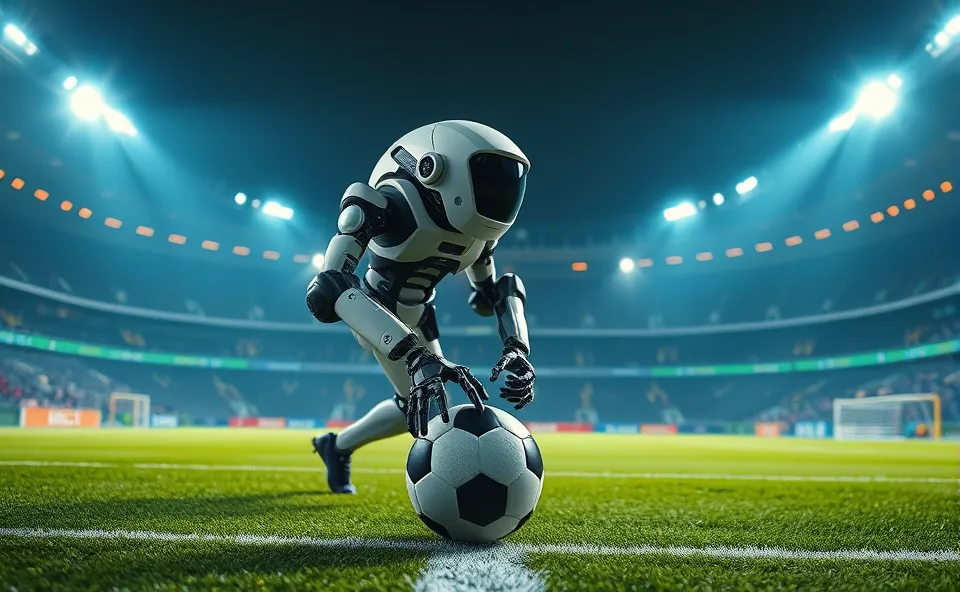
A New Star Enters the Pitch
Imagine the roar of a massive crowd and the electric energy of a stadium during the FIFA World Cup. Everyone is waiting for the game to start. Suddenly, instead of a human ball boy or a referee walking out with the equipment, a metallic figure steps onto the grass. It is the Atlas robot, a humanoid robot that looks like something straight out of a science fiction movie. With a smooth, calculated stride, it carries the game ball right to the center of the field.
This was not just a fancy trick for the cameras. It was a demonstration of how far robot technology has come. The Atlas robot did not just walk in a straight line. It handled the uneven surface of the pitch and moved with a grace that felt almost human. Seeing a soccer robot deliver the ball in one of the most watched sporting events on earth sent a clear message to the world. The gap between laboratory experiments and real world application is closing fast.
For most people, the sight was simply cool. But for those who follow technology and business, it was a milestone. It showed that a humanoid robot can operate in a high pressure, unpredictable environment without glitching or falling over. This moment turned a piece of hardware into a global celebrity, proving that AI in sports is moving beyond data analytics and into the physical world.
Why Everyone is Talking About the Robot
The internet exploded with clips of this moment because it hit the perfect intersection of sports and innovation. The World Cup is already a global phenomenon, but adding a cutting edge machine to the mix created a viral sensation. People are not just searching for the video because it looks futuristic. They are searching for it because it represents a shift in what we think machines can do.
For years, we have seen videos of robots falling over or moving in stiff, jerky motions. Atlas changed that narrative. The fluidity of its movements during the game ball delivery felt natural. When a machine can mimic human balance and precision on a global stage, it sparks a conversation about where this technology will end up in our own lives.
There is also a massive curiosity about the partnership behind the scenes. The collaboration between the creators of the robot and global brands like Hyundai has added a layer of business intrigue. People want to know if this is a marketing stunt or the beginning of a new era where robots assist in major events. The sheer scale of the FIFA World Cup provided the perfect backdrop to show that this technology is ready for the big leagues.
The Journey to the Stadium
To understand why this moment was so special, we have to look at where the Atlas robot started. For a long time, Boston Dynamics worked on versions of Atlas that relied on hydraulics. These robots were powerful, but they were loud and leaked fluid. They were impressive in controlled environments, but they were not exactly built for a pristine soccer pitch.
The version we saw at the World Cup is different. The shift toward electric actuators has changed everything. Electric motors allow for more precise movements and a much quieter operation. This evolution is what allowed the humanoid robot to move with such confidence and stability. It is no longer just about strength. It is now about agility and intelligence.
The involvement of Hyundai has also played a huge role. By bringing the expertise of a global automotive and robotics giant into the mix, the development of the Atlas robot accelerated. They moved from creating a machine that could simply walk to creating a machine that could interact with the world. This background of constant iteration is what made the game ball delivery possible. It was the result of thousands of hours of testing, failing, and refining.
Changing the Game for Sports and Business
This event was more than a performance. It has real implications for the business of sports innovation. When we see a humanoid robot performing a task at the World Cup, we are seeing a prototype for future stadium operations. The potential for automation in sports is massive.
From a business perspective, this opens up several doors:
- Event Logistics: Robots could handle repetitive tasks like transporting equipment or managing crowds, allowing human staff to focus on more complex guest services.
- Sponsorship and Marketing: Brands can use robot technology to create immersive experiences that attract younger, tech savvy audiences.
- Enhanced Training: In the future, a soccer robot could be used to simulate a perfect defender or a precise passer, helping athletes train in ways that were previously impossible.
- Operational Efficiency: Automated systems can reduce the margin of error in game day preparations, ensuring everything is in the right place at the right time.
Beyond the stadium, this impacts the wider market for AI in sports. Investors are looking at these demonstrations as proof of concept. If a robot can navigate a stadium and deliver a ball, it can likely navigate a warehouse or a hospital. The World Cup was essentially a high profile stress test for the commercial viability of humanoid robots.
Where Do We Go From Here
Looking ahead, we should not expect robots to replace the players anytime soon. Soccer is a game of passion and intuition, things that AI cannot yet replicate. However, the role of the humanoid robot in the ecosystem of the sport will likely grow.
We will probably see robots taking on more active roles in match day operations. It is logical to imagine robots acting as assistants to referees or managing the technical areas of the pitch. As the AI becomes more sophisticated, these robots will be able to react to live game situations in real time, perhaps helping with ball retrieval or managing equipment changes more efficiently.
The integration of robot technology will likely move into the training grounds first. We might see specialized robots designed to mimic the movement patterns of star players to help newcomers learn. This would turn the future of soccer into a hybrid of human skill and machine precision.
Ultimately, the Atlas robot at the World Cup was a glimpse into a world where humans and machines collaborate. The focus will shift from what the robot can do alone to how the robot can make the human experience better, faster, and more exciting.
Common Questions About Robotics in Sports
What exactly is the Atlas robot?
The Atlas robot is an advanced humanoid robot developed by Boston Dynamics. It is designed to mimic human movement and balance, allowing it to navigate complex environments and perform physical tasks with high precision.
Why was the World Cup a good place to show a soccer robot?
The FIFA World Cup provides a global platform with millions of viewers. Using a soccer robot for game ball delivery proves that the technology can handle high pressure environments and public scrutiny while performing a task flawlessly.
How does robot technology improve sports innovation?
Robot technology introduces new ways to train athletes, manage stadium logistics, and engage fans. It pushes the boundaries of what is possible in terms of performance analysis and event management.
Who is behind the development of the Atlas robot?
The robot is created by Boston Dynamics, with significant support and investment from Hyundai. This partnership combines cutting edge robotics research with industrial scale manufacturing.
Will humanoid robots eventually play in the World Cup?
While robots are becoming more agile, they lack the creativity and emotional intelligence of human athletes. They are more likely to serve as assistants, trainers, or operational support rather than competing players.











