Audacity 4: A Leap Forward for Audio Creators with Non-Destructive Editing
The world of digital audio editing is buzzing with the announcement of Audacity 4, a significant evolution for this beloved open-source audio editor. For years, Audacity has been a go-to tool for podcasters, musicians, and sound designers, renowned for its power and accessibility. However, a core limitation has always been its “destructive” editing workflow. Audacity 4 promises to change that fundamentally, introducing a non-destructive editing model and a modernized interface. This shift aims to empower creators with greater flexibility and efficiency, bringing the audio editing software closer to the capabilities of professional digital audio workstations (DAWs). This development is particularly exciting for the millions of users who rely on Audacity for their audio recording software needs.
Under the Hood A New Way to Edit Sound
At the heart of the Audacity 4 update is the transition to non-destructive editing. Traditionally, when you made a change in Audacity, like cutting a section of audio or applying an effect, that change was permanent. It overwrote the original audio data. Think of it like chiseling away at a stone sculpture; once a piece is removed, you can’t easily put it back. This meant that if you later decided a cut was too aggressive or an effect didn’t sound right, you’d have to undo it, potentially losing other edits made in the meantime, or start over.
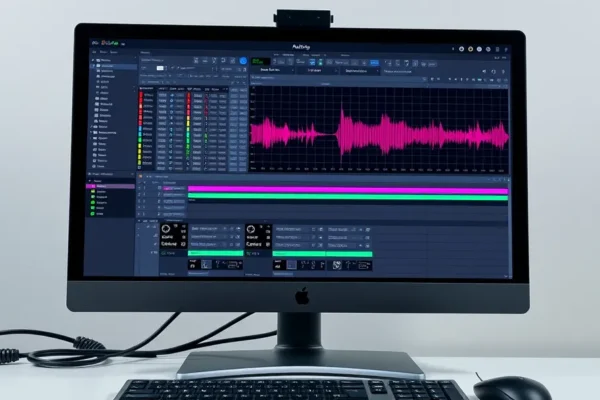
Audacity 4, however, adopts a non-destructive workflow. This is akin to working with digital layers in image editing software. Instead of altering the original audio directly, Audacity 4 will store your edits as instructions or “metadata” that are applied when the audio is played or exported. This means you can apply an effect, adjust its parameters, or even remove it entirely at any point, without affecting the original recording. If you apply an EQ boost, for instance, the original audio remains untouched. The EQ instruction is simply layered on top, and you can tweak or disable it whenever you wish. This approach significantly enhances the creative process, allowing for more experimentation and refinement without the fear of irreversible mistakes. This new system is a substantial upgrade to its existing sound editing features.
Audacity 4 in Action Real-World Impact for Creators
The implications of non-destructive editing for creators are vast. For podcasters, it means being able to easily remove unwanted pauses or background noise without permanently altering the vocal track, allowing for quick revisions. Musicians can experiment with different mixing techniques, effects chains, and mastering processes, knowing they can always revert to an earlier state. Sound designers gain more agility in crafting complex audio landscapes, adjusting individual elements without fear of breaking the entire mix. This modernization also extends to the user interface. Early previews of Audacity 4 showcase a cleaner, more intuitive design. While specific details are still emerging from the Audacity development team, the goal is to streamline workflows, making powerful tools more accessible. This makes Audacity 4 a compelling new option in the realm of audio production tools. While currently in beta stages, with wider releases anticipated later this year, the impact on independent creators and educational institutions is expected to be significant.
Navigating the Competitive Audio Landscape
Audacity has long occupied a unique space as a powerful, free, and open-source audio editor. Its primary competitors, especially in the professional sphere, are sophisticated digital audio workstations (DAWs) like Pro Tools, Logic Pro X, Ableton Live, and Reaper. These DAWs have long offered robust non-destructive editing capabilities, making them the standard for many industry professionals. Audacity’s strength has always been its accessibility and its lack of cost, attracting a massive user base from hobbyists to semi-professionals.
The introduction of non-destructive editing in Audacity 4 directly addresses one of the key differentiators that set professional DAWs apart. This move effectively bridges the gap, bringing Audacity closer to the feature set of its commercial counterparts. However, it’s important to note that professional DAWs often boast more advanced features, deeper integration with hardware, and a wider ecosystem of plugins. Audacity’s advantage remains its open-source nature, the vast community support, and its continued commitment to being free. This makes it an attractive option for those who find professional DAWs too expensive or complex.
Reshaping Audio Production Workflows
The modernization of Audacity with its new non-destructive workflow and interface is poised to reshape how creators approach audio production. For many, it means a lowered barrier to entry for more complex audio manipulation. Instead of relying solely on simple recording and editing, creators can now engage in more iterative and experimental production processes without the steep learning curve or cost associated with professional DAWs. This could democratize advanced audio editing even further, potentially leading to a surge in the quality and creativity of independent content.
Economically, this could empower more individuals to develop marketable audio skills without significant financial investment. For businesses, it offers a more capable and cost-effective solution for in-house audio needs, from podcast production to marketing materials. Socially, it fosters a more inclusive environment for audio creation, enabling a wider range of voices to produce high-quality content. The short-term impact will likely be seen in the adoption by existing Audacity users eager for these new capabilities. The long-term impact could see Audacity becoming a more serious contender for projects previously exclusive to paid DAWs.
Addressing the Hurdles Ahead
Despite the exciting advancements, Audacity 4 faces challenges. The transition to a non-destructive workflow, while powerful, can also introduce new complexities for users accustomed to the simpler destructive model. Learning how to manage and organize edits in a non-destructive manner requires a shift in thinking. Performance can also be a concern; non-destructive editing often requires more processing power and can lead to larger project files, especially with extensive edits. Ensuring smooth performance across a wide range of hardware will be crucial for adoption.
Furthermore, while Audacity 4 aims to be more intuitive, mastering its full potential, like any advanced audio editor, will still require learning. The open-source development model, while fostering community, can sometimes lead to slower development cycles or inconsistencies compared to commercially funded projects. There might also be limitations in terms of compatibility with certain advanced third-party plugins that are deeply integrated with older, destructive workflows. The success of the transition will depend on clear documentation, ongoing community support, and continued optimization by the development team.
The Road Ahead for Audacity
The trajectory for Audacity 4, and indeed for Audacity as a whole, points towards continued evolution as a powerful, accessible, and increasingly professional audio editing solution. With the foundational shift to non-destructive editing complete, future developments will likely focus on refining this system, enhancing performance, and expanding the feature set. We can anticipate continued improvements to the user interface, making it even more user-friendly and efficient.
The developers have also indicated a focus on improving integration with modern audio workflows and potentially expanding support for advanced plugin formats. The open-source nature of Audacity means that the community will play a vital role in shaping its future. Key developments to watch will include the speed of bug fixes, the introduction of new built-in effects and tools, and the overall stability and performance as the software matures beyond its beta phase. The timeline for these advancements is largely community-driven, but the commitment to this new paradigm suggests a sustained effort to keep Audacity at the forefront of accessible audio editing software.
Your Audacity 4 Questions Answered
What is non-destructive editing in Audacity 4?
Non-destructive editing means your original audio recording remains untouched. Changes you make, like applying effects or cutting, are saved as instructions that are applied when you play or export the audio, allowing you to easily change or remove them later.
Is Audacity 4 free to use?
Yes, Audacity 4, like its predecessors, is expected to remain a free and open-source audio editor, making it accessible to everyone.
When will Audacity 4 be available?
Audacity 4 is currently in beta. A wider public release is anticipated later in the year, though specific dates are subject to the development and testing process.
How does Audacity 4 compare to professional DAWs?
Audacity 4 now offers a key feature previously found only in professional digital audio workstations (DAWs). While professional DAWs often have more extensive feature sets and industry-specific integrations, Audacity 4 provides a powerful and free alternative for many audio recording and editing tasks.
Will my old Audacity projects work with Audacity 4?
Migrating older projects may require some adjustment due to the fundamental change in editing methodology. Users might need to reapply certain edits or review how effects are managed in the new non-destructive environment.
Who benefits most from the Audacity 4 update?
Creators of all levels will benefit, but particularly those who previously found destructive editing limiting. Podcasters, musicians, voice-over artists, and students will find the increased flexibility and creative freedom invaluable for their sound editing features and audio production tools.
This article provides an overview based on current announcements and available information regarding the Audacity 4 update. The full capabilities and user experience will become clearer as the software progresses through its beta phase and towards a public release.