

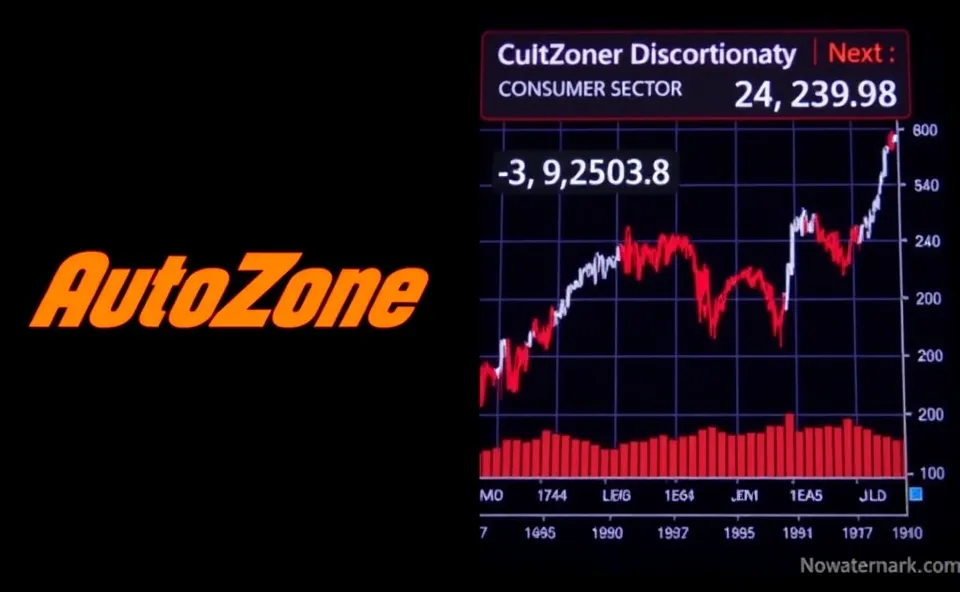
Checking In On AutoZone and Its Neighbors
Hey everyone! Let’s dive into something interesting happening in the stock market. We’re going to take a close look at AutoZone stock, often known by its ticker symbol AZO, and see how it’s doing compared to a big group of companies called the consumer discretionary sector. Think of this sector like a big neighborhood where companies sell things people want to buy, but don’t necessarily need right away. Things like new cars, fancy electronics, or even a new outfit. We’re going to figure out if AutoZone is keeping pace with its neighbors or if it’s taking a different route.
Why the Buzz About AutoZone Right Now?
So, why are we talking about AutoZone stock and its performance against the broader consumer discretionary sector today? Well, lately, some of the numbers suggest that AutoZone might not be shining quite as brightly as some of the other businesses in that “wants” category. When we look at stock performance charts and financial news, there’s a trend emerging that suggests AZO might be experiencing some underperformance relative to its peers. This kind of sector comparison is crucial for investors and anyone interested in understanding market trends. It’s not just about how one company is doing, but how it’s doing within the bigger economic picture.
A Look Back: Building the AutoZone Story
To really understand where AutoZone is today, it helps to remember a bit about its past and the context of the consumer discretionary sector. For a long time, companies that sell non-essential goods and services, like those in the consumer discretionary sector, can be a bit like a rollercoaster. When the economy is booming and people have extra cash, these companies tend to do really well. People feel confident buying new things. However, when things get a little tighter economically, or if there’s uncertainty, people tend to hold onto their money and cut back on those “wants.”
AutoZone, as a major player in automotive retail, has its own unique story within this. It sells auto parts and accessories. This can be a bit of a mixed bag. On one hand, if people are holding onto their cars longer because they’re not buying new ones, they’ll need to fix the ones they have, which can be good for AutoZone. On the other hand, if people are really struggling financially, they might delay even necessary car repairs, which could hurt sales. So, AutoZone lives in an interesting space, affected by both economic confidence and the practical need to keep vehicles running.
Over the years, we’ve seen periods where AZO stock has performed exceptionally well, often outpacing the general market. Investors have often seen it as a resilient business. However, market dynamics are always shifting. The consumer discretionary sector as a whole is very sensitive to economic cycles. When consumer spending is strong, this sector usually rallies. When consumer confidence dips, it often feels the pinch first.
What This Means for the Market and You
So, what’s the big deal if AutoZone stock is showing some underperformance compared to the consumer discretionary sector? It’s a signal, and signals matter in the world of business and investment. For investors, it suggests that perhaps the factors driving growth in other parts of the consumer discretionary sector aren’t benefiting AutoZone in the same way right now. This could be due to a variety of reasons, perhaps related to specific challenges in the automotive retail space, changing consumer habits, or even just the natural ebb and flow of stock trends.
For AutoZone itself, this underperformance means it needs to pay close attention to its strategies. Are there opportunities to boost sales? Are there cost efficiencies to be found? Are they effectively reaching their customer base? The automotive retail market is competitive, and staying ahead requires constant adaptation. This doesn’t necessarily mean doom and gloom for AZO stock, but it does highlight areas for focus.
From a broader market analysis perspective, it’s a piece of the puzzle in understanding where consumer spending is heading. If a significant part of the consumer discretionary sector is slowing down, it might reflect a broader trend of consumers becoming more cautious with their spending. This kind of insight is what keeps financial news and market trends so dynamic.
Looking Ahead: What’s Next for AZO and Its Peers?
When we look to the future, it’s logical to consider what might influence AutoZone stock and the consumer discretionary sector. Several factors could play a role. Economic conditions are always a major driver. If the economy continues to strengthen and consumer confidence grows, we might see a rebound across the entire sector, including AutoZone. People might feel more comfortable spending on both essentials and discretionary items, and perhaps even be more inclined to buy new cars, which could indirectly affect the demand for parts and maintenance.
However, if economic headwinds persist or new challenges arise, consumers might continue to prioritize essential spending and delay purchases of non-essential goods. In such a scenario, companies in the consumer discretionary sector, including AutoZone, might continue to face pressure. For AutoZone specifically, the trends in vehicle ownership and maintenance will be key. Are people keeping their cars longer, driving demand for parts? Or are shifting transportation habits, like the rise of electric vehicles or ride-sharing, changing the landscape of automotive repair and maintenance?
Technological advancements also play a part. How is AutoZone leveraging e-commerce? Are they innovating in how they serve customers online and in stores? The ability to adapt to new technologies and evolving customer expectations will be critical for any business looking to thrive.
It’s also worth considering the competitive landscape. AutoZone operates within automotive retail, a sector with established players and emerging competitors. Staying innovative and customer focused will be essential for sustained stock performance.
Frequently Asked Questions About AutoZone Stock Performance
What is the primary reason for the current focus on AutoZone stock?
The current focus on AutoZone stock, AZO, stems from observations about its stock performance relative to the broader consumer discretionary sector. People are looking to understand why AZO might be experiencing some underperformance compared to other companies selling non-essential goods and services.
How does AutoZone’s performance compare to the general consumer discretionary sector?
Recent market analysis suggests that AutoZone stock may not be performing as strongly as some of its peers within the consumer discretionary sector. This kind of sector comparison is a key element of understanding investment trends.
What are some factors that influence AZO stock trends?
Several factors can influence AZO stock trends. These include the overall health of the economy, consumer confidence, trends in vehicle ownership and maintenance, competition within automotive retail, and the company’s own business strategies and operational efficiency.
Is AutoZone considered a retail stock, and how does that affect its stock performance?
Yes, AutoZone is a prominent retail stock, specifically in the automotive retail segment. As a retail stock, its performance is closely tied to consumer spending habits and economic conditions that impact people’s willingness and ability to purchase goods.
Where can I find more financial news about AutoZone stock analysis?
You can find more financial news and resources for AutoZone stock analysis on various financial information platforms and news outlets that cover market trends and company performance. These sources often provide detailed stock performance data and expert commentary.











