

Understanding Retail Survival and the Economics of Physical Spaces
At its core, a business exists to provide value to customers in exchange for money. To keep the doors open, a company must ensure its revenue, which is the total money coming in from sales, stays higher than its expenses, such as rent, employee wages, and inventory costs. When a company experiences what economists call operational inefficiency, it means it is spending too much relative to the money it is making.
Think of a retail business like a garden. If you have a massive garden but only a few plants that are actually growing fruit, you are wasting a lot of water and fertilizer on empty soil. In the retail world, physical stores are the soil. If a store is not generating enough profit to cover its own electricity, rent, and staffing, it acts as a drain on the rest of the company. Understanding this concept helps us see why even large, well-known brands sometimes decide to shrink their footprint.
How Store Closures Function in Modern Business
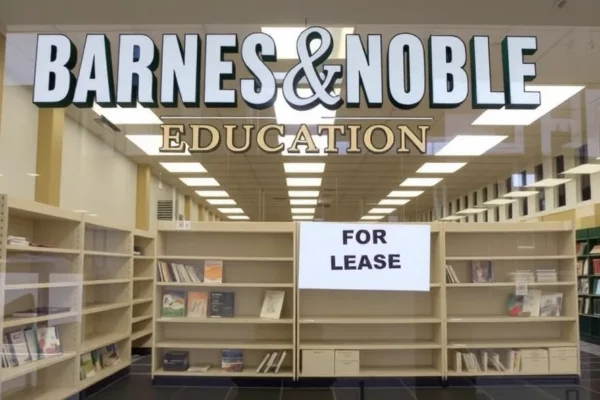
When a company like Barnes & Noble Education decides to close 68 stores despite reporting sales, it is performing a financial operation known as footprint optimization. This is the strategic process of closing underperforming physical locations to protect the company’s overall financial health.
Imagine a college retailer that operates 500 locations across the country. Each store has a lease that must be paid every month, regardless of whether students walk in to buy textbooks or not. If 68 of those stores are located on campuses where students have largely shifted to digital e-books or online ordering, those stores become liabilities. A liability is simply a financial obligation that requires cash outflow.
The step-by-step mechanism works like this: First, the company looks at the profit margin, which is the percentage of revenue that remains after covering all costs for a specific store. If that margin turns negative, the store is losing money. Second, the company analyzes whether those sales could be captured through a centralized online channel instead. If the answer is yes, they close the physical storefront, stop paying that specific rent, and redirect the customers to their website. This is a classic example of adjusting retail strategy to match current consumer behavior.
Why Efficiency Shifts Matter to You
You might wonder why a bookstore closing on a campus in another state should matter to your personal financial life. The answer lies in market health and job stability. When a large company struggles to turn a profit, it often has to make difficult choices that affect its employees and its investors.
On a personal level, these trends serve as a reminder that industries are constantly evolving. If you are an investor, understanding how a company manages its brick-and-mortar retail presence is vital to assessing the long-term risk of your investment. If you are a student or a worker, these shifts highlight the importance of being adaptable in an economy where digital services are replacing traditional roles.
Economically, this impacts local communities by changing the landscape of commerce. When a major chain downsizes, it affects local tax revenues and employment opportunities. It creates a domino effect where smaller, surrounding businesses may also see less foot traffic, illustrating how interconnected our financial ecosystems truly are.
The Evolution of the Higher Education Retail Landscape
The story of Barnes & Noble Education and similar bookstore closures is rooted in a massive shift in how we consume information. Historically, the college bookstore was the primary, often exclusive, destination for students to purchase physical textbooks. As recently as two decades ago, these stores had a near-monopoly on academic materials.
However, the rise of e-commerce and the digital transformation of higher education have fundamentally altered the landscape. According to industry data from the National Association of College Stores, there has been a steady transition toward digital course materials and rental programs. This shift is not just about convenience; it is about cost. Students, facing rising tuition, have become increasingly price-sensitive, choosing to buy or rent used books online rather than paying the premium for new copies in a physical shop.
The current wave of store downsizing is a direct reaction to these education market trends. Even when a company generates substantial sales, the high overhead costs of maintaining a physical presence on hundreds of campuses can make it impossible to remain profitable. The industry is currently in a state of consolidation, where companies are prioritizing digital platforms over high-cost physical footprints.
Practical Financial Lessons from Retail Trends
When you see headlines about major store closures, it is helpful to look past the “doom and gloom” narrative and focus on the underlying financial strategy. The most important lesson is to understand that physical assets require maintenance. If those assets do not contribute to growth, they can become anchors that drag down a business.
Common misconceptions often lead people to believe that if a company has sales, it must be doing well. In reality, sales do not equal profit. A business can have millions in sales but still go bankrupt if its operating expenses are too high. When analyzing the retail industry, always look for the profit margin rather than just the top-line revenue figures.
If you are looking at your own budget or personal business venture, apply the same logic: Are your current expenses aligned with the value you are creating? Are you holding onto assets—like unused memberships, unnecessary subscriptions, or underutilized physical space—that are costing you more than they are worth? The same principle of downsizing to improve cash flow applies to individuals as much as it does to corporations.
Connecting the Dots in the Retail Economy
The closure of retail spaces is tightly linked to concepts like digital disruption and operational agility. Digital disruption occurs when new technologies, such as digital learning platforms or online marketplaces, change the way an industry functions. Barnes & Noble Education is currently navigating this exact phenomenon.
This situation also ties into broader ideas like asset management and capital allocation. A company has a limited amount of capital, or money available for investment. By choosing to close stores, they are essentially reallocating their capital from “losing” assets to “winning” assets, such as their e-commerce infrastructure. Understanding these moves provides deep insight into how markets function and how companies attempt to survive in a rapidly changing environment.
Common Questions About Bookstore Closures
How do bookstore closures reflect broader retail industry trends?
These closures represent the ongoing shift toward e-commerce and digital services. As consumers prioritize convenience and lower costs, brick-and-mortar retailers are forced to reduce their physical footprints to remain competitive.
What does it mean when a company has high sales but is still closing stores?
It means the company is facing a profit problem, not a sales problem. Even with high revenue, if the cost of operating physical retail locations exceeds the profit generated by those locations, the company must close them to protect its bottom line.
How does the e-commerce impact change the way we buy academic materials?
The e-commerce impact has decentralized the market, allowing students to compare prices across dozens of online platforms instantly. This increased competition drives down prices for consumers but forces traditional college bookstores to rethink their business models.
What are the primary risks for investors when a retailer downsizes?
The primary risk is that the downsizing might not happen fast enough, or that the cost of closing stores—such as lease break fees and severance—could further strain the company’s financial performance. Investors monitor these moves to see if they successfully lead to a leaner, more profitable company.
Can individuals apply the same strategy used by Barnes & Noble Education?
Yes, the principle of evaluating the return on investment for your own assets is universal. Just as a retailer evaluates its stores, individuals can evaluate their own spending habits to ensure that their money is being directed toward assets that provide long-term value rather than recurring, unnecessary costs.
This content is provided for educational purposes only and does not constitute financial, investment, or tax advice. Financial situations and economic environments are complex and vary greatly by individual. Before making significant financial decisions, it is strongly recommended that you consult with a qualified financial advisor or professional who can review your specific circumstances and goals. Financial outcomes are never guaranteed, and past performance or industry trends are not indicative of future results.











