

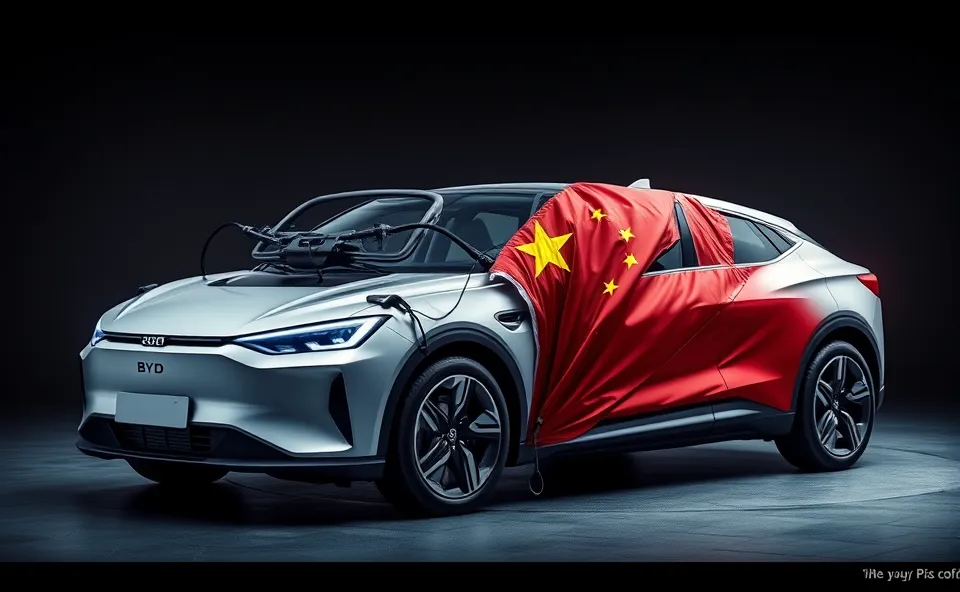
The strange paradox of selling more but earning less
Imagine you own the most popular bakery in town. Every single day, people line up around the block to buy your bread. Your sales records are breaking every month, and you are selling more loaves than any other baker in history. On the surface, you are winning. But when you look at your bank account at the end of the month, you notice something worrying. Even though you are selling way more bread, the actual profit you keep is shrinking.
This is exactly the situation facing BYD right now. In the world of electric vehicles, BYD has become a global powerhouse. They are moving massive amounts of cars and have achieved a level of market dominance that makes many other companies jealous. However, the money they make on each car is under heavy pressure.
The core of the problem is a gap between volume and value. It is one thing to dominate the road with your cars, but it is another thing to dominate the balance sheet. BYD is finding out that growing fast is expensive, and staying on top requires a constant sacrifice of profit margins. They are essentially trading their profit for a bigger piece of the market.
Why everyone is talking about the EV price war
You might wonder why people are suddenly obsessed with BYD financials when the company seems to be winning. The reason is simple: a brutal price war has broken out in the China auto market. For a long time, electric cars were seen as premium products. People paid a premium for the technology and the brand.
That changed when Tesla started aggressively cutting prices to maintain its own share of the market. When the industry leader drops prices, everyone else has to follow or risk losing their customers. BYD, being the other major player, had to react. They didn’t just lower prices; they launched new models that were cheaper than their previous ones to attract a wider range of buyers.
Investors are paying attention now because this trend is unsustainable for most companies. While BYD has the scale to survive these cuts, the market is starting to ask if there is a floor to how low prices can go. People are searching for answers because if the biggest player in the game is struggling to keep its margins high, it suggests that the entire automotive industry is entering a very dangerous phase.
How BYD climbed to the top of the mountain
To understand how we got here, we have to look at how BYD built its empire. Unlike many other car companies, BYD did not start with cars. They started with batteries. This gave them a massive advantage that almost no one else has: vertical integration.
Vertical integration is a fancy way of saying they make almost everything themselves. While other companies have to buy batteries, chips, and software from different suppliers, BYD produces the most expensive part of the car, the battery, in their own factories. This is why they were able to achieve such incredible sales records so quickly.
They focused on a wide range of products, from budget friendly hatchbacks to luxury SUVs. This strategy allowed them to capture every type of buyer in China. For a few years, it seemed like they had found the perfect formula. They had the lowest costs, the fastest production, and the most diverse lineup. They were no longer just a local brand; they were a legitimate Tesla rival on a global scale.
What shrinking margins mean for the car world
When profit margins shrink, it creates a ripple effect that touches everyone. For BYD, it means they have less extra cash to spend on the next big breakthrough. Innovation in electric vehicles is incredibly expensive. Developing new battery chemistry or autonomous driving software requires billions of dollars in research and development.
If a company is barely making a profit on each unit sold, they have to be much more careful about where they spend their money. This could slow down the pace of technological evolution. For the automotive industry, this price war is a double edged sword:
- For the consumer: It is great news. Cars are becoming more affordable, and the transition to green energy is happening faster because the price barrier is dropping.
- For the businesses: It is a nightmare. Smaller companies that cannot survive on thin margins are going bankrupt. This leads to a market where only two or three giants survive, which could eventually lead to higher prices once the competition is gone.
- For the technology: We might see a shift toward “good enough” technology rather than “cutting edge” technology if companies can no longer afford to take big risks.
The impact is a shift in how we define success. In the past, success was about how many cars you sold. Now, the conversation has shifted toward how much money you actually keep from those sales.
Where the race goes from here
So, what happens next? BYD cannot simply raise prices because Tesla and other competitors would immediately steal their customers. They are locked in a game of chicken. The most likely path forward is a shift in strategy toward higher value markets.
We are already seeing BYD push hard into international markets like Europe, Southeast Asia, and South America. In these regions, they can often sell their cars at a higher price than they do in China, which helps recover some of those lost profit margins. Expanding globally is not just about growth; it is about financial survival.
Additionally, BYD is moving upmarket. They are launching premium brands and luxury models. The goal is to move away from the budget segment, where the fighting is the most intense, and move into the luxury segment, where customers are willing to pay more for status and features. If they can successfully brand themselves as a luxury maker, they can stop the bleeding and start growing their profits again.
The future of EV competition will not be won by the company that sells the most cars, but by the company that can manage its costs most efficiently while still convincing people to pay a premium for their brand.
Common questions about the EV market
Is BYD now bigger than Tesla?
In terms of total volume of electric vehicles and plug in hybrids sold, BYD has frequently challenged or surpassed Tesla. However, in terms of total company value and profit per vehicle, Tesla has historically held the lead. BYD has more cars on the road, but Tesla has often had a stronger financial cushion.
Why are profit margins falling in the China auto market?
The main reason is the aggressive price war. Too many companies entered the market at once, creating an oversupply of cars. To attract buyers, companies began cutting prices drastically. When you lower the price but your cost to build the car stays the same, your profit margin shrinks.
How does BYD maintain its market dominance?
BYD uses its control over the supply chain. Because they manufacture their own batteries and many other parts, they can lower their prices more than other companies can without losing money. This allows them to undercut rivals and keep their sales records climbing.
Will the price war make electric vehicles cheaper for everyone?
Yes, in the short term, this competition is driving prices down globally. As BYD and Tesla fight for dominance, they are forcing the entire automotive industry to find ways to make cars cheaper for the end user.
What is the biggest risk for BYD financials?
The biggest risk is a combination of slowing demand and increasing tariffs. If other countries put high taxes on Chinese cars to protect their own industries, BYD will lose its best escape route from the low profit environment of the domestic market.











