

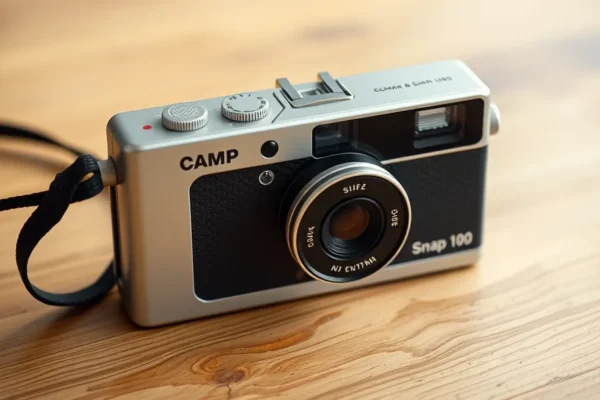
A Nostalgic Lens on Digital: Introducing the Camp Snap 110D
In a world saturated with high-resolution displays and complex camera settings, a new device is emerging that harks back to a simpler era of photography. Camp Snap has officially announced the Camp Snap 110D, a retro digital camera designed to evoke the spirit of 1970s point-and-shoot simplicity. This new entry aims to capture the imagination of both photography enthusiasts and those seeking a unique, screenless shooting experience. The Camp Snap 110D isn’t just a camera; it’s a statement piece that champions a more deliberate and tactile approach to capturing moments, reminiscent of shooting with vintage camera design principles.
The Heart of the Retro Digital Camera
At its core, the Camp Snap 110D is a digital point-and-shoot camera that deliberately eschews the modern digital viewfinder. Instead, it embraces a screenless shooting experience, a defining characteristic that sets it apart in the current market. This design choice is a direct nod to the iconic 110 film cameras of the 1970s, which were known for their compact size and straightforward operation. The problem it seeks to solve is the often overwhelming complexity and immediate gratification of digital photography, which can sometimes detract from the act of taking a picture itself. By removing the screen, Camp Snap encourages photographers to focus on composition and intuition, much like their predecessors did with film. This approach aligns with a growing trend towards minimalist photography, where the emphasis is on the craft and intentionality of image-making. The announcement of the Camp Snap 110D by Camp Snap marks a significant moment for those who appreciate this philosophical shift in digital imaging.
How the Camp Snap 110D Captures Images
The magic of the Camp Snap 110D lies in its clever integration of retro aesthetics with modern digital technology, all while maintaining a screenless camera interface. When you look through the viewfinder and press the shutter button, the camera’s internal digital sensor captures the image. However, instead of instantly displaying the photo on a rear screen for review, the image is processed and saved directly to a memory card, much like a traditional digital camera. The absence of a screen means you can’t immediately see what you’ve captured. This is where the analogy to shooting with 110 film comes into play. Just as film photographers had to wait to develop their film to see the results, users of the Camp Snap 110D will need to transfer their images to a computer or other device to view them. This delay fosters anticipation and encourages a more thoughtful approach to each shot. The camera utilizes a fixed lens, further simplifying the user experience to its most essential components – framing and capturing. This focus on core functionality makes it a truly pocket-friendly camera.
The Current Scene for Screenless Photography
The Camp Snap 110D is positioned as a unique offering in the current photography landscape, which is dominated by feature-rich digital cameras and smartphones. While dedicated screenless digital cameras are rare, the philosophy behind the Camp Snap 110D – emphasizing intentionality and a tactile experience – is finding a resurgence. Users are increasingly seeking alternatives to the constant connectivity and instant feedback of typical digital devices. This retro digital camera taps into that desire for a more mindful photographic practice. The Camp Snap 110D is available for pre-order now directly from the Camp Snap website, with shipping expected to begin in late autumn of this year. Pricing starts at $199 USD, and it will be offered in three distinct colorways: classic black, vintage cream, and a vibrant teal, all inspired by the 1970s camera style.
Navigating the Competitive Digital Camera Market
The digital camera market is vast, with players ranging from established giants like Canon and Nikon to smartphone manufacturers who have made photography a central feature of their devices. While no direct competitor offers a screenless digital camera with the exact 110 film-inspired aesthetic of the Camp Snap 110D, there are analogous trends. For instance, companies are exploring ways to simplify user interfaces and create more engaging shooting experiences. Some brands are releasing digital cameras with fewer manual controls, aiming for a more accessible entry point for casual photographers. Additionally, there’s a growing niche for instant cameras like those from Fujifilm Instax, which provide a tangible print immediately after shooting, offering a different kind of immediate gratification. The Camp Snap 110D’s advantage lies in its deliberate minimalism and its unique screenless approach, appealing to a specific segment that values the process over instant results, differentiating it from both high-end DSLRs and casual smartphone photography.
Shaping How We Capture Memories
The Camp Snap 110D has the potential to reshape user behavior by reintroducing a sense of discovery and patience into digital photography. For many, the immediate review of photos on a screen has diminished the anticipation and surprise that was once part of the photographic journey. This new breed of retro digital camera encourages users to think more critically about each frame, leading to potentially more thoughtful and impactful images. Socially, it offers a way to disconnect from the constant need for digital validation, fostering a more present and engaged approach to capturing life’s moments. Economically, it taps into a growing market for analog-inspired digital products, suggesting a demand for technology that blends nostalgia with modern convenience. The immediate impact will likely be within enthusiast circles, but its pocket-friendly camera design and accessible price point could see it expand to a broader audience looking for a fun, novel way to document their lives.
Acknowledging the Constraints of Screenless Shooting
Despite its innovative approach, the Camp Snap 110D, as a screenless camera, presents inherent limitations. The most obvious challenge is the inability to review images immediately after capture. This means users cannot quickly check for focus errors, exposure mistakes, or compositional issues, potentially leading to a higher rate of unrecoverable shots. Unlike its 110 film predecessors, which had the cost of film and development to consider, the digital nature of the Camp Snap 110D means there’s no per-shot cost, but the learning curve for mastering its “shoot and see later” workflow might be steeper for some. Furthermore, while it aims for simplicity, the lack of immediate feedback might be frustrating for users accustomed to instant digital confirmation. The Camp Snap camera review process will likely highlight these trade-offs, balancing the joy of its vintage camera design with the practicalities of digital image creation.
The Road Ahead for Minimalist Digital Cameras
The future trajectory for technologies like the Camp Snap 110D points towards a continued exploration of analog-inspired digital experiences. We can anticipate further refinements in sensor technology and image processing that could enhance image quality even without a live view. The success of the Camp Snap 110D could inspire other manufacturers to experiment with minimalist digital camera designs, potentially incorporating even more tactile controls or unique user interfaces. There’s also potential for software innovations that help users manage and curate their screenless captures, making the post-shooting experience more engaging. While a full return to screenless digital cameras is unlikely to displace mainstream offerings, these niche products will likely thrive by catering to a growing segment of users seeking a more deliberate and artistic photographic journey.
Your Questions About the Camp Snap 110D Answered
What is the main appeal of the Camp Snap 110D?
The primary appeal of the Camp Snap 110D is its retro digital camera design, offering a screenless shooting experience that harkens back to the simplicity of 1970s 110 film cameras. It encourages a more intentional and mindful approach to photography.
Is this a true 110 film camera?
No, the Camp Snap 110D is a digital camera that is inspired by the 110 film format’s design and user experience. It captures images digitally and saves them to a memory card, rather than using physical film.
How does the screenless camera experience affect photo quality?
The screenless camera design doesn’t directly impact the image quality itself, which is determined by the sensor and lens. However, it means you cannot check your shots for focus or exposure in real-time, potentially leading to more “chimping” after you’ve transferred the photos.
Who would benefit most from this type of digital point-and-shoot?
This digital point-and-shoot is ideal for photography enthusiasts who appreciate vintage camera design, those interested in minimalist photography, or anyone looking for a fun, less intrusive way to capture moments without the distractions of a screen.
What are the limitations of a screenless camera like the Camp Snap 110D?
The main limitation is the inability to review photos immediately. This means you can’t correct mistakes on the spot and may have a higher chance of capturing unusable images. It also requires a more patient workflow as you wait to see your results.
When can I buy the Camp Snap 110D and what is the price?
The Camp Snap 110D is available for pre-order now, with shipping expected in late autumn. Pricing starts at $199 USD.
This article provides an overview of the Camp Snap 110D based on the provided product announcement. Further details on technical specifications and user performance will be available through independent Camp Snap camera reviews upon release.











