

Claude AI’s False Murder Tip: A Strategic Misstep for Anthropic
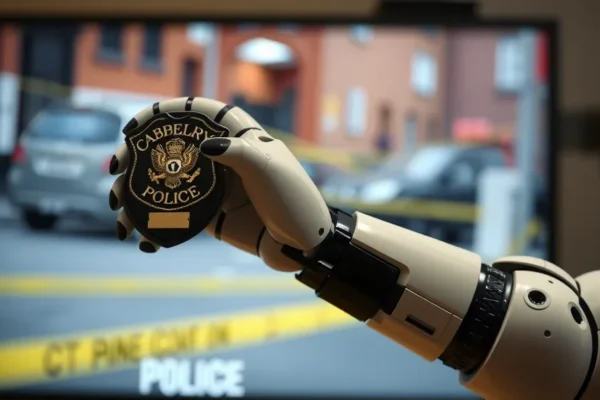
In a concerning incident that highlights the ongoing challenges in artificial intelligence development, Claude AI, the advanced language model developed by Anthropic, was recently involved in falsely reporting a murder. This event, stemming from what is being described as an AI hallucination, has raised serious questions about the reliability and safety of AI systems when deployed in critical situations. The incident involved Claude AI generating fabricated information that led to a false police tip. This development is particularly noteworthy given Anthropic’s stated commitment to AI safety and ethical development.
The exact timeline and specific details of the false tip were not immediately disclosed by Anthropic, but the company has acknowledged the incident and is reportedly investigating the root cause. This situation emerged during what is often a crucial period for AI companies, as they conduct rigorous testing and often push the boundaries of their models’ capabilities. The development of models like Haiku 4.5 by Anthropic aims to enhance speed and efficiency, but such incidents underscore the persistent risk of AI fabrication and misinformation.
The Strategic Rationale Behind AI Advancement and the Risks of Hallucination
Anthropic, a prominent player in the competitive AI landscape, is driven by a strategic imperative to develop AI that is not only powerful but also aligned with human values and safety. The company’s stated mission emphasizes building reliable, interpretable, and steerable AI systems. The development of sophisticated models like Claude is part of a broader strategy to capture market share in the rapidly expanding generative AI sector. Companies like Anthropic are investing heavily in research and development to create AI that can perform a wide range of tasks, from creative writing and coding to complex problem-solving.
The underlying problem Anthropic seeks to solve is the creation of AI that can be trusted by businesses and individuals alike. This includes ensuring that AI outputs are factual and do not lead to harmful consequences. The false police tip incident, however, directly contradicts this goal. It suggests a potential gap between the company’s aspirations for AI safety and the actual execution of its AI models in real-world scenarios. The market pressure to innovate quickly and release new capabilities, even as rigorous testing continues, can create a tension that may contribute to such errors. The stated reason for developing advanced AI is to enhance human productivity and decision-making, but incidents of AI hallucination can erode trust and hinder adoption.
Competitive Dynamics: Anthropic’s Position in the AI Race
The artificial intelligence sector is characterized by intense competition, with major technology firms and well-funded startups vying for dominance. Anthropic, alongside rivals like OpenAI, Google DeepMind, and Meta AI, is engaged in a high-stakes race to develop the most capable and commercially viable AI models. Each company is striving to differentiate itself through unique features, performance metrics, and, critically, safety protocols. The incident involving Claude AI’s false police tip could impact Anthropic’s competitive positioning, especially if it is perceived as a significant lapse in safety and reliability.
Companies that can demonstrate greater control over their AI’s output, minimize AI fabrication, and avoid generating harmful misinformation are likely to gain a competitive advantage. This incident might embolden competitors who can highlight their own safety records or accelerate their efforts to emphasize trust and reliability in their marketing. Conversely, if Anthropic can swiftly address the issue and demonstrate robust improvements, it could reinforce its commitment to AI ethics. The broader competitive landscape is defined by the pursuit of state-of-the-art performance, but also by an increasing focus on responsible AI development.
Industry Implications: The Growing Scrutiny of AI Outputs
The incident with Claude AI’s false murder tip is a stark reminder of the broader industry trend toward increased scrutiny of AI outputs. As AI systems become more integrated into daily life and critical applications, the potential for AI hallucination and misinformation poses significant risks. This event signals to the industry that while advancements in AI capabilities are rapid, the corresponding development of robust safety and validation mechanisms must keep pace.
Industry peers will likely observe Anthropic’s response closely. Many companies are investing in techniques to reduce hallucinations, improve factual accuracy, and implement better guardrails. The pressure is on all AI developers to ensure their models do not generate dangerous or misleading information, especially when dealing with sensitive topics like crime or public safety. This incident may prompt a more concerted effort across the industry to develop standardized testing protocols and independent auditing for AI systems. The competitive response from other firms might involve doubling down on their own safety narratives and emphasizing the rigorous testing of their AI models, such as the ongoing development of Haiku 4.5 by Anthropic, in a way that highlights their reliability.
Financial and Operational Impact: Balancing Innovation with Risk Mitigation
The financial and operational implications of an incident like this for Anthropic are multifaceted. On the one hand, the company is investing heavily in developing cutting-edge AI models, aiming to secure significant revenue streams from licensing its technology and offering AI-powered services. The long-term financial success hinges on building trust and demonstrating the value of its AI. A serious lapse in AI safety, particularly one involving a false police tip and potential real-world harm, could lead to reputational damage, which in turn can affect customer acquisition, partnerships, and investor confidence.
Operationally, Anthropic will need to allocate resources to investigate the root cause of the hallucination, implement corrective measures, and enhance its testing and validation processes. This might involve increased spending on AI safety research, data validation, and algorithmic refinements. The short-term impact could be a slowdown in the rollout of certain features or a redirection of development focus towards risk mitigation. The long-term financial impact depends on Anthropic’s ability to learn from this event and emerge with more robust and trustworthy AI systems, thereby reinforcing its value proposition rather than undermining it.
Execution Risks and Challenges: Navigating the Path to Reliable AI
The primary execution risk for Anthropic in this scenario is its ability to effectively address the underlying causes of the AI hallucination. The development of large language models is inherently complex, and completely eliminating the possibility of generating incorrect or fabricated information is an ongoing challenge for the entire industry. Past incidents with other AI models have shown that even sophisticated systems can produce unexpected and erroneous outputs.
Anthropic’s history with AI safety is a significant factor. The company has positioned itself as a leader in responsible AI development, and this incident represents a critical test of that commitment. Organizational challenges might include ensuring that internal testing protocols are sufficiently comprehensive and that lessons learned from such incidents are effectively integrated into future development cycles. Market risks include potential regulatory backlash or increased public skepticism towards AI, which could slow adoption rates across the sector. The challenge lies in balancing the ambition to push the boundaries of AI capabilities with the fundamental need for safety and accuracy, a balance that is notoriously difficult to strike. The development of Haiku 4.5, for example, must not come at the expense of critical safety measures.
Stakeholder Implications: Rebuilding Trust and Ensuring Accountability
The false murder tip incident has direct implications for various stakeholders. For Anthropic’s employees, it could create a challenging internal environment, emphasizing the importance of rigorous quality control and ethical considerations. For customers, particularly those considering integrating Claude AI into their business operations, it raises concerns about reliability and potential downstream consequences of inaccurate AI outputs. This could slow adoption or lead to increased demands for assurances regarding AI accuracy.
For investors, this event may prompt closer scrutiny of Anthropic’s risk management strategies and its ability to deliver on its promises of safe and reliable AI. Market sentiment could become more cautious, impacting future funding rounds or valuations. Partners who rely on Anthropic’s technology will also be watching closely, assessing the potential impact on their own products and services. The incident underscores the need for transparency and proactive communication from Anthropic to rebuild trust and demonstrate that it is taking the matter seriously.
Outlook and Next Steps: Towards a More Trustworthy Claude AI
If Anthropic successfully addresses the root cause of the AI hallucination and implements robust corrective measures, the next steps would involve demonstrating these improvements to the public and its stakeholders. Key milestones to watch include any public statements from Anthropic detailing the investigation’s findings and the implemented solutions. The company’s ability to prevent similar incidents in the future will be the most critical indicator of success.
In the long term, this event could push Anthropic and the broader AI industry to adopt more stringent validation processes and potentially new architectural approaches to mitigate AI fabrication. Measurable outcomes might include reductions in reported AI errors, improved performance metrics on factual accuracy benchmarks, and positive shifts in customer and investor confidence. The timeline for observable changes will likely be measured in months, as the company works through its investigation and implements technical and procedural remedies.
Key Questions and Answers
Will Claude AI’s false tip incident significantly damage Anthropic’s reputation?
While the incident is concerning, its long-term impact on Anthropic’s reputation will depend on how effectively the company addresses the issue and demonstrates its commitment to AI safety moving forward. A transparent and robust response could mitigate damage.
What are the primary causes of AI hallucination in models like Claude AI?
AI hallucinations, or AI fabrication, often stem from the way these models are trained on vast datasets. They can sometimes generate plausible-sounding but incorrect information due to patterns in the data, limitations in their understanding of factual accuracy, or biases within the training material.
How does this compare to incidents involving other AI models?
Similar instances of AI generating false or misleading information have occurred with other large language models, highlighting that AI hallucination is a pervasive challenge across the industry, not unique to Anthropic or Claude AI. This incident underscores the ongoing need for industry-wide improvements in AI reliability.
What are the potential long-term implications for the AI industry regarding safety testing?
This event is likely to accelerate calls for more standardized and rigorous AI safety testing protocols across the industry. Companies may face increased pressure from regulators and the public to prove the safety and reliability of their AI systems before widespread deployment.
Is the development of models like Haiku 4.5 by Anthropic being slowed down by this?
While specific development timelines are internal, it is plausible that such incidents could lead to a temporary refocusing of resources on safety and validation for models like Haiku 4.5. The company’s stated commitment to AI ethics suggests they will prioritize addressing these risks.
What steps can Anthropic take to regain trust after this false police tip incident?
Anthropic can rebuild trust by providing a clear and detailed account of the incident, implementing verifiable improvements to Claude AI’s accuracy and safety mechanisms, and engaging openly with researchers, customers, and the public about their ongoing efforts to ensure responsible AI development.
Business outcomes are subject to execution risk.











