

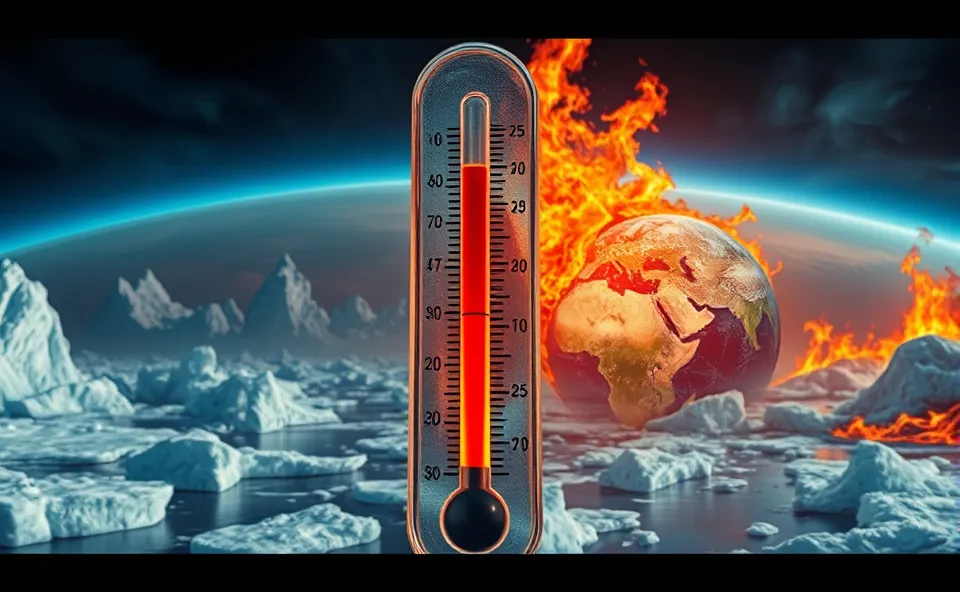
The Heat Is Getting Hard to Ignore
If you have stepped outside over the last few summers, you probably noticed something unsettling. It is not just that it is hot. It is that the heat feels different. It feels heavier, lasts longer, and reaches temperatures that seem impossible. We are seeing heatwaves that do not just break records, they shatter them. These events are no longer rare anomalies. They are becoming our new normal.
When we talk about a heatwave, we are not just talking about needing more ice in our drinks. We are talking about cities becoming heat traps, forests catching fire more easily, and power grids struggling to keep the lights on. This is the physical face of the climate crisis. It is a direct result of how the earth is trapping more heat in the atmosphere, leading to a cycle of extreme weather that affects every single person on the planet.
The scary part is that these spikes in temperature are not happening in isolation. They happen alongside floods and storms, creating a chaotic pattern of environmental disaster. For many of us, the heat is a warning sign. It is a loud, clear signal that the balance of our planet is off. While a few hot days might seem like a nuisance, the cumulative effect is a systemic failure of the natural cooling systems we have relied on for thousands of years.
Why Everyone Is Talking About the Temperature Now
You might wonder why the conversation around climate change has shifted from distant warnings to urgent daily discussions. The reason is simple. The crisis is no longer a prediction about the year 2050. It is happening in the current fiscal quarter. People are searching for answers because they can feel the impact on their wallets and their health.
For a long time, the discussion was driven by scientists and activists. Now, it is being driven by homeowners, business owners, and investors. When a heatwave kills crops, food prices go up. When extreme weather destroys a neighborhood, insurance companies raise premiums or stop offering coverage altogether. This shift from an environmental issue to a financial issue has brought a whole new group of people into the conversation.
There is also a growing sense of frustration. People are realizing that the tools to fix this existed years ago. The gap between what we know we need to do and what is actually being done has become a canyon. This realization is driving a surge in interest regarding political inaction. People are no longer asking if global warming is real. They are asking why the people in power are not acting fast enough to stop it.
How We Got Into This Mess
To understand why we are in this position, we have to look back at the last few decades. The science of global warming was not a secret. For years, reports have clearly outlined the risks of burning fossil fuels and destroying carbon absorbing forests. We had the maps, the data, and the warnings. However, the response was characterized by a massive policy failure.
For a long time, the global approach to the environment was based on a dangerous trade off. Leaders believed that protecting the economy meant ignoring the planet. They thought that switching to clean energy would be too expensive or too slow. This logic was flawed because it ignored the long term costs of doing nothing. This period of political inaction allowed carbon emissions to climb while the window for easy solutions slowly closed.
Climate policy was often treated as a side project rather than a core economic strategy. Treaties were signed, but they lacked teeth. Goals were set, but there were no real penalties for missing them. This lack of urgency created a false sense of security. We acted as if we had forever to fix the problem, while the earth was already reacting to the damage. The heatwaves we see today are essentially the bill coming due for decades of avoidance.
The Real Cost of a Warming World
When we look at this through a financial lens, the cost of inaction is staggering. The climate crisis is not just an ecological problem. It is a massive economic drain. The financial impact shows up in several critical areas.
- Agricultural Collapse: Heatwaves dry out soil and kill livestock. When a major breadbasket region suffers a heatwave, the global food supply chain ripples. This leads to inflation and food insecurity.
- Labor Productivity: It is hard to work in 110 degree heat. Construction, farming, and manufacturing see a massive drop in productivity when temperatures soar. This slows down economic growth and puts workers at risk.
- Infrastructure Decay: Our roads, bridges, and rails were not built for this kind of heat. Asphalt melts, and steel rails can warp. Replacing and repairing this infrastructure costs billions of dollars.
- Energy Crises: Everyone turns on the air conditioning at the same time during a heatwave. This puts an immense strain on the grid, leading to blackouts. These outages shut down businesses and cost the economy millions in lost revenue per hour.
Beyond the immediate costs, there is the issue of risk. Investors are now looking at climate risk as a primary concern. Companies that rely on stable weather patterns are now seen as volatile. The market is starting to realize that a business model that ignores the climate crisis is a business model destined for failure. The financial world is finally waking up to the fact that you cannot have a healthy economy on a dying planet.
Where Do We Go From Here
The situation is serious, but it is not hopeless. The path forward requires a complete shift in how we view the relationship between money and nature. We need to move from a mindset of damage control to one of proactive design. This means building a sustainable future where economic growth does not come at the expense of the air we breathe or the temperature of the planet.
The most urgent need is a drastic upgrade in climate policy. We need laws that make it more expensive to pollute and more profitable to be green. This is not just about planting trees. It is about redesigning our entire energy grid, transforming how we grow food, and building cities that can breathe. We need to invest in technology that captures carbon and energy sources that do not poison the atmosphere.
In the coming years, we will likely see a surge in green finance. More money will flow into sustainable technology because it is the only safe bet left. The businesses that survive and thrive will be those that adapt the fastest. We are moving toward a world where sustainability is not a marketing slogan, but a requirement for survival. The cost of action is high, but as the recent heatwaves have shown us, the cost of doing nothing is far higher.
Common Questions About the Climate Crisis
How does climate change cause a more intense heatwave?
Climate change increases the average temperature of the earth. This raises the baseline for all weather. When a heatwave occurs, it starts from a higher temperature, making the peaks much more extreme. It also changes jet streams, which can trap hot air over one area for weeks.
What exactly is political inaction in this context?
Political inaction refers to the failure of governments to implement strong, binding laws to reduce carbon emissions. It includes ignoring scientific warnings, subsidizing fossil fuels, and failing to meet international climate goals despite having the resources to do so.
Will the climate crisis lead to a permanent financial crash?
It does not have to, but it creates huge risks. If we do not adapt, the costs of environmental disaster and infrastructure failure could destabilize markets. However, transitioning to a sustainable future creates new industries and jobs that can drive a new era of growth.
Can we still prevent an environmental disaster?
We cannot undo the warming that has already happened, but we can prevent the worst case scenarios. By aggressively implementing climate policy and reducing emissions now, we can stop the planet from hitting tipping points that would lead to uncontrollable disasters.
What does a sustainable future actually look like?
A sustainable future is one where human activity stays within the planetary boundaries. This includes using 100 percent clean energy, practicing regenerative agriculture, and designing circular economies where waste is eliminated and nature is restored.











