

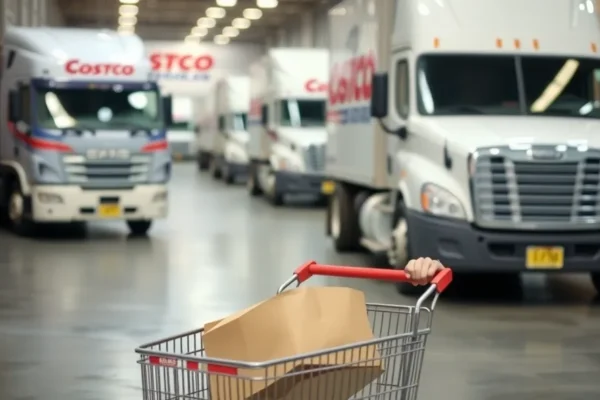
The Concept of the Retail Arms Race
In the world of business, a “retail arms race” happens when companies compete by adding the same expensive features to their services just to keep up with one another. Imagine a neighborhood where every house has a white picket fence. If one neighbor installs a fancy security system, the other neighbors feel they must do the same to stay competitive. Soon, everyone is spending thousands of dollars on security systems, but no one actually has a better house than they did before. They are simply spending more money to maintain the same position.
Currently, the biggest arms race in retail is “same-day delivery.” Companies like Amazon and Walmart spend billions of dollars on warehouses, drivers, and software to get a package to your door in a matter of hours. While this is convenient for the shopper, it is incredibly expensive for the business. To pay for these costs, companies often have to raise prices or accept lower profits.
Understanding this concept is important because it explains why some companies choose to do the opposite of what seems “normal.” When you see a giant company like Costco avoiding the push for rapid delivery, they are not being outdated. Instead, they are using a specific retail strategy to avoid the high costs of the arms race, allowing them to keep their prices lower for the consumer.
How the Costco Strategy Works
To understand why Costco avoids the delivery race, we first have to understand their membership model. Most stores make money by selling a product for more than they paid for it. This difference is called a “profit margin.” Costco, however, keeps its profit margins very thin. Instead, they make a significant portion of their profit from the annual membership fees people pay just to shop there.
Because their goal is to provide the absolute lowest price to members, they cannot afford the massive costs associated with Costco delivery for every single item. Instead, they focus on the in-store experience. They use a method called “treasure hunt shopping.”
Imagine if you went to a store and knew exactly where everything was, and the inventory never changed. It would be efficient, but boring. Now, imagine walking into a Costco warehouse. You go in for milk and eggs, but as you walk through the aisles, you spot a high-end espresso machine at a great price, a giant pack of luxury towels, or a seasonal outdoor toy you didn’t know you needed. These items are often limited and change frequently.
This creates a psychological “treasure hunt.” The shopper thinks, “I need to go to Costco today because if I don’t buy that item now, it might be gone tomorrow.” This encourages people to physically visit the warehouse. Once they are inside, they are likely to buy more than they originally planned. This is a powerful competitive advantage because you cannot “treasure hunt” on a smartphone screen; you have to be there in person.
Why This Strategy Matters to Your Money
The way a company chooses to operate has a direct impact on your personal finances. When a retailer invests heavily in same-day delivery trends, those costs are rarely absorbed by the company. They are usually passed down to the consumer through higher product prices, delivery fees, or monthly subscription costs.
By sitting out the delivery race, Costco reduces its “overhead,” which is the ongoing cost of running a business. Because they don’t have to manage a massive fleet of last-mile delivery drivers for every small order, they can negotiate lower prices from suppliers and pass those savings directly to you. For the consumer, this means the “value per unit” is generally higher.
From a broader economic perspective, this strategy affects the labor market and inflation. The push for instant delivery has created a massive demand for gig-economy drivers. While this provides flexible work, it also creates a high-pressure environment where the cost of shipping an item can sometimes be higher than the profit made on the item itself. When companies focus on the warehouse model instead, they prioritize efficiency over speed, which can help keep the prices of bulk goods stable even when shipping costs in the wider economy are rising.
The Evolution of Warehouse Clubs
The concept of the warehouse club evolved in the late 20th century to challenge traditional supermarkets. The goal was simple: strip away the fancy displays, remove the expensive advertising, and sell items in bulk to lower the cost for the end user. This shifted the responsibility of “last mile” transport from the store to the customer. In this model, the customer provides the labor of driving to the store and hauling the goods home in exchange for a lower price.
For decades, this was the only way to shop in bulk. However, the rise of e-commerce in the 2010s changed consumer preferences. People became accustomed to the “Amazon effect,” where the expectation shifted from “I can get this for a great price if I drive” to “I want this now, and I want it delivered for free.”
According to industry data, many retailers tried to pivot to rapid delivery but found the profit margins were unsustainable. This triggered a renewed interest in the Costco model. While other stores were losing money on shipping, Costco’s membership renewal rates remained incredibly high, often exceeding 90 percent in North American markets. This proved that a large segment of consumers still values the combination of low prices and the physical experience over the convenience of a delivery app.
Practical Implications for Your Shopping Habits
When you are deciding where to spend your money, it is helpful to recognize the tradeoff between convenience and value. Many people believe that a company without a robust delivery system is “falling behind.” In reality, this is often a calculated financial decision to protect the customer’s wallet.
A common misconception is that online shopping is always cheaper because you can compare prices instantly. However, when you factor in the “convenience tax”—such as delivery fees, tips for drivers, or slightly higher per-item costs to cover shipping—the in-store warehouse model is often more cost-effective for those who can make the trip.
If you are looking to optimize your spending, consider these two insights:
- Analyze your “cost of convenience”: Track how much you spend on delivery fees and small-order surcharges over a month. You may find that the “time saved” is costing you a significant percentage of your monthly budget.
- Use the “treasure hunt” mindfully: Recognize that the in-store experience is designed to make you buy things you didn’t plan for. To get the most financial value, stick to a list for your essentials but allow a small, set budget for the “surprises” you find.
Connecting the Dots with Other Financial Ideas
The Costco strategy connects to several other important financial concepts. Understanding economies of scale helps here; this is the idea that as a company grows and buys more of a product, the cost per item drops. Costco uses this to keep prices low, and by avoiding the delivery race, they ensure those savings aren’t eaten up by shipping costs.
This also relates to the concept of customer acquisition cost. Most retailers spend a lot of money on ads to get new customers. Costco, through its membership model, creates “customer lock-in.” Once you pay for a membership, you feel a financial incentive to shop there more often to “get your money’s worth.” This makes their business model much more stable than a store that has to fight for every single transaction via a delivery app.
Common Questions About Costco’s Strategy
Why doesn’t Costco offer free same-day delivery like Amazon?
Same-day delivery is extremely expensive to operate. By avoiding this, Costco avoids the high costs of logistics and labor, which allows them to keep the prices of their products lower for members.
Does the “treasure hunt” shopping actually save me money?
The “treasure hunt” is a marketing tool to get you into the store. While the items themselves are often a great value, the strategy is designed to encourage impulse buying, which can lead to spending more than you intended.
How does the membership model affect the price of goods?
Because Costco earns a steady income from membership fees, they do not need to make a large profit on every item they sell. This allows them to sell goods very close to the price they paid for them.
Will the rise of e-commerce eventually force Costco to change?
While Costco has added some e-commerce options, their core retail strategy relies on the physical warehouse. As long as people value bulk savings and the in-store experience, the warehouse model remains viable.
Does avoiding delivery help fight inflation?
When companies reduce their overhead costs, they are less likely to raise prices to cover operational losses. This helps keep the cost of bulk staples lower for the consumer during inflationary periods.
Disclaimer: This article is for educational purposes only and provides a general overview of retail and economic strategies. It is not personal financial advice. Financial situations vary based on individual income, location, and spending habits; please consult a professional financial advisor for personalized guidance regarding your budget or investments.











