

“`html
Dataland Where Our Data Paints the Walls
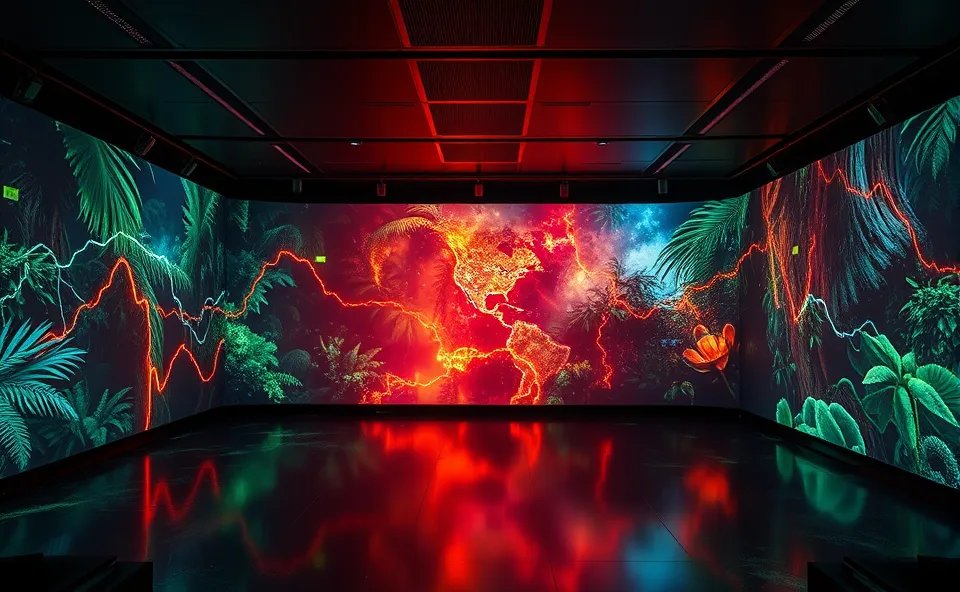
Imagine stepping into a museum where the art isn’t just on display, but is literally being created around you, inspired by… you! That’s the magic of Dataland, a truly unique AI art experience that’s blurring the lines between technology and nature. Think of it as the world’s first AI art museum, but with a twist that gets deeply personal. Dataland takes the data from biometric wearables, like the smartwatches many of us wear daily, and combines it with information sourced from Amazon’s vast digital world. This powerful blend is then fed into artificial intelligence systems to generate incredible, ever-changing digital art. It’s not just about looking at pretty pictures; it’s about experiencing a new form of art that’s deeply connected to our own lives and the digital landscape we inhabit.
Why All the Buzz About Dataland Right Now?
People are incredibly curious about Dataland because it taps into several major tech trends all at once. Firstly, the explosion of AI art has captured everyone’s imagination. We’re seeing generative art everywhere, from social media to design studios, and Dataland offers a fascinating new dimension to this phenomenon. Secondly, the rise of biometric wearables is undeniable. More and more people are tracking their health, fitness, and even sleep patterns with these devices, and Dataland shows us a novel way this personal data can be used beyond just health apps. Finally, the concept of an experiential gallery is gaining traction. People want more than passive viewing; they want to be part of the experience. Dataland delivers this by making the viewer an integral part of the art creation process. It’s this convergence of AI, personal data, and immersive experiences that makes Dataland a hot topic right now.
A Glimpse into Dataland’s Genesis
To really appreciate Dataland, it helps to understand where we’ve come from. For decades, art has been static. We visit galleries, admire paintings or sculptures, and that’s it. Then came digital art, which opened up new possibilities, but it was still largely created by artists using digital tools. The real game changer was the development of sophisticated artificial intelligence algorithms. These AIs, trained on massive datasets of existing art, could learn styles, techniques, and even emotional nuances to create entirely new pieces. Think of AI art as a digital apprentice that can learn from all the masters at once. Dataland takes this a step further. Instead of just training AIs on existing art, it introduces a real-time, human element through biometric data and broader online information. This isn’t just AI creating art; it’s AI creating art based on the pulse of humanity and the digital ether. The Amazon data, for example, might include trends, popular topics, or even environmental data, providing a vast context for the AI to draw upon. When combined with your heart rate, sleep patterns, or activity levels captured by your wearable, the AI has a unique palette of real-world and personal influences to paint with.
The Profound Meaning Behind This Tech Fusion
The impact of Dataland is multifaceted and quite profound. For individuals, it offers a deeply personal connection to art. Your own biometric data, something intrinsically you, becomes a brushstroke in a digital masterpiece. It fosters a new kind of self-awareness, seeing how your own physiological state can influence creative output. It transforms passive art consumption into an active, participatory event. For the world of technology and art, Dataland represents a significant leap. It demonstrates the potential for AI to move beyond mere replication and into genuine creation, influenced by dynamic, real-world inputs. It pushes the boundaries of what we consider an immersive museum, proving that experiences can be fluid, responsive, and personalized. Businesses looking to engage audiences might see this as a blueprint for future marketing and customer engagement strategies – creating interactive, data-driven experiences that resonate on a deeper level. It also highlights a growing trend of nature technology, where we find ways to integrate our understanding and experience of the natural world, including our own biological selves, with advanced digital systems.
What’s Next for AI Art and Experiential Galleries?
Looking ahead, the Dataland concept hints at a future where our digital and physical lives become even more interwoven with creative expression. We might see more art installations that dynamically change based on the collective mood or activity of a city’s population, captured through anonymized data. Imagine public spaces where the ambient light or soundscapes are generated by the collective emotional output of its inhabitants. For AI art, this means moving towards more nuanced and context-aware creations. Instead of just mimicking styles, AIs will be able to understand and respond to complex environmental and human factors, leading to art that is not only beautiful but also meaningful and relevant to its time and place. We could also see AI exhibits becoming more educational, helping people understand the complex interplay between data, technology, and their own well-being. The potential for generative art to become a more integral part of our daily lives, reflecting our experiences in real-time, is immense. This could lead to personalized digital art for our homes, or even interactive storytelling experiences powered by AI and our personal data.
Curious About Dataland? Let’s Talk.
What exactly is Dataland’s AI art like?
Dataland’s AI art is generative, meaning the artificial intelligence creates it on the fly. It’s inspired by your biometric data and information pulled from Amazon’s digital sphere, so the art can be abstract, fluid, and ever-changing, reflecting the unique inputs it receives. It’s a dynamic display, not a fixed painting.
How does my personal biometric data influence the AI art in Dataland?
When you wear a biometric wearable, devices like smartwatches can track things like your heart rate, movement, and even sleep quality. This real-time data is fed into the AI, acting as a creative prompt. For example, a higher heart rate might lead to more vibrant colors or faster-moving patterns in the generative art.
Besides biometrics, what kind of Amazon data does Dataland use?
The Amazon data can be quite broad. It might include trending topics, popular search queries, or even environmental data aggregated from various sources. This provides a wider context for the AI, allowing it to blend your personal state with larger societal or environmental themes.
Is Dataland a permanent installation or a temporary AI exhibit?
Dataland is described as an experiential gallery, suggesting it offers a unique, potentially ongoing, exhibition. While specific details about its permanence might vary, the concept focuses on providing a continuous, evolving AI art experience for visitors.
What is the main goal of creating an AI art museum like Dataland?
The primary goal of an AI art museum like Dataland is to explore the intersection of technology, data, and human experience. It aims to demonstrate how artificial intelligence can create art that is deeply personal and contextually relevant, bridging the gap between the digital and natural worlds in a novel, immersive way.
“`











