

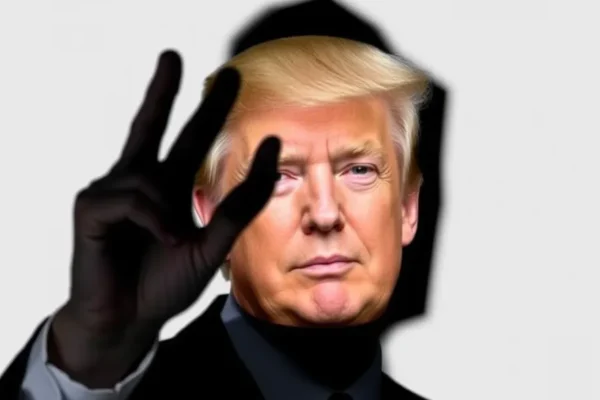
The Rise of Malicious Synthetic Media
A disturbing new trend in cybercrime is unfolding across the European continent. Recent reports indicate that sexually explicit deepfake websites are actively targeting more than 100 politicians, the vast majority of whom are women. This coordinated effort spans 22 different European countries, marking a significant escalation in how synthetic media is used as a weapon.
Deepfakes are highly realistic digital manipulations created using artificial intelligence. While the technology has many creative applications in film and art, it is increasingly being weaponized. In this specific instance, the technology is not being used for entertainment but for targeted harassment and disinformation campaigns. By placing the faces of public officials onto explicit content, bad actors are attempting to damage reputations, silence female voices in leadership, and undermine the democratic process.
This development is significant because it demonstrates the shift from experimental AI misuse to organized, large-scale digital warfare. This is no longer a niche problem for tech enthusiasts. It is a direct threat to election integrity and the safety of public figures. As AI tools become more accessible, the barrier to entry for creating convincing misinformation continues to drop, allowing small groups to exert massive influence over public perception.
The Engine Behind the Fake: How Generative AI Works
To understand how these attacks happen, we must understand the core mechanism of generative AI. Most modern deepfakes rely on a process called a Generative Adversarial Network, or GAN. While that sounds complex, the concept is quite simple when you use an analogy.
Think of a GAN like a competition between two different AI programs: an art forger and a museum curator. The forger’s job is to create a painting that looks exactly like a masterpiece. The curator’s job is to look at the painting and determine if it is a real masterpiece or a fake. In the beginning, the forger is not very good, and the curator catches the fake immediately. However, every time the curator catches a fake, the forger learns from the mistake and tries harder. Simultaneously, the curator becomes better at spotting subtle flaws. They go back and forth millions of times until the forger becomes so skilled that the curator can no longer tell the difference between the fake and the original. This is how deepfakes are created. One part of the AI creates the image, and the other part critiques it until it is indistinguishable from reality.
In the context of these attacks on politicians, the AI is trained on thousands of images and videos of the target. The software learns the specific nuances of their facial expressions, the way their eyes move, and how their skin reacts to light. Once the AI has mastered these patterns, it can overlay that digital mask onto another person’s body in a video. The result is a piece of synthetic media that looks and moves with startling accuracy.
The Current Landscape of Deepfake Attacks in Europe
This is not a theoretical threat. The targeting of politicians in Europe is a current and active reality. These attacks are not localized to one region or one political party. Instead, they appear to be part of a broader wave of gender-based cybercrime designed to exploit the vulnerabilities of digital platforms.
The maturity level of this technology has moved from early adoption in research labs to mainstream availability on the open web. Today, anyone with a decent computer and an internet connection can access “deepfake-as-a-service” websites. These platforms allow users to upload a photo and generate a video for a small fee, effectively democratizing the ability to create highly damaging content.
In Europe, the impact is felt most acutely by women in the public eye. The use of revenge porn techniques against political leaders is a calculated tactic. It is designed to trigger shame and distraction, moving the public conversation away from policy and toward personal scandal. Because these websites often operate in legal gray areas or from jurisdictions with weak digital laws, they can remain online long enough to cause irreparable reputational harm.
The Battle Between Creation and Detection
As the ability to generate deepfakes improves, a secondary industry is emerging to fight back. The technological landscape is currently a high-stakes arms race between those creating synthetic media and those developing tools to detect it.
On one side, we have the creators who use rapidly evolving diffusion models and GANs. These tools are becoming faster, more efficient, and harder to trace. On the other side, cybersecurity firms and tech giants like Microsoft and Google are investing heavily in detection algorithms. These detection tools look for “digital fingerprints” that the human eye cannot see, such as unnatural blinking patterns, inconsistencies in blood flow visible in skin tones, or microscopic errors in how light reflects off the eyes.
Currently, the creators have a slight advantage. The reason is speed. A deepfake can be generated and go viral in a matter of hours, while the process of verifying it, labeling it as fake, and removing it from social media platforms can take days or even weeks. While detection technology is improving, it is still playing catch-up to the sheer volume of content being produced by generative AI.
The Societal Consequences of Targeted Disinformation
The implications of this technology extend far beyond the individuals being targeted. The weaponization of deepfakes against politicians creates several layers of social and political instability.
First, there is the issue of gender bias. The fact that these attacks predominantly target women is not a coincidence. It is a form of digital violence used to enforce traditional power structures and discourage women from entering the political arena. When female leaders are met with sexualized disinformation, it creates a higher barrier to entry for women than for their male counterparts.
Second, this trend threatens election integrity. If voters cannot trust what they see and hear, the very foundation of informed decision-making begins to crumble. This leads to a phenomenon known as the “liar’s dividend.” This occurs when the mere existence of deepfakes allows a politician to claim that a real, incriminating video of them is actually a fake. In a world where anything can be faked, nothing feels entirely true.
Third, the economic and social costs are significant. Governments must divert massive resources toward cybersecurity and digital literacy, while the psychological toll on victims and the erosion of public trust can lead to increased social polarization and political apathy.
Technical and Regulatory Bottlenecks
Despite the urgency, several major challenges prevent a simple solution to the deepfake problem. We are currently facing a massive gap between technological capability and legal enforcement.
Technically, the “perfect” deepfake is becoming more achievable every day. As computing power increases, the amount of data required to create a flawless imitation decreases. This means that even mid-range consumer hardware can eventually produce high-quality synthetic media. Additionally, the decentralized nature of the internet makes it incredibly difficult to “delete” a video once it has been uploaded to multiple platforms and mirrored across the web.
Regulatorily, the law is struggling to keep pace. While the European Union has made significant strides with the EU AI Act, which aims to establish rules for the ethical use of AI, implementing these rules across 27 member states is a monumental task. Defining the legal difference between “satire” and “malicious disinformation” is also a complex hurdle. Most current laws are designed for traditional media and are not equipped to handle the speed and scale of AI-generated content. This creates a vacuum where cybercriminals can operate with relative impunity.
The Future of Truth in a Synthetic World
The trajectory of this technology suggests that we are entering an era of “persistent synthetic reality.” We should expect to see deepfakes move beyond static videos into multi-modal formats, where AI can simultaneously mimic a person’s voice, facial expressions, and even their unique mannerisms in real-time during live video calls.
In the short term, we will likely see a massive increase in the development of “provenance technology.” This involves creating digital watermarks or blockchain-based ledgers that track the origin of a piece of media from the moment it is captured by a camera. This would allow users to verify that a video is an authentic recording rather than a synthetic creation.
In the long term, the focus will shift from detection to resilience. This means improving digital literacy so that the public is more skeptical of unverified content. However, the core challenge will remain: as AI becomes more human-like, the distinction between the real and the synthetic will become increasingly blurred. The battle will not just be fought with better algorithms, but with better social frameworks and more robust legal protections.
Frequently Asked Questions
Are deepfakes becoming more realistic?
Yes, the realism of deepfakes is increasing rapidly due to advancements in generative AI and increased computing power. As these models receive more training data, they become much better at mimicking human nuances like eye movement and skin texture.
How do politicians protect themselves from deepfakes?
Politicians often rely on digital forensics teams to verify content and rapid-response communications to debunk misinformation. However, the best defense is a combination of high-level cybersecurity and proactive digital literacy campaigns.
Can all deepfakes be detected?
No, there is no guarantee that every deepfake can be detected. While detection tools are improving, they are in a constant arms race with the AI models used to create the fakes, and a perfect fake may eventually bypass current detection methods.
What is the role of the EU AI Act in this issue?
The EU AI Act is designed to create a regulatory framework that requires transparency for AI-generated content. This includes labeling synthetic media so that users are aware they are interacting with something that is not real.
Is this technology only used for political disinformation?
No, deepfakes have many legitimate uses in industries like filmmaking, education, and gaming. The current issue is the malicious application of the technology for cybercrime and targeted harassment.
Note: This article is based on current technological trends and reported incidents regarding synthetic media. The field of generative AI is evolving rapidly, and the effectiveness of detection and regulation is subject to ongoing research and legislative developments.











