

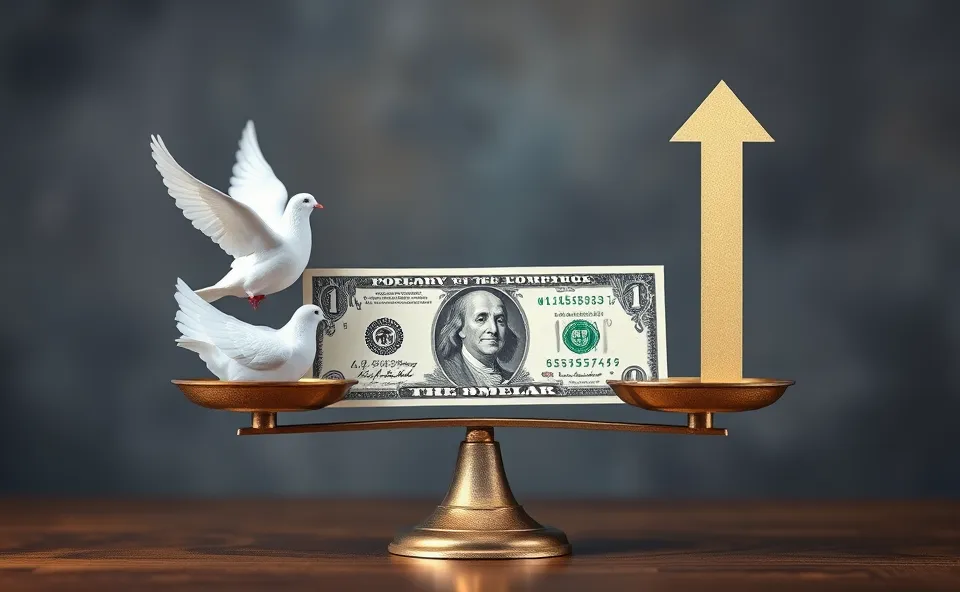
When Geopolitical Calm Meets Economic Signals: A Dollar Story
You know how sometimes the world feels a bit like a delicate balancing act? Well, right now, the US dollar is playing a starring role in that act, and two major forces are nudging it around. On one side, we have whispers of peace or at least reduced tensions involving Iran. On the other, all eyes are on what the Federal Reserve might do with interest rates. These two seemingly different things are actually quite connected when it comes to shaping investor sentiment and, consequently, how the dollar performs in the currency market.
Why Are We Talking About This Now?
It’s simple really. When things get a bit uncertain in the world, or when the economic outlook shifts, people naturally pay more attention to the big players. The dollar, being the world’s primary reserve currency, is always under a microscope. Now, with potential shifts in geopolitical risk and the ongoing discussion about the Federal Reserve’s path for interest rates, investor sentiment is like a weather vane, spinning to catch every new breeze. This heightened attention means more people are looking for answers about what’s driving the dollar, hence the buzz around Iran peace prospects and the Fed rate outlook.
A Little Background: The Dollar’s Usual Dance
The US dollar has a long history of being a safe haven. When the global economy feels shaky or when there’s a lot of market uncertainty, investors often flock to the dollar because they see it as a stable bet. Think of it like this: if you’re worried about your investments at home, you might move your money to a place you trust more. The dollar often benefits from this kind of behavior.
Now, let’s talk interest rates. The Federal Reserve, or the Fed as it’s commonly called, has a huge influence on the dollar. When the Fed raises interest rates, it generally makes holding dollar denominated assets more attractive. Higher interest rates mean better returns on things like US Treasury bonds. This increased demand for dollar assets can push the value of the US dollar up against other currencies. Conversely, if the Fed signals it might lower interest rates, it can make the dollar less appealing to some investors, potentially causing its value to dip.
Geopolitical events, like potential peace developments or escalations in sensitive regions, also play a significant role. A sudden flare up of conflict can increase global risk aversion, driving investors towards perceived safe havens like the dollar. Conversely, news that eases tensions can lead investors to take on more risk, potentially moving money away from the dollar into other, higher yielding assets or regions perceived to be stabilizing.
The Ripple Effect: What This Means for All of Us
So, how does this whole dollar, Iran peace, Fed rate outlook story actually affect you, your business, or the technology you use? It’s all about the currency market and its wider implications.
For businesses, especially those involved in international trade, the strength or weakness of the dollar is a big deal.
- Imports and Exports: When the dollar is strong, US goods become more expensive for buyers in other countries, which can hurt American exporters. On the flip side, imports become cheaper for American consumers and businesses, which can be good for consumers but might put pressure on domestic industries. A weaker dollar has the opposite effect.
- Global Supply Chains: Many businesses operate with complex global supply chains. Fluctuations in the dollar’s value can impact the cost of raw materials, components, and finished goods that are traded across borders. This can affect pricing and profitability for companies worldwide.
- Foreign Investment: A strong dollar can make it more expensive for foreign companies to invest in the US. Conversely, a weaker dollar can make US assets, like stocks or real estate, more attractive to overseas investors.
For the global economy, the dollar’s performance acts as a barometer for market uncertainty and investor sentiment. When the dollar is strong due to perceived instability, it can signal a global slowdown or increased risk aversion. Conversely, a more stable or slightly weaker dollar might indicate growing confidence in the global economic outlook.
Even technology can be indirectly affected. Companies that rely on imported components or have significant overseas sales will see their financial performance influenced by currency exchange rates. Think about the cost of electronics, cars, or even some software services all of which can be impacted by how the dollar stacks up against other currencies.
The connection between the Fed rate outlook and geopolitical events like Iran peace prospects is fascinating. If tensions ease in a region like Iran, it can reduce a certain type of geopolitical risk. This reduction in risk can lead investors to feel more comfortable taking on different kinds of investments, perhaps those with higher potential returns but also higher risk. This shift in risk appetite can then influence their decisions regarding dollar denominated assets and how they view the potential impact of Fed rate changes.
What’s Next on the Horizon?
Looking ahead, it’s likely that investor sentiment will continue to be a tug of war between these two forces.
On the geopolitical front: Any concrete steps towards de-escalation or sustained peace in regions like the Middle East will likely be met with a cautious optimism. This could lead some investors to diversify away from the dollar as a primary safe haven, seeking out opportunities in other markets that are perceived as stabilizing. However, the impact will depend on the perceived permanence of any such peace.
On the Fed front: The Federal Reserve’s communication and actions regarding interest rates will remain a dominant theme.
- If inflation continues to cool and the Fed signals a pause or even a potential cut in interest rates, this could reduce the attractiveness of the dollar for yield seeking investors.
- If inflation proves stickier and the Fed needs to maintain higher interest rates for longer, this could continue to support the dollar, assuming other global economic conditions don’t worsen significantly.
The interplay is key. A truly impactful shift might occur if we see sustained geopolitical stability combined with a clear dovish stance from the Fed, or prolonged geopolitical tension alongside hawkish Fed policy. For now, the dollar’s path will likely be shaped by how these two narratives evolve, creating a dynamic environment for the currency market.
Your Questions Answered
How do Iran peace prospects directly influence the dollar’s value?
When there’s a greater prospect of peace or reduced tensions involving Iran, it tends to lower the perception of geopolitical risk globally. Investors often see this as a positive development for the global economy. This can lead them to move money away from the US dollar, which they might have been holding as a safe haven during times of uncertainty. As demand for the dollar potentially decreases, its value in the currency market can weaken against other currencies.
What is the Fed rate outlook and why is it important for the dollar?
The Fed rate outlook refers to expectations about the future direction of interest rates set by the US Federal Reserve. If the Fed is expected to raise interest rates, it generally makes dollar denominated assets, like US Treasury bonds, more attractive to investors because they offer higher returns. This increased demand for dollars can strengthen the US dollar. Conversely, if the Fed is expected to lower interest rates, dollar assets become less appealing, which can weaken the dollar.
How does investor sentiment bridge the gap between geopolitical events and the Fed rate outlook for the dollar?
Investor sentiment acts as the crucial link. When geopolitical risks decrease, like with Iran peace prospects, investors might feel more confident to seek higher returns elsewhere, potentially reducing their reliance on the dollar as a safe bet. This sentiment, combined with how investors interpret the Fed’s signals on interest rates, shapes their overall risk appetite. If the Fed’s rate outlook is also considered favorable, it can further sway investor sentiment towards or away from the dollar.
Can the US dollar weaken even if the Fed signals higher interest rates due to geopolitical concerns?
It’s possible, though less common. While higher interest rates typically support the dollar, a severe and sudden escalation of geopolitical risk elsewhere in the world could still drive investors to the dollar for safety, overriding the yield differential for a period. However, if the geopolitical calm is directly related to Iran and signals broader global stability, it would likely encourage a move away from the dollar, potentially even if the Fed were leaning towards higher rates, but the impact of the Fed’s actions on the dollar would still be significant.
What are the broader implications of a fluctuating dollar, influenced by Iran peace and Fed rate outlook, on the global economy?
A fluctuating dollar has wide-reaching effects. A stronger dollar can make imports cheaper for the US but exports more expensive, impacting trade balances. It can also make it harder for countries with dollar denominated debt to repay their loans. Conversely, a weaker dollar can boost US exports but increase import costs. These shifts influence global trade, investment flows, inflation rates, and economic growth prospects across the globe, making the dollar’s performance a key indicator for the health of the global economy.











