

Understanding the Reality of Autonomous Technology
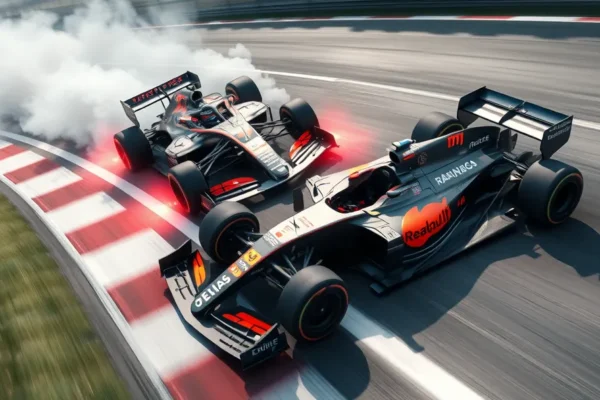
If you have been following the latest news in the tech world, you might have seen the shocking footage of two driverless cars colliding at 155 mph during a high-speed session on a Formula 1 track. It was a dramatic moment that looked more like a movie stunt gone wrong than a controlled test. But for those of us looking at the future of transportation, this self-driving car crash is a massive wake-up call.
At its simplest, autonomous vehicles are designed to replace the human driver with a complex web of cameras, lasers, and computer brains. The goal is to create a world where driving is no longer a chore or a danger, but a seamless service. This technology aims to solve the problem of human error, which is responsible for the vast majority of road accidents. Whether it is a tired commuter or a distracted teenager, humans are unpredictable. AI, in theory, is not.
We are currently in a transition period. This technology is being designed for everyone from busy parents wanting more time in the morning to elderly citizens who want to maintain their independence without needing a license. You should care about this right now because the decisions made by engineers during these high-speed testing phases will determine how safe your future car will be when you are driving it to the grocery store or picking up your kids from school.
How This Tech is Meant to Work in Your Daily Life
When we talk about driverless cars, we aren’t just talking about racing on a track. We are talking about how you move through the world. The promise of autonomous vehicles is that they will integrate into your routine to make life smoother and less stressful.
Imagine you are a busy professional who spends an hour in traffic every morning. Instead of white-knuckling the steering wheel, you could sit back, check your emails, or even take a quick nap while the car navigates the highway. The vehicle handles the stop-and-go movement, the lane changes, and the constant monitoring of the cars around you.
Think about a large family managing a hectic schedule. A fleet of autonomous vehicles could act like a private shuttle service. You could tap an app, and a car arrives to take the kids to soccer practice or run errands, reducing the number of vehicles sitting in your driveway and the stress of being the family chauffeur.
Even for those with mobility issues, this technology offers a life-changing level of freedom. If you can no longer drive due to age or health, an autonomous vehicle provides a way to visit friends, go to doctor appointments, and stay connected to your community without relying on expensive rideshare services or public transit.
Who Should Trust This Tech and Who Should Wait
As exciting as these advancements are, the recent incident on the Formula 1 track shows that we are not quite at the finish line. Deciding whether to embrace or avoid this tech depends on your personal tolerance for risk.
Best for: Tech enthusiasts and early adopters who enjoy testing the boundaries of what is possible. These are people who want to be at the forefront of the next big revolution and understand that “beta” versions of technology often come with growing pains.
Good for: The broader public once the technology moves into the “low-speed, predictable environment” phase. This includes city driving, grocery runs, and highway commuting in well-mapped areas.
Skip if: You require 100% reliability for every single trip. If you are someone who gets anxious when you aren’t in total control of a machine, or if you live in an area with unpredictable weather and complex, unmapped roads, you should probably stick to manual driving for now. The current limitations of AI mean it still struggles with the “unexpected,” and the recent crash is a perfect example of that.
How Autonomous Vehicles Stack Up Against Human Drivers
The main competitor to any autonomous vehicle is, of course, a human being behind the wheel. While it might seem like a choice between “perfect computer” and “flawed human,” the reality is more nuanced.
Human drivers are much better at handling “edge cases.” An edge case is something weird or unexpected, like a construction worker using hand signals that aren’t in a manual, or a plastic bag blowing across the road that looks like a small animal. Humans use intuition and context to make these split-second decisions. Currently, AI limitations mean that computers can sometimes overreact or underreact to these strange sights.
However, autonomous vehicles are far superior when it comes to constant vigilance. A computer does not get sleepy, it does not look at a smartphone, and it does not get angry in traffic. In terms of value, while a manual car is much cheaper to buy and maintain today, the long-term value of autonomous tech lies in the potential to save billions of dollars in accident-related costs and medical expenses.
The Learning Curve for Self-Driving Systems
Getting used to autonomous vehicles isn’t as simple as plugging in a new gadget. It involves a massive learning curve for both the software and the people using it. For the technology itself, the “setup” involves mapping every inch of a road and calibrating thousands of sensors to work in perfect harmony.
For you, the consumer, the learning curve involves understanding how to interact with the car. You will need to learn how to monitor the system, how to take over in an emergency, and how to communicate your destination effectively. It is not as intuitive as a steering wheel and pedals. There may be moments of frustration where the car feels too cautious, or perhaps too aggressive, as the software learns the nuances of your local driving habits.
The Real-World Pros of Moving Toward Autonomy
Despite the recent setback, there are undeniable advantages to this technology:
- Reduced Driver Fatigue: By handling the monotonous parts of driving, these vehicles can significantly lower the mental strain on commuters.
- Enhanced Efficiency: Autonomous systems can communicate with each other to optimize traffic flow, which means less time sitting in idling traffic and better fuel or battery usage.
- Increased Accessibility: It opens up the world for people who are currently unable to drive, providing a level of independence that was previously impossible.
- Consistent Safety Standards: Once perfected, an AI driver follows the rules of the road with a level of precision that no human can match.
The Real-World Cons and Critical Limitations
The crash on the Formula 1 track highlighted three major areas where the technology currently fails:
- Sensor Failure: At high speeds, even a millisecond of “blindness” due to glare, heavy rain, or a technical glitch can be catastrophic. The sensors simply couldn’t keep up with the environment.
- The Problem of Blind Corners: AI relies heavily on what it can “see” right now. Unlike a human, who can anticipate that a car might emerge from a blind corner based on the shape of the road, an AI can struggle to predict what it cannot currently detect with its sensors.
- Limits of Physics and Vehicle Dynamics: No matter how smart the AI is, it cannot break the laws of physics. The crash showed that even with perfect calculations, the vehicle dynamics at 155 mph are so extreme that the car’s ability to recover from a minor error is virtually non-existent.
Price, Value, and the Cost of Safety
As of 2024, the cost of entry for high-level autonomous driving is significant. Most consumer-ready versions of this tech are bundled into high-end luxury vehicles or offered as expensive monthly subscriptions. You aren’t just paying for a car; you are paying for the massive amount of computing power and expensive LIDAR hardware tucked into the bumper.
Is it worth the premium? For the average driver, probably not yet. The value proposition only becomes clear when the technology can move from “driver assistance” to “true autonomy.” Currently, you are paying a lot of money for a system that still requires you to pay attention. For budget-conscious buyers, traditional vehicles remain the much better value until the hardware costs of sensors and processors drop significantly.
The Final Verdict: Should You Buy Into the Hype?
Our recommendation is to stay curious but stay cautious. Autonomous vehicles represent one of the most important technological shifts in our lifetime, but the recent high-speed testing accidents prove that we are still in the “experimental” phase.
If you are looking for a car that can truly take you from point A to point B while you sleep, you should wait. The technology is not ready for the high-stakes complexity of the real world. However, if you want a car with advanced safety features that help you stay in your lane and avoid collisions, the current generation of driver assistance is a fantastic investment.
Common Questions About Autonomous Vehicles
Is it safe to use driverless cars today?
For low-speed, highly controlled environments, they are becoming quite reliable. However, as seen in recent high-speed testing, they still struggle with extreme speeds and complex physical limits.
Will autonomous vehicles replace human drivers soon?
Not entirely. We are looking at a long transition period where humans and AI will share the road for many years before full autonomy becomes the norm.
How does a sensor failure happen in a self-driving car?
A sensor failure can be caused by anything from heavy snow and rain blocking the view to a sudden software glitch or even extreme sunlight blinding the cameras.
Are autonomous vehicles more expensive than regular cars?
Yes, currently they are more expensive due to the high cost of the sensors, cameras, and powerful onboard computers required to run the software.
Can I still drive my car if the AI fails?
Most current systems are designed as “assistance” features, meaning you are always expected to be ready to take control of the steering and pedals immediately.
Product prices and availability vary by region. Verify current pricing before purchase











