

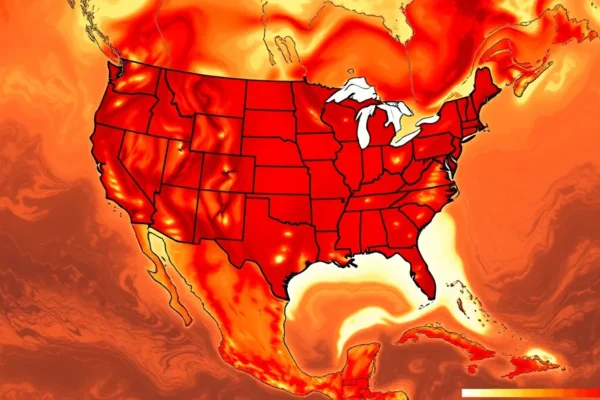
The Unusual Summer Heat Griping the US
The United States has recently experienced a prolonged period of summer-like heat, breaking numerous records well into the autumn months. This isn’t just a typical warm spell; it’s a significant deviation from historical weather patterns, prompting a closer look at the driving forces. Two major factors are at play: the well-documented atmospheric phenomenon known as El Niño, and the overarching influence of global warming fueled by the burning of fossil fuels. Understanding how these elements interact is crucial to grasping the intensity and duration of this unusual US heat.
El Niño and Global Warming: A Perfect Storm for US Heat
At the heart of this record-breaking US heat lies a confluence of natural climate variability and human-induced climate change. El Niño, a naturally occurring climate pattern, is currently influencing global weather systems. This climate pattern is characterized by warmer-than-average sea surface temperatures in the central and eastern tropical Pacific Ocean. When El Niño is active, it disrupts normal weather patterns worldwide. For the United States, a strong El Niño often leads to wetter conditions in the southern states and warmer, drier conditions in the northern and western parts of the country, especially during the cooler months. However, its influence extends to summer, exacerbating existing heat trends.
The critical second piece of this puzzle is global warming, driven primarily by the increased concentration of greenhouse gases in the atmosphere, largely from the burning of fossil fuels like coal, oil, and natural gas. These gases trap heat, leading to a gradual and persistent rise in global average temperatures. Think of it like adding extra blankets to the Earth’s atmosphere; each blanket traps more heat, making the planet warmer overall. Global warming essentially “loads the dice” for extreme weather events, making heatwaves more frequent, intense, and longer-lasting.
When El Niño’s warming influence combines with an already warmer planet due to fossil fuels, the result can be amplified temperature anomalies. El Niño provides the immediate, albeit significant, nudge to weather patterns, while global warming provides the underlying warmer baseline. This combination means that even typical El Niño-driven warmth can manifest as record-breaking temperatures when superimposed on a warmer climate. For instance, the National Oceanic and Atmospheric Administration (NOAA) has confirmed the presence of a strong El Niño event, which, when coupled with the background warming trend, contributes to the persistent high temperatures observed across the US, extending what felt like a summer weather pattern deep into September heat.
How El Niño and Fossil Fuels Amplify Heat
To understand how El Niño and fossil fuels create this record-breaking US heat, let’s break down the mechanisms.
El Niño’s influence on global weather is profound. Imagine the Pacific Ocean as a giant thermostat. During El Niño, this thermostat is turned up, releasing more heat into the atmosphere. This heat doesn’t stay localized; it travels via atmospheric currents, altering jet streams and pressure systems across the globe. For North America, this often means shifts in the typical atmospheric circulation that dictates temperature and precipitation. For example, a weaker or shifted jet stream can allow high-pressure systems, which bring clear skies and intense sunshine, to linger over regions for extended periods, creating prolonged heatwaves.
Fossil fuels, on the other hand, act as a constant, underlying heat source. The combustion of coal, oil, and natural gas releases carbon dioxide and other greenhouse gases. These gases are like a one-way mirror for heat. Sunlight enters the atmosphere, warming the Earth’s surface. Normally, some of this heat radiates back into space. However, greenhouse gases trap a significant portion of this outgoing heat, preventing it from escaping. This trapped heat leads to a gradual but consistent increase in global average temperatures. This phenomenon, often referred to as global warming, means that the baseline temperature is already higher than it was in previous decades.
When El Niño adds its significant thermal anomaly to this already warmer baseline, the effect is additive, and sometimes even multiplicative. It’s like having a fever (global warming) and then catching a strong flu (El Niño); the combined illness is much more severe than either condition alone. The atmospheric phenomenon of El Niño amplifies the warming trend driven by fossil fuels, leading to record temperatures that feel like an extended summer weather across the US, even as the calendar moves into autumn. This interaction makes predicting and managing extreme weather events increasingly complex.
Where We See These Record Temperatures Now
The impact of this combined phenomenon is evident across the United States right now. Cities and regions that typically see a cooling trend in late summer and early autumn are experiencing temperatures that are unseasonably high, often breaking daily, monthly, and even all-time records. For instance, data from NOAA’s National Centers for Environmental Information (NCEI) consistently shows widespread temperature anomalies across the country, with many areas experiencing their hottest recorded periods for specific dates or months.
This isn’t an isolated incident affecting a single city; it’s a pattern observed across large swathes of the nation. The prolonged heat has significant real-world consequences, impacting public health, agriculture, and energy demand. Farmers are grappling with crops that may be stressed by the extended heat, potentially affecting yields. Energy grids are facing increased demand for air conditioning, raising concerns about reliability and cost. Public health advisories are being issued to protect vulnerable populations from heat-related illnesses. The summer weather seems to be refusing to let go, a direct consequence of these powerful climate drivers.
This type of extreme weather has become more common with the progression of global warming. While El Niño is a cyclical event, its impact is amplified by the underlying warming trend. This means that while El Niño might bring a stronger nudge this year, the overall context of a warmer planet makes such extreme temperature events more probable and more severe than they would have been in the past. The current situation is a clear manifestation of how natural climate variability, when superimposed on human-caused climate change, can lead to unprecedented weather patterns.
Understanding the Forces at Play
It’s important to understand that El Niño and global warming, while distinct, are not independent forces when it comes to causing US heat and record temperatures.
El Niño is an example of a natural climate pattern that oscillates roughly every two to seven years. It’s a natural part of Earth’s climate system, and scientists have been studying it for decades. Its influence is significant, capable of altering weather patterns across continents for months at a time. NOAA continuously monitors sea surface temperatures in the Pacific to identify and track El Niño events, providing crucial data for weather forecasting and climate research.
Global warming, however, is a longer-term trend driven by human activities. The overwhelming scientific consensus, supported by organizations like the Intergovernmental Panel on Climate Change (IPCC), attributes the observed warming primarily to the emission of greenhouse gases from the burning of fossil fuels. This is not a cyclical variation; it’s a persistent change in the Earth’s energy balance.
The interaction is where the record-breaking heat emerges. Imagine El Niño is like a strong wave coming in from the ocean. If the ocean level is already higher due to melting ice caps and thermal expansion (global warming), that wave will reach further inland and cause more significant flooding. Similarly, El Niño’s warming influence is amplified because the overall temperature of the planet is already elevated due to fossil fuel emissions. This means that a standard El Niño might now produce a heatwave that is hotter and longer than it would have been 50 years ago. The current US heat is a stark illustration of this amplified effect, showcasing how the atmospheric phenomenon interacts with the ongoing climate change.
Implications of Persistent Summer Heat
The implications of this extended summer-like heat across the US are far-reaching, affecting various aspects of life and the economy.
Economically, prolonged heatwaves place significant stress on critical infrastructure. Energy demand surges as more people rely on air conditioning, potentially leading to higher utility bills for consumers and placing a strain on power grids. Agricultural sectors face challenges, with crops needing to withstand higher temperatures and potential water scarcity due to altered precipitation patterns. This can lead to reduced yields, increased food prices, and economic hardship for farmers. Businesses that rely on outdoor activities or operate in unconditioned spaces may also see reduced productivity and revenue.
Socially, the impact on public health is a primary concern. Extreme heat poses serious health risks, particularly to vulnerable populations such as the elderly, young children, and individuals with pre-existing health conditions. Heatstroke, heat exhaustion, and exacerbation of respiratory and cardiovascular diseases are all increased risks. The extended summer weather can also disrupt daily life, affecting outdoor recreation, school schedules, and community events.
From an environmental perspective, prolonged heat can stress ecosystems, leading to increased risk of wildfires, impacting biodiversity, and affecting water resources. The altered weather patterns can have cascading effects throughout natural systems. The ongoing trend of such extreme weather events suggests a need for adaptation strategies to build resilience against these changing conditions. The continued reliance on fossil fuels exacerbates these issues, making it crucial to consider the long-term sustainability of our energy practices.
Challenges in Addressing the Heatwave Phenomenon
While the scientific understanding of El Niño and global warming is robust, addressing the resulting extreme weather poses significant challenges.
One of the primary challenges is the complex interplay between natural variability and human-induced climate change. While El Niño is a predictable, albeit variable, climate pattern, accurately forecasting its specific regional impacts, especially when amplified by global warming, remains a complex scientific endeavor. Predicting the precise duration and intensity of heatwaves is an ongoing area of research.
Another significant hurdle is the global reliance on fossil fuels. Transitioning away from these energy sources to cleaner alternatives is a monumental economic and political undertaking. Developing nations require access to affordable energy, and established industries are heavily invested in fossil fuel infrastructure. This inertia makes rapid decarbonization difficult.
Furthermore, the adaptation to more frequent and intense extreme weather events requires significant investment in infrastructure, public health systems, and resilient agricultural practices. Many communities lack the resources to implement these necessary changes effectively. The sheer scale of the problem – a global climate system influenced by worldwide energy consumption – means that solutions require international cooperation and sustained effort over decades. Overcoming these challenges necessitates a multi-faceted approach involving scientific research, technological innovation, policy changes, and societal adaptation.
The Path Forward: Mitigation and Adaptation
The future trajectory of US heat and similar extreme weather events is largely dependent on our collective response to climate change, particularly our reliance on fossil fuels. Scientists predict that as global warming continues, El Niño events, and other climate patterns, will likely lead to even more frequent and intense heatwaves.
Key developments to watch include advancements in renewable energy technologies, such as solar, wind, and geothermal power, which aim to reduce our reliance on fossil fuels. Innovations in energy storage and grid modernization are also crucial for managing the intermittency of renewables and ensuring reliable power during peak demand, like during heatwaves.
On the adaptation front, we can expect to see increased investment in climate-resilient infrastructure, such as improved water management systems, heat-resistant building materials, and early warning systems for extreme weather. Research into drought-resistant crops and sustainable agricultural practices will be vital for food security.
The timeline for these changes is critical. While renewable energy technologies are rapidly becoming more cost-effective and widely adopted, a complete transition away from fossil fuels is a long-term endeavor, likely spanning decades. The immediate challenge is to mitigate the worst effects of current warming while simultaneously adapting to the changes already underway. Continued research by organizations like NOAA and climate science bodies worldwide will refine our understanding and improve our ability to forecast and respond to these complex weather patterns.
Frequently Asked Questions about US Heat and Climate Patterns
What is El Niño and how does it cause US heat?
El Niño is a climate pattern characterized by warmer-than-average sea surface temperatures in the Pacific Ocean. This disrupts global weather patterns, and for the US, it can often lead to warmer and drier conditions in certain regions, contributing to heatwaves when combined with other factors.
How do fossil fuels contribute to record temperatures?
Fossil fuels release greenhouse gases like carbon dioxide when burned, trapping heat in the Earth’s atmosphere. This “global warming” effect creates a warmer baseline temperature, making heatwaves more intense and frequent, and amplifying the effects of natural climate patterns like El Niño.
Is this extreme heat a new phenomenon?
While heatwaves have always occurred, the frequency, intensity, and duration of extreme heat events have increased significantly in recent decades, a trend directly linked to global warming caused by fossil fuel emissions. El Niño exacerbates this trend when active.
Who is most affected by this record-breaking US heat?
Vulnerable populations, including the elderly, young children, outdoor workers, and individuals with chronic health conditions, are most at risk from the health impacts of extreme heat. Economically, agricultural sectors and energy providers face significant challenges.
What can be done to address these record temperatures?
Addressing these record temperatures requires a two-pronged approach: mitigation, which involves reducing greenhouse gas emissions by transitioning away from fossil fuels to renewable energy sources, and adaptation, which involves preparing communities and infrastructure for the impacts of extreme weather that are already occurring.
How long will this record heat continue?
The duration of specific heatwaves is influenced by various weather patterns, including the persistence of El Niño. However, the underlying trend of increasing global temperatures means that such extreme heat events are likely to become more common and intense in the future.
This article synthesizes information from various scientific bodies and climate reports, including those from the National Oceanic and Atmospheric Administration (NOAA) and the Intergovernmental Panel on Climate Change (IPCC). The information presented reflects the current understanding of climate science regarding El Niño, global warming, and their impact on weather patterns. As climate science continues to evolve, further research may refine these understandings and predictions.











