

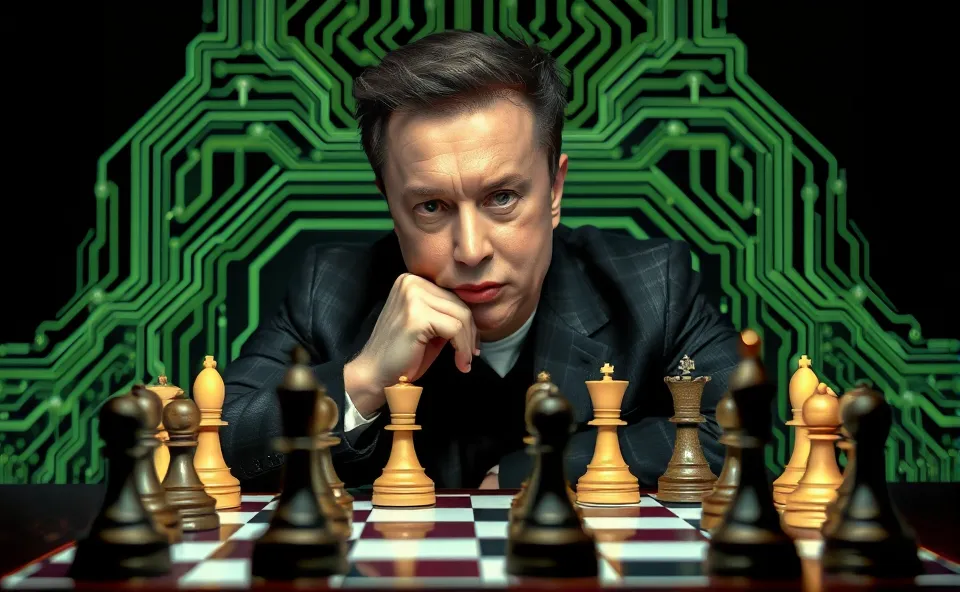
A New Player in the AI Race
Elon Musk has a habit of jumping into the deep end of the pool just when things get interesting. His latest move is the launch of xAI, a new venture focused entirely on artificial intelligence. For those who follow the tech world, this might seem like just another addition to his growing list of companies. However, this is not just a side project. xAI is designed to compete with the biggest names in the field, aiming to create a more truthful and curious version of artificial intelligence.
At its core, xAI is about understanding the true nature of the universe. While other companies focus on chatbots that can write emails or summarize documents, Musk wants something deeper. He wants a system that can reason and solve complex problems. This means building massive computing clusters and hiring some of the smartest minds in the industry. It is a bold move into a space that is already crowded, but that is exactly how he likes to operate.
For the average person, this might look like just another app or a new way to interact with a computer. But for the business world, it signals a major shift. Musk is not just building a tool; he is building a foundation. By creating a separate entity for AI, he is positioning himself to own the intelligence layer that could eventually power everything from robots to space travel.
Why Tesla Investors are Feeling Anxious
You might wonder why a new AI company would worry people who own shares in an EV giant. On the surface, Tesla and xAI seem like different beasts. One sells cars and batteries, while the other writes code and trains models. But the lines between these two worlds are incredibly blurry.
Tesla has spent years telling the world that it is not just a car company. In every earnings call and presentation, the message is the same: Tesla is an AI and robotics company. From the Full Self Driving software to the Optimus humanoid robot, the value of Tesla is tied to its ability to master artificial intelligence.
When Elon Musk starts a separate AI venture, it creates a natural tension. Investors start asking a few uncomfortable questions. Where will the best engineers go? Will the most advanced AI research stay at Tesla, or will it migrate to xAI? If Musk discovers a breakthrough in reasoning or logic, which company gets to use it first?
The fear is rooted in the idea of divided attention. Running one massive company is hard. Running several is nearly impossible without something slipping through the cracks. When the leader of a company is also the leader of a direct competitor in the same technology space, the market gets nervous. This uncertainty is why the news of xAI has caused a stir in the investing community.
The Pattern of Big Bets
To understand this moment, we have to look at the history of how Elon Musk operates. He does not do small steps. He takes massive, market defining bets that often look like madness until they actually work.
Think back to the early days of Tesla. The world laughed at the idea of an electric car that people actually wanted to buy. Most experts thought the EV market was a niche for people who didn’t mind driving slow, ugly cars. Musk bet everything on the idea that performance and luxury could drive adoption. He was right, and it changed the entire global automotive industry.
The same thing happened with SpaceX. The idea of reusable rockets sounded like science fiction. Traditional aerospace companies thought it was too risky and too expensive. But Musk pushed through the failures and the explosions until he proved that landing a rocket vertically was possible. This disrupted the entire launch market and lowered the cost of getting to space.
This history shows a clear pattern: innovation through disruption. He identifies a stagnant industry, applies a first principles thinking approach, and pushes the boundaries of what is possible. However, these bets always come with a period of intense instability. There is always a moment where the market panics before the vision becomes clear. xAI is simply the latest chapter in this long book of high stakes gambles.
The Ripple Effect on the Market
The launch of this new venture does more than just make investors sweat. It changes the dynamics of the entire technology landscape. When a figure with Musk’s resources enters the AI arena, it forces every other player to move faster.
For the EV market, the impact is indirect but powerful. If xAI succeeds in creating a superior reasoning engine, that intelligence could eventually be integrated back into Tesla vehicles. Imagine a car that does not just follow a map, but actually understands the context of its surroundings in a human like way. That would be a massive leap forward for autonomy.
But there is also the risk of talent dilution. The war for AI talent is the most aggressive hiring battle in history. There are only a handful of people globally who truly understand how to scale these massive models. If xAI attracts the top researchers away from Tesla, the development of FSD could slow down.
Furthermore, this move sends a signal to the broader market about the future of corporate structure. We are seeing a trend where founders create an ecosystem of companies that feed into one another. Instead of one giant conglomerate, they build a web of specialized ventures. This allows for more agility, but it makes the financial side of investing much more complex.
Where Do We Go From Here
Looking ahead, the relationship between Tesla and xAI will likely be the most watched story in tech. We are not looking at a simple split, but rather a complex partnership.
It is logical to assume that these companies will share a symbiotic relationship. Tesla provides the real world data from millions of cars on the road. xAI provides the high level cognitive processing power. Together, they could create a feedback loop that no other company can match. While Google and OpenAI have the internet, Musk has the physical world.
In the coming years, we will likely see xAI tools being integrated into the Tesla ecosystem. This could happen through voice interfaces that are actually helpful or robots that can perform complex household tasks. The goal is a seamless integration of artificial intelligence into physical hardware.
For the investors, the key will be transparency. If the boundaries between the companies are clear and the benefits are shared, the anxiety will fade. If the ventures remain secretive and competitive, the tension will grow. Either way, the move into AI is a necessity. In a world where intelligence is becoming the primary commodity, you cannot afford to stand still.
Common Questions About the AI Shift
How does xAI differ from the AI used in Tesla?
Tesla focuses mostly on physical AI, which means using vision and sensors to move things in the real world, like cars and robots. xAI is more focused on general intelligence and reasoning, which is about processing information and understanding the world through language and logic.
Why would Elon Musk start a new venture instead of keeping it inside Tesla?
Starting a separate company allows for more flexibility. It means xAI can seek its own funding and partner with other businesses without being tied to the specific regulations or goals of a car company. It also allows him to attract talent who might want to work on pure AI rather than automotive tech.
Will this move hurt the value of investing in Tesla?
Some investors worry about divided attention and the movement of talent. However, others see it as a win because Tesla could eventually benefit from the breakthroughs made at xAI. The impact depends on how the two companies collaborate.
What does this mean for the future of EV technology?
It means the future of the EV is not just about the battery or the motor. It is about the brain of the car. As artificial intelligence improves, cars will become more like personal assistants and more capable of true autonomy.
Is this a risky move for the overall market?
Innovation always carries risk. While the venture is bold, it pushes the entire technology sector to innovate faster. Whether it succeeds or fails, the competition will likely accelerate the development of smarter and more capable AI for everyone.











