

The Day the Tech Titan Met the Law
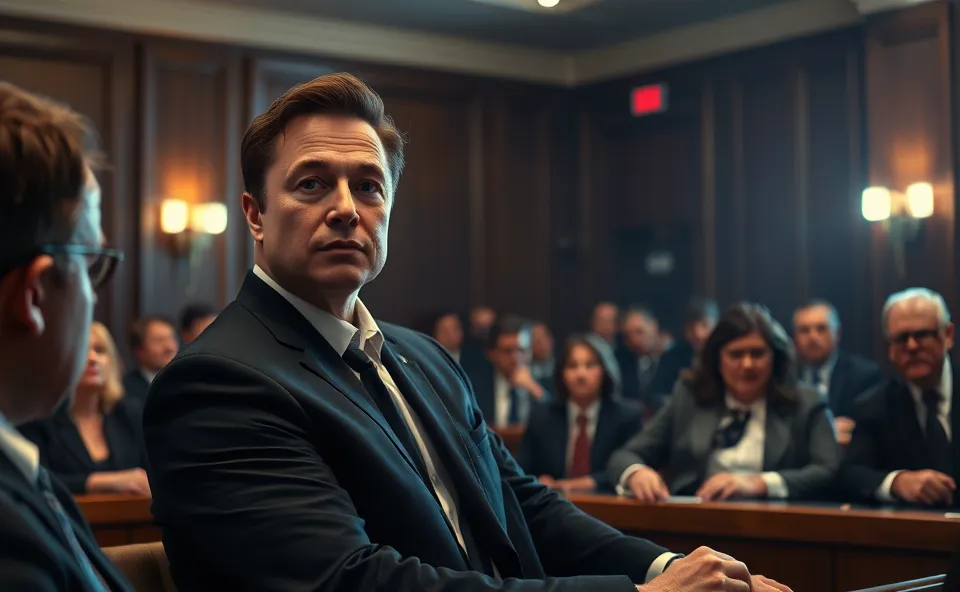
Imagine one of the most powerful people in the world sitting in a witness chair, trying to keep his cool while a lawyer picks apart his every word. That is exactly what happened during the recent Elon Musk court testimony. For those who follow the tech world, we are used to seeing Musk control the narrative on social media or during grand product reveals. But a courtroom is a different beast entirely.
In this legal battle, Musk found himself in a high pressure environment where he could not simply tweet his way out of a tough question. The atmosphere was thick with tension as the defense lawyer, William Savitt, began a rigorous cross examination. Instead of the confident persona we see in interviews, the version of Musk we saw here was far more guarded.
The core of the drama revolved around how Musk answered questions. Rather than giving simple yes or no responses, he often circled around the point. He used a style of speaking that felt evasive, attempting to redefine the terms of the questions or pivot to a different topic. This created a palpable friction in the room. Savitt tried to pin him down with leading questions, which are designed to guide the witness toward a specific admission.
The interaction felt less like a formal legal proceeding and more like a strategic game of chess. Every time Savitt tried to close a loop, Musk found a way to open a new one. For the jury watching, this was a masterclass in how a high profile figure handles pressure, though it also highlighted the deep frustrations of the legal process when a witness refuses to be direct.
Why Everyone is Talking About This Now
This particular moment has exploded in popularity because it represents a clash of two very different worlds. On one side, you have the fast moving, rule breaking world of Silicon Valley. On the other, you have the slow, rigid, and precise world of the legal system. Seeing these two worlds collide in a public courtroom is naturally gripping.
People are searching for details on this court testimony because Musk is a polarizing figure. Some see his evasiveness as a clever way to protect his interests, while others see it as a sign that he is struggling to justify his claims. The courtroom drama aspect adds a layer of entertainment to a complex legal dispute.
Moreover, the stakes are incredibly high. This is not just a personal spat. It is a fight over the soul and direction of artificial intelligence. When a figure as influential as Musk is grilled on the stand, the world watches to see if the narrative he has built about his goals and intentions holds up under professional scrutiny.
The Roots of the Legal Fight
To understand why this testimony is so heated, we have to look back at the relationship between Musk and OpenAI. In the beginning, Musk was a key player in the creation of OpenAI. The original goal was to build a non profit organization that would develop safe artificial intelligence for the benefit of all humanity. The idea was to prevent any one company, like Google, from having a monopoly on the most powerful technology in history.
However, the relationship soured over time. OpenAI shifted from a pure non profit model to a capped profit structure to attract the massive amounts of capital needed for computing power. This move allowed them to partner with Microsoft and scale rapidly. Musk felt betrayed by this pivot, arguing that the company had abandoned its founding mission.
This led to the current legal battle. Musk alleges that the leadership, specifically Sam Altman, moved the goalposts to create a closed source, profit driven empire. Sam Altman and the OpenAI team argue that the shift was necessary for survival and progress. When Musk took the stand, he was not just defending a contract, he was defending his vision of how AI should be governed.
What This Means for the Tech World
The ripples of this courtroom experience go far beyond a single lawsuit. This case sends a strong signal to other tech founders and investors about the importance of governance and original agreements.
First, it highlights the risks of the non profit to profit pivot. Many companies start with idealistic goals to gain public trust or talent, but as they scale, the financial pressure to monetize becomes overwhelming. This legal battle shows that those early promises can come back to haunt a company years later.
Second, it impacts how we view corporate leadership. The way Musk handled his cross examination reveals a lot about his leadership style. He prefers to define the reality of a situation himself. While this works when you are the CEO of SpaceX or Tesla, it creates significant friction in a legal setting where a jury decides the truth.
For the AI industry, this case is a warning. It proves that the race for AGI (Artificial General Intelligence) is not just a technical race, but a legal and ethical one. If the courts decide that OpenAI violated its original mission, it could force a massive shift in how AI companies share their research and profits.
Where Do We Go From Here
As the dust settles on this specific testimony, the focus will shift back to the jury. They are the ones who have to weigh the evasive nature of the testimony against the hard evidence presented in the case.
It is likely that we will see more attempts to bring other key figures into the spotlight. The dynamic between Musk and Sam Altman remains the central axis of this story. If the case proceeds toward a verdict, it will set a precedent for how intellectual property and founding charters are handled in the age of AI.
We can expect the legal strategies to evolve. Now that the defense knows how Musk behaves under pressure, they will likely refine their questioning to leave even less room for pivots. Meanwhile, Musk will likely continue to use his public platform to frame the narrative in his favor, regardless of what happens inside the courtroom.
In the long run, this conflict will likely accelerate the push for clearer AI regulations. When the founders of a major AI lab are fighting in court over the definition of non profit, it becomes obvious that the current rules are too vague for the technology they are building.
Common Questions About the Legal Clash
What was the main goal of the Elon Musk court testimony?
The primary goal was to determine if OpenAI drifted away from its original non profit mission and if the current leadership violated the agreements made during the company’s founding.
Who is William Savitt and what was his role?
William Savitt is the defense lawyer who conducted the cross examination of Musk. He used leading questions to try and get direct answers and uncover contradictions in Musk’s claims.
How did Sam Altman fit into this courtroom drama?
Sam Altman is the CEO of OpenAI and a central figure in the dispute. While Musk’s testimony focused on his own experiences, the legal battle is fundamentally about the choices Altman and the board made regarding the company’s structure.
Why was the cross examination described as challenging?
It was challenging because of the clash in communication styles. The lawyer sought precise, binary answers, while Musk provided long, complex responses that often avoided the core of the question.
What is the ultimate goal of this legal battle?
Musk wants to hold OpenAI accountable to its original non profit charter, potentially forcing the company to release its technology or change its profit model to benefit the public rather than private investors.











