

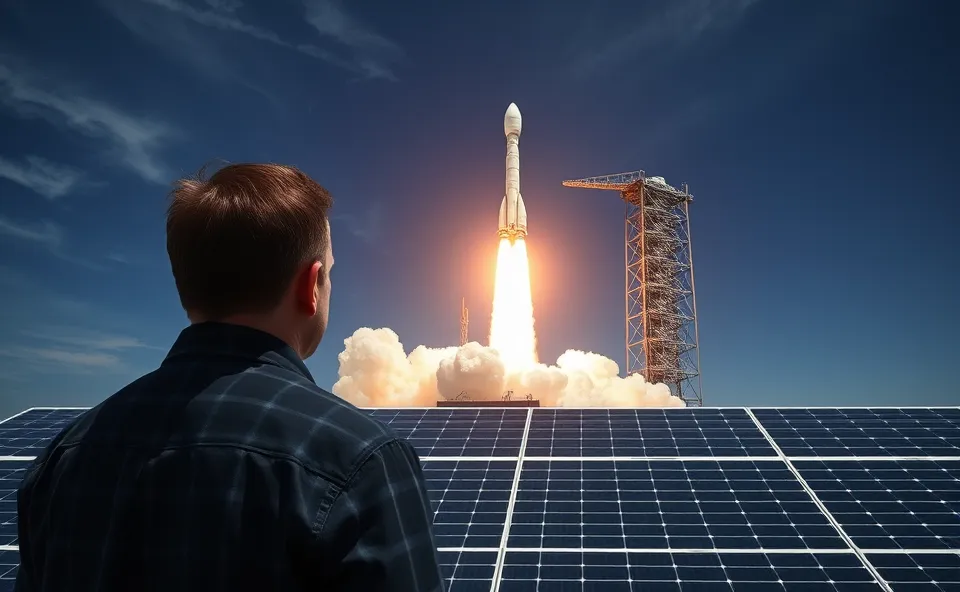
A Surprising Turn for Elon Musk’s Energy Vision
It looks like Elon Musk is making a pretty big shift in his long-term plans, and it’s catching a lot of people by surprise. Remember when he talked about a future powered by solar energy, with everything running on clean electricity from the sun? Well, it seems that vision is taking a backseat. Reports suggest that his artificial intelligence company, xAI, is now looking into natural gas. At the same time, SpaceX, his rocket company, is shifting its focus towards building data centers in orbit. This is quite a departure from the grand promises of a solar-electric economy he once championed. It’s not just a minor tweak; it feels like a significant pivot in how he sees the future of energy and technology.
Why the Buzz About Elon Musk and Solar Power Now?
The reason this is all coming up now is because of recent announcements and industry whispers. When a figure as influential as Elon Musk, who is so closely associated with Elon Musk and solar power, makes such noticeable changes in direction, it naturally sparks a lot of discussion. People are curious about the whys and hows of these pivots. Are these just strategic adjustments, or do they signal a fundamental rethinking of his approach to tackling major global challenges like climate change and technological advancement? The contrast between the past rhetoric of a solar-electric economy and the current focus on natural gas for xAI and orbital data centers for SpaceX raises many questions and drives the current interest.
Looking Back: The Dream of a Solar-Electric World
To really get this, we need to rewind a bit. For years, Elon Musk has been a prominent voice advocating for a transition to renewable energy. His vision for a solar-electric economy was a cornerstone of this. Think about it: homes powered by solar panels, electric cars charged by that clean energy, and a whole infrastructure designed to run sustainably. This was a compelling picture of the future, one that aimed to tackle carbon emissions and create a more environmentally friendly world. Companies like Tesla, with its solar roofs and electric vehicles, were central to this narrative. The idea was to harness the sun’s power and make it the backbone of our technological society. It was an inspiring goal, and many believed it was the path forward for our planet.
What This Means for Tech and Beyond
This shift has some pretty interesting implications. For xAI, moving towards natural gas, at least as a potential energy source for its operations, is a notable change from the pure renewable energy ideal. Natural gas is still a fossil fuel, and while often seen as cleaner than coal, it’s not the zero-emission solution that solar power promises. This could mean different things for the future of AI development, especially if large data centers require immense amounts of power. On the SpaceX side, the focus on orbital data centers is a bold step into space exploration as a practical frontier for technology. Imagine massive computing hubs floating above Earth. This could revolutionize data processing, offering incredible speed and perhaps even new capabilities for global communication and research. However, it also raises questions about the energy sources needed to power these off-world facilities and the overall environmental footprint of space-based infrastructure. The implications for the tech industry are vast, potentially creating new markets and accelerating innovation in areas like AI, space technology, and energy infrastructure. It also makes us rethink what “renewable energy” means in the context of rapidly advancing tech and the immense power demands they create.
Peering Ahead: What’s Next on the Horizon?
So, where does this leave us looking forward? The pivot suggests that practical realities, like the immense power needs of cutting-edge AI and the challenges of scaling renewable energy globally, might be influencing strategic decisions. For xAI, exploring natural gas might be a short-to-medium term solution to meet immediate power demands while longer-term renewable solutions are developed or scaled. It doesn’t necessarily mean abandoning renewable energy altogether, but perhaps integrating different sources for optimal efficiency and reliability. For SpaceX, the orbital data centers are a glimpse into a future where space isn’t just for exploration but for essential infrastructure. This could pave the way for space-based manufacturing, advanced research labs, and even a new era of space tourism that’s powered by innovative energy solutions. The key takeaway is that the path to a sustainable and technologically advanced future is likely to be complex and involve a mix of solutions, rather than a single, all-encompassing approach. Elon Musk’s evolving strategies highlight the dynamic nature of technological development and the constant search for the most effective ways to achieve ambitious goals.
Frequently Asked Questions
- What is Elon Musk’s current stance on solar power?
- How is SpaceX’s focus on orbital data centers related to Elon Musk’s past vision for a solar-electric economy?
- What are the main reasons for xAI’s apparent pivot towards natural gas, considering Elon Musk’s previous emphasis on renewable energy?
- Does this tech pivot mean the end of Elon Musk’s commitment to solar power for his ventures?
- What are the potential implications of SpaceX building orbital data centers for the future of space exploration and energy?











