

“`html
Why You Need to Know About Basic Financial Accounts
Imagine your money is like water. Without the right containers, it can evaporate, leak away, or become inaccessible when you need it most. Understanding basic financial accounts is like learning to build the essential containers for your money. It’s not just about avoiding problems; it’s about building a secure and flexible future. Why does this matter so much? Because how you manage your money directly impacts your daily life, your ability to handle surprises, and your dreams for the future. Are you wondering how to keep your money safe and accessible? Do you want to know how to start saving for that new car or a comfortable retirement? This guide will answer those questions and help you build a strong foundation in personal finance basics.
What Are Financial Accounts in Simple Terms
At its heart, a financial account is simply a special place where you keep your money, managed by a bank or other financial institution. Think of it like a digital piggy bank or a secure locker for your cash. Instead of stuffing bills under your mattress, you deposit them into an account, and the institution keeps track of how much you have. This makes your money safe, easy to access when you need it, and allows you to do things like pay bills and make purchases electronically.
Building Your Financial Foundation
Before diving into specific types of accounts, it’s helpful to understand a couple of foundational ideas. First, money itself is what we use to exchange for goods and services. Second, financial institutions are businesses, like banks, that provide services related to money, such as holding deposits, making loans, and facilitating transactions. When you open a financial account, you’re essentially creating a formal relationship with one of these institutions. You give them your money to hold, and in return, they offer you security and tools to manage it. This relationship is built on trust and regulations designed to protect your funds.
How Essential Financial Accounts Work
Let’s break down the most fundamental types of financial accounts everyone needs.
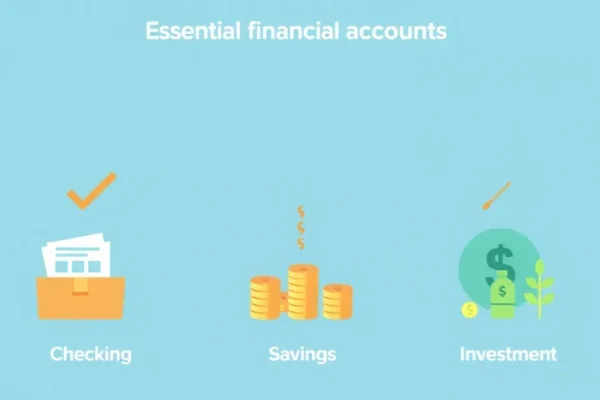
The Checking Account The Everyday Workhorse
Picture a checking account as your money’s daily go-to place. It’s designed for frequent transactions – paying bills, buying groceries, withdrawing cash.
- Purpose: To hold money you plan to spend soon and to make it easy to pay for things.
- How it works: You deposit money into your checking account. You can then access it using a debit card, writing checks, or through online transfers and bill payments. Banks typically don’t pay much interest on checking accounts because their main job is accessibility, not growth.
- Example 1: Sarah needs to buy groceries. She uses her debit card linked to her checking account. The amount of her grocery bill is immediately deducted from her account balance.
- Example 2: John has to pay his rent. He writes a check from his checking account and gives it to his landlord. The bank then transfers the money from John’s account to the landlord’s account.
- Example 3: Maria wants to pay her electricity bill online. She logs into her utility company’s website and authorizes a payment directly from her checking account using her account number and routing number.
The Savings Account Your Money’s Safe Haven
Think of a savings account as a more secure, slightly less accessible vault for money you don’t need right away. Its primary goal is to help your money grow, albeit slowly, while keeping it safe.
- Purpose: To store money you want to save for future goals or emergencies, earning a small amount of interest in the process.
- How it works: You deposit money into a savings account. Unlike checking accounts, there are usually limits on how many times you can withdraw money or transfer it out each month. This is to encourage you to keep the money saved. Savings accounts typically offer a modest interest rate, meaning the bank pays you a small percentage of your deposited money each year for keeping it with them.
- Example 1: David is saving for a vacation next year. He sets up an automatic transfer of $100 each month from his checking account to his savings account. Over time, this builds up his vacation fund.
- Example 2: Emily has an unexpected car repair. She withdraws money from her savings account, which she had been building up for just such emergencies.
- Example 3: The interest earned on Maria’s savings account for the month is added to her balance, making her savings grow a little bit larger without her having to do anything extra.
The Emergency Fund A Financial Safety Net
While not a specific type of account in the same way as checking or savings, an emergency fund is a crucial purpose for your savings. It’s a stash of money set aside specifically for unexpected financial shocks.
- Purpose: To cover essential living expenses if you lose your job, face a medical crisis, or have a major home repair, preventing you from going into debt.
- How it works: You build this fund by consistently saving money. It’s typically kept in an easily accessible savings account so you can get to it quickly if needed. The key is to only use it for genuine emergencies.
- Example: When John unexpectedly lost his job, his emergency fund covered his rent, utilities, and food for three months while he searched for new employment, preventing him from having to take out high-interest loans.
Why These Accounts Work the Way They Do
The structure of these basic financial accounts is rooted in centuries of financial practice and evolution. Banks, as financial institutions, operate on a business model that allows them to provide these services. They make money by lending out a portion of the deposits they receive to others (e.g., for mortgages or business loans) at a higher interest rate than they pay to account holders.
- Checking Accounts & Accessibility: The design of checking accounts prioritizes quick access because banks know people need to spend money regularly. The low or no interest is a trade-off for this convenience.
- Savings Accounts & Growth: Savings accounts are designed to encourage saving by offering a small reward (interest). The withdrawal limits are a gentle nudge to prevent people from treating them like checking accounts, thus allowing the bank to use those funds more reliably for longer-term lending.
- Interest and the Time Value of Money: The concept of interest is tied to the time value of money, an economic principle stating that money available at the present time is worth more than the same amount in the future due to its potential earning capacity. Banks pay you interest because they are using your money for a period of time. Historically, simple interest was calculated, but modern banking uses compound interest, where you earn interest on both your original deposit and the accumulated interest.
The regulatory environment also plays a huge role. In many countries, government agencies (like the FDIC in the United States) insure deposits up to a certain amount. This insurance protects your money even if the bank fails, building public trust and encouraging people to use these institutions. This system of regulated deposit-taking and lending has been refined over many decades to provide a stable framework for personal finance.
Common Misconceptions About Basic Financial Accounts
People often have a few misunderstandings when they’re starting out with financial accounts.
- Misconception 1: “I don’t have enough money to open an account.”
- Reality: Most banks offer accounts with no or very low minimum balance requirements. The goal is to get you started, not to exclude you based on wealth.
- Misconception 2: “Savings accounts are too complicated; I’ll just keep my extra cash at home.”
- Reality: Savings accounts are incredibly simple. The main thing to remember is that they are for money you don’t need immediately, and they earn a little bit of interest. Keeping cash at home is unsafe and means missing out on any potential growth.
- Misconception 3: “Checking accounts are just for writing checks.”
- Reality: While checks are a feature, checking accounts are primarily about easy access to your money for all sorts of transactions, especially with the prevalence of debit cards, online banking, and mobile payment apps.
These misconceptions often stem from a lack of exposure or a fear of dealing with financial institutions, but the reality is that these basic accounts are designed to be user-friendly and accessible.
Real-World Applications of Financial Accounts
You encounter basic financial accounts everywhere, even if you don’t actively manage them yet.
- Receiving Your Paycheck: Most employers deposit wages directly into an employee’s checking account. This is a direct application of the checking account’s purpose for frequent transactions.
- Paying for Online Purchases: When you buy something from an online store, you often enter your debit card details, which link directly to your checking account. This is how e-commerce relies on checking accounts for transactions.
- Saving for a Down Payment: Someone saving to buy a house will diligently deposit money into a savings account over several years. This demonstrates the savings account’s role in achieving significant future goals.
- Handling Unexpected Medical Bills: If a family faces a sudden medical emergency, their emergency fund, stored in a savings account, becomes critical to cover the costs without disrupting their regular finances or forcing them into debt.
Connections to Other Financial Ideas
Understanding basic financial accounts opens the door to many other important personal finance concepts.
- Budgeting: Knowing how much money is in your checking account is essential for creating and sticking to a budget, which is a plan for how you will spend and save your money.
- Credit Cards: While not an account where you deposit money, credit cards are linked to your ability to manage funds and pay back borrowed money, often drawing from your checking account to make payments. Poor management can lead to debt, highlighting the importance of having those foundational accounts in order.
- Investing: Once you have a solid emergency fund and your checking account is in good shape, you might consider investment accounts. These are designed for growing your money over the long term, often with higher potential returns but also higher risk than a savings account.
- Retirement Accounts: These are specialized savings accounts designed specifically for long-term savings for life after you stop working, offering tax advantages. Building a secure retirement often starts with mastering the basics of savings and consistent deposits.
The Big Picture Understanding Your Financial Power
Mastering basic financial accounts is far more than just a mundane task; it’s about gaining control and power over your financial life. It’s the first step toward financial literacy and independence. By understanding how checking and savings accounts work, you’re not just storing money; you’re building a system that supports your goals, protects you from unexpected setbacks, and creates opportunities for future growth. It’s the bedrock upon which all other financial planning – from buying a home to planning for retirement – is built. This foundational knowledge empowers you to make informed decisions and reduces the anxiety often associated with money matters.
Key Takeaways and Common Questions
Let’s recap and address some common questions about essential financial accounts.
What are the most basic financial accounts everyone needs?
The two most essential financial accounts for beginners are a checking account for daily spending and a savings account for storing money and earning a little interest.
Why is a checking account so important?
A checking account is important because it provides easy access to your money for everyday transactions like buying groceries, paying bills, and withdrawing cash, making managing your finances convenient and efficient.
What is the difference between a checking and a savings account?
The main difference is purpose and accessibility. Checking accounts are for frequent transactions and immediate access, while savings accounts are for storing money you don’t need right away, often earning a small amount of interest, with some limits on withdrawals.
What is an emergency fund and where should I keep it?
An emergency fund is money set aside specifically for unexpected expenses like job loss or medical bills. It should be kept in an easily accessible savings account so you can get to it quickly when needed.
Do I need a lot of money to open a bank account?
No, most banks offer accounts with no or very low minimum deposit requirements, making them accessible to everyone.
Are there other types of financial accounts besides checking and savings?
Yes, beyond these basic financial accounts, there are investment accounts for growing wealth over time and retirement accounts specifically for long-term savings for your future.
Is it safe to keep my money in a bank account?
Yes, in most developed countries, bank deposits are insured by government agencies up to a certain amount, meaning your money is protected even if the bank encounters financial difficulties.
Further Learning: To deepen your understanding, explore topics like budgeting techniques, the basics of compound interest, and the importance of building an emergency fund. You might also be interested in how credit cards work and the initial steps towards saving for long-term goals.
“`











