

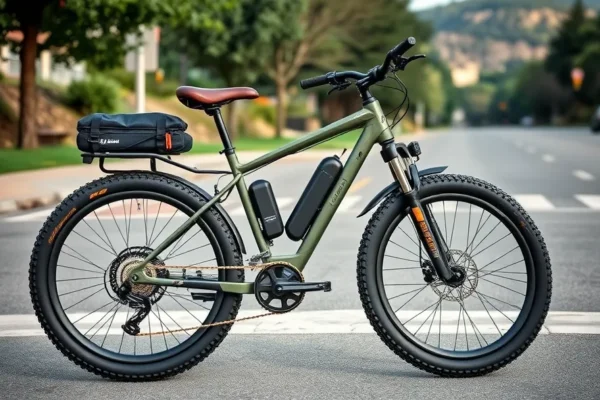
The Rise of the eSUV e-Bike Blurring Trail and Town Lines
The line between dedicated urban commuters and rugged off-road explorers is becoming increasingly blurred, especially in the world of electric bicycles. A prime example of this evolution is the Amflow TL Carbon, a new contender that proudly labels itself an “eSUV e-bike.” This isn’t just marketing jargon; it points to a growing category of electric bikes designed to tackle a wider spectrum of terrain and use cases than ever before. The Amflow TL Carbon aims to deliver a versatile riding experience, from navigating city streets to venturing onto unpaved trails and even embracing bikepacking adventures. This emerging “eSUV e-bike” concept promises a do-it-all solution for riders seeking a single machine for diverse needs.
Under the Hood: What Makes the Amflow TL Carbon Tick
At its heart, the Amflow TL Carbon is designed for versatility, and this is achieved through a combination of robust construction and integrated electric assistance. The “TL Carbon” in its name signifies a frame constructed from carbon fiber, a material known for its strength and lightness. This is crucial for an electric bike, where batteries and motors add significant weight. The electric power comes from what Amflow calls “Avinox motors.” While the specifics of Avinox motors aren’t extensively detailed in public technical sheets, they are presented as high-torque units designed to provide ample assistance across varied inclines and terrains, akin to the power delivery you might expect from an electric SUV.
Beyond the motor, the “eSUV” designation is earned through its hardware. The Amflow TL Carbon features a full suspension system. This means there’s a shock absorber at the front (often called a fork) and another at the rear of the bike. Think of it like the suspension in a car – it absorbs bumps and vibrations from the road or trail, providing a smoother and more controlled ride, especially over rough surfaces. This full suspension is a key differentiator from many typical urban e-bikes, which often have only front suspension or none at all.
Furthermore, the bike is equipped with what Amflow describes as all-terrain tires. These are tires with a more aggressive tread pattern than those found on road bikes, offering better grip on loose surfaces like gravel, dirt, and mud, while still remaining efficient enough for paved roads. Combined with its sturdy frame and powerful motor, these features position the Amflow TL Carbon as an electric mountain bike capable of tackling more challenging routes, but with the added benefit of electric assist for longer distances or steeper climbs.
From City Streets to Mountain Trails: Real-World Use Cases
The Amflow TL Carbon, and the broader “eSUV e-bike” category it represents, is positioned to serve a multitude of riders. For the urban commuter, the full suspension and robust tires can transform a bumpy commute into a comfortable journey, effortlessly handling potholes, cobblestones, and occasional detours onto park paths. The electric motor means that arriving at work or home without being overly sweaty is a distinct possibility, even with a challenging commute.
Beyond daily commuting, its design hints strongly at capabilities for more adventurous pursuits. As a gravel e-bike, it can comfortably traverse unpaved roads and light trails often found on bikepacking routes. Bikepacking involves carrying camping gear and embarking on multi-day cycling trips, often on mixed surfaces. The Amflow TL Carbon’s capacity for carrying gear, coupled with its all-terrain readiness, makes it a compelling option for those looking to explore further off the beaten path. Its electric mountain bike (eMTB) aspirations mean it can handle more technical singletrack, though its versatility might mean it doesn’t outperform dedicated eMTBs on extreme downhill runs.
The Amflow TL Carbon is currently available for pre-order directly from Amflow, with initial shipments anticipated for early 2024, according to company announcements. This places it in the early adoption phase for this specific model and for the broader eSUV e-bike concept.
Navigating the Competitive Landscape of Versatile E-Bikes
The Amflow TL Carbon enters a burgeoning market of electric bikes striving for versatility. Several established brands are already offering bikes that aim to bridge the gap between urban riding and off-road capability. For instance, brands like Trek, Specialized, and Giant offer hybrid e-bikes that feature front suspension and wider tires, suitable for light trails and comfortable commuting. These often lean more towards the urban or gravel e-bike end of the spectrum.
More directly competing with the “eSUV e-bike” concept are brands producing robust electric mountain bikes that also offer some degree of urban practicality. Companies like Rad Power Bikes offer more affordable, albeit often heavier, e-bikes with fat tires and suspension that can handle various terrains. However, Amflow’s focus on a carbon fiber frame and what is presented as a more integrated, high-performance motor and suspension system suggests a positioning towards a premium segment of the versatile e-bike market, aiming to offer a lighter and more agile option compared to some of the bulkier utility e-bikes.
The key differentiator for Amflow and similar “eSUV e-bike” concepts is the emphasis on balancing substantial off-road capability with refined on-road performance, often through advanced materials and integrated systems, aiming for a true do-it-all machine rather than a compromise.
Reshaping Mobility: The Impact of the Versatile e-Bike
The emergence of the versatile eSUV e-bike like the Amflow TL Carbon could significantly reshape how people perceive and utilize personal transportation. For individuals, it offers the potential to consolidate multiple cycling needs into a single, capable machine. This reduces the need for owning and maintaining separate bikes for commuting, recreation, and adventure, appealing to a growing segment of consumers who value simplicity and efficiency.
Economically, this trend could stimulate innovation in motor and battery technology, as well as frame design and suspension systems. It also opens up new market segments for manufacturers and retailers. For urban planning, more capable e-bikes could encourage greater adoption of cycling for longer commutes and for accessing areas with less developed infrastructure, potentially reducing reliance on cars and contributing to lower urban congestion and emissions.
Socially, these bikes can democratize access to varied terrain and longer journeys, empowering individuals to explore their surroundings more extensively. For bikepacking enthusiasts, it makes longer, more challenging routes more accessible. The short-term impact is likely to be seen in early adopters and enthusiasts embracing these capable machines. In the long term, if costs become more accessible and these bikes prove their durability and reliability, they could become a mainstream option for a broad range of riders.
Navigating the Hurdles: Limitations and Challenges Ahead
Despite the promising versatility, the Amflow TL Carbon and the eSUV e-bike concept face several limitations and challenges. The primary hurdle is often cost. High-end components like carbon fiber frames, full suspension, and powerful, integrated electric systems are expensive. This makes these versatile e-bikes significantly pricier than many standard urban or entry-level electric mountain bikes, potentially limiting their accessibility to a broader audience.
Secondly, true versatility often involves compromise. While the Amflow TL Carbon is designed to be capable on both trails and roads, it may not excel as a dedicated, high-performance electric mountain bike on very technical downhill trails, nor will it be as lightweight or agile as a minimalist urban commuter. Riders seeking peak performance in a specific niche might find these do-it-all bikes to be a jack of all trades but a master of none.
Technical challenges also remain. Battery range is always a consideration for any electric bike, especially when tackling demanding terrain or long distances. Ensuring sufficient range while keeping the bike reasonably light is a constant engineering challenge. Furthermore, the complexity of full suspension systems and integrated electric components can lead to higher maintenance costs and potentially more complex repairs, especially in remote locations.
Adoption barriers also include the need for clear regulations regarding e-bike classifications and usage, particularly as these bikes become more capable of off-road speeds. Consumer education on the capabilities and limitations of such machines is also crucial to ensure safe and responsible use.
The Road Ahead: Future Trajectory of Versatile E-Bikes
The future trajectory for versatile e-bikes, including those adopting the eSUV e-bike moniker, appears to be one of continuous refinement and integration. We can expect to see ongoing advancements in battery technology, aiming for higher energy density to increase range without adding substantial weight. Motor efficiency will also improve, providing more power with less energy consumption.
Carbon fiber frame technology will likely become more accessible, potentially driving down the cost of lighter, more capable bikes. We may also see more intelligent integration of suspension systems, perhaps with electronic adjustments that can adapt to different terrains on the fly. Amflow’s approach with its Avinox motors and integrated design suggests a trend towards more seamless, almost car-like user experiences on bikes.
Developments to watch will include how well these manufacturers balance performance across diverse terrains, the evolution of software for motor control and battery management, and the potential for modularity or customization to further tailor these bikes to individual needs, whether for long-distance bikepacking or demanding daily commutes. The timeline for these advancements is ongoing, with incremental improvements expected annually, and more significant leaps in technology every 3-5 years, driven by competition and consumer demand.
Key Questions About the eSUV e-Bike
What exactly is an eSUV e-bike?
An eSUV e-bike, like the Amflow TL Carbon, is an electric bicycle designed to be exceptionally versatile, capable of handling a wide range of conditions from urban commuting and road riding to more demanding off-road adventures on trails and gravel paths. The “eSUV” designation highlights its robust build, suspension, and all-terrain capabilities, drawing a parallel to the multi-purpose nature of sport utility vehicles.
Is the Amflow TL Carbon suitable for serious off-roading like a dedicated electric mountain bike?
The Amflow TL Carbon is designed with significant off-road capability, including full suspension and all-terrain tires, making it a competent electric mountain bike for many trails. However, for extreme downhill riding or highly technical singletrack, a dedicated, more specialized eMTB might still offer superior performance. Its strength lies in its broader versatility.
How does the carbon fiber frame contribute to the bike’s performance?
A carbon fiber frame is lighter than traditional aluminum or steel frames. This reduced weight makes the electric bike easier to handle, accelerate, and pedal, especially when the electric assist is not engaged. It also allows manufacturers to more easily incorporate complex shapes for aerodynamics and suspension integration, as seen in the Amflow TL Carbon.
What are the benefits of full suspension on an electric bike?
Full suspension on an electric bike means shocks at both the front and rear wheels. This absorbs bumps and vibrations from rough terrain, leading to a significantly smoother and more comfortable ride. It also improves traction and control, particularly on uneven surfaces like gravel, dirt, and rocky paths, making it ideal for an eSUV e-bike.
Who would benefit most from an eSUV e-bike?
Individuals who want a single, capable bicycle for multiple purposes would benefit most. This includes commuters who face varied road conditions, recreational riders who enjoy exploring both paved paths and light to moderate trails, and bikepacking enthusiasts looking for an electric assist for longer, multi-day journeys on mixed terrain.
What are the potential downsides of such a versatile e-bike?
The primary downsides are typically higher cost due to advanced components and construction, and the inherent compromise in peak performance compared to specialized bikes. A versatile eSUV e-bike might not be as light or agile as a pure road bike, nor as rugged or purpose-built as an extreme downhill eMTB. Maintenance can also be more complex and costly.
This review is based on information provided by Amflow and general industry trends in the electric bicycle market. Specific performance capabilities and long-term reliability require further real-world testing and user feedback as the Amflow TL Carbon becomes more widely available.











