

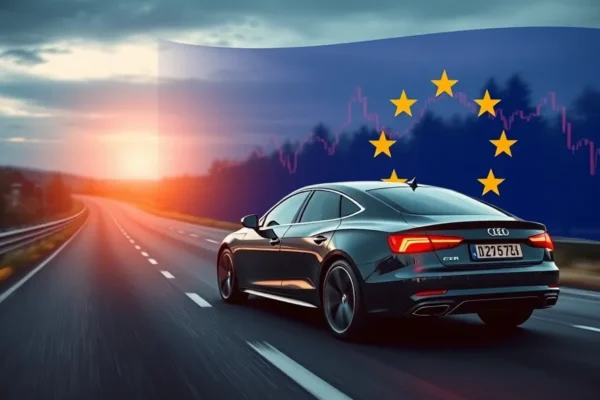
A New Trade Strategy for the European Automotive Sector
The European Union is signaling a significant shift in its industrial strategy. As Brussels trade policy evolves to protect domestic markets, regulators are considering a stricter approach to vehicle imports, specifically targeting a potential cap on Chinese hybrid vehicle imports. This policy move is intended to provide breathing room for legacy European manufacturers who have faced mounting pressure from a surge in lower-cost, high-tech imports from Asia. In response to this prospective policy, EU carmaker shares have seen a noticeable uplift, reflecting renewed investor confidence in the long-term profitability of the traditional automotive industry.
Why Brussels is Intervening Now
The strategic rationale for these potential import caps is rooted in the “level playing field” argument. For years, European automotive giants such as Volkswagen, Stellantis, and Renault have struggled to match the cost structure and technological agility of Chinese competitors in the battery-electric and hybrid vehicle segments. According to recent industry reports from the European Automobile Manufacturers’ Association, imports of vehicles from China have risen sharply, eroding the market share of domestic firms.
By considering import limits or additional electric vehicle tariffs, the European Commission aims to protect the local manufacturing base. The primary goal is to buy time. European firms are currently in the midst of a massive, capital-intensive transition toward electrification. A flood of cheaper hybrid alternatives from abroad could undermine this transition by stripping away the cash flow these companies need to fund their own research and development. The move is a classic protectionist strategy designed to foster domestic “industrial champions” while they complete their internal operational pivots.
Shifting Competitive Dynamics
This policy change creates a clear divide in the competitive landscape. Companies that rely heavily on European manufacturing, such as BMW and Mercedes-Benz, stand to benefit from reduced price-based competition. These brands have traditionally competed on premium positioning, and the entry of high-spec, lower-priced Chinese vehicles has threatened their pricing power, which is a company’s ability to keep prices high without losing customers.
Conversely, the move creates a disadvantaged position for companies that use China as an export hub for European-branded vehicles or those that have deep joint ventures with Chinese manufacturers. For these firms, the trade policy could force a costly reconfiguration of their global supply chains. The competitive positioning here is clear: the EU is prioritizing regional manufacturing stability over the benefits of a completely open, globalized supply chain.
The Future of the European Automotive Industry
This development signals a broader trend in global trade: the move toward regionalization. For decades, the automotive industry operated on the principle of global supply chains designed for maximum efficiency. Now, geopolitical tensions and economic security have moved to the forefront. Other industry peers, including those in the automotive parts and component sectors, are likely to lobby for similar protections, arguing that the entire European ecosystem is at risk.
Industry analysts at firms like Bloomberg Intelligence suggest that this could lead to a “fortress Europe” strategy, where automakers focus on building a closed-loop supply chain within the continent. While this stabilizes the local industry, it also risks isolating European carmakers from the rapid pace of innovation occurring in the Asian market, where competition is fierce and development cycles are shorter.
Financial and Operational Consequences
The financial impact of potential import caps is two-fold. In the short term, investors have reacted positively, viewing the move as a protective floor for share prices. When the market expects reduced competition, it often rewards stocks with higher valuations. We have seen this reflected in the recent stock market reaction for companies like Stellantis and Volkswagen, as analysts upgrade their outlooks based on the potential for higher margins in a less-saturated market.
However, the long-term operational impact is more complex. If European manufacturers become reliant on government protection to maintain their margins, they may face less pressure to innovate or lower their own production costs. The cost of such policies often falls on the consumer, who may end up paying higher prices for vehicles. Furthermore, if China retaliates with its own trade barriers, European firms that derive a significant portion of their revenue from Chinese sales could see their earnings growth stall.
The Risks of Protectionist Policy
While the market has reacted with optimism, execution risk remains high. A major risk is the possibility of trade retaliation. China is a massive market for European premium brands, and the Chinese government has various regulatory and diplomatic levers it can pull to disadvantage European firms operating within its borders.
Historically, aggressive trade barriers have had mixed results. While they may provide temporary relief for domestic companies, they rarely address the underlying cause of competitive decline, such as sluggish innovation or inefficient manufacturing processes. There is a risk that EU carmakers might treat this as a signal to slow down their own restructuring efforts, which would leave them even further behind in the global race for technological leadership once the trade restrictions are eventually eased or removed.
Impact on Stakeholders
Employees in the European automotive sector are perhaps the largest beneficiaries of this policy, as it promises job security in a time of rapid automation and shifting market demand. Investors, meanwhile, have seen a recovery in vehicle manufacturing stocks, providing a temporary reprieve from the volatility that has plagued the sector for several years.
Customers, however, face a more uncertain future. If imports are restricted, the variety of affordable hybrid and electric vehicle models on the market could decrease. This could force consumers into higher-priced domestic options, potentially slowing the overall adoption rate of green vehicles across the continent. For suppliers and partners, the environment becomes one of “wait and see,” as they adjust their production schedules to align with the evolving regulatory landscape.
Outlook and Next Steps
The next phase will involve formal negotiations and the possible implementation of specific tariff structures. Investors should watch for the European Commission’s formal reports on the impact of Chinese hybrid vehicle imports. A key milestone will be the specific tariff rates set and whether they apply to all imports or only to specific segments of the market.
We should monitor the share prices of major European players for continued stability, but more importantly, we should watch for updates in their quarterly earnings reports regarding their capital expenditure on R&D. If companies use the extra profit margins from these protective policies to accelerate their own electric vehicle technology, the strategy will have been a success. If they use it merely to protect dividends while falling behind on tech, the long-term outlook remains grim.
Common Questions About EU Trade Policy
How is the EU carmaker shares trend influenced by these trade discussions?
EU carmaker shares often move in response to policy news because investors anticipate that import protections will lead to higher profit margins. By limiting the entry of lower-cost competitors, companies have more pricing power, which is a major driver of stock market valuation in the automotive industry.
What does a potential Chinese hybrid import cap mean for the average consumer?
A cap on hybrid vehicle imports could lead to less competition and potentially higher prices for consumers in the European Union. While it protects local jobs, it may limit the variety of affordable, high-tech vehicle models available in the market, which is a frequent concern for consumer advocacy groups.
How does this policy affect EU-China trade relations?
This policy risks a cycle of trade retaliation. If the EU imposes tariffs or import limits, China may respond with its own restrictions on European goods, including luxury vehicles, which would harm firms like Mercedes-Benz and BMW that generate significant revenue in the Chinese market.
Is this strategy an alternative to innovation for European companies?
This strategy is intended to be a “bridge,” not a substitute for innovation. The goal is to provide a stable financial environment so companies can invest in the technology needed to compete globally. However, a significant risk is that these protections could make companies complacent, leading to a decline in long-term competitiveness.
What are the primary execution risks of this strategy?
The primary risks include geopolitical retaliation from trading partners, the potential for slowing the green transition by reducing the supply of affordable hybrids, and the risk that European automakers may not use the time provided by these policies to effectively improve their own manufacturing and technological capabilities.
Note: Business outcomes and market movements are inherently subject to execution risk and external economic factors. The strategies discussed are subject to change based on evolving regulatory decisions and global market volatility.











