

A Stunning New Look at Our Galactic Home
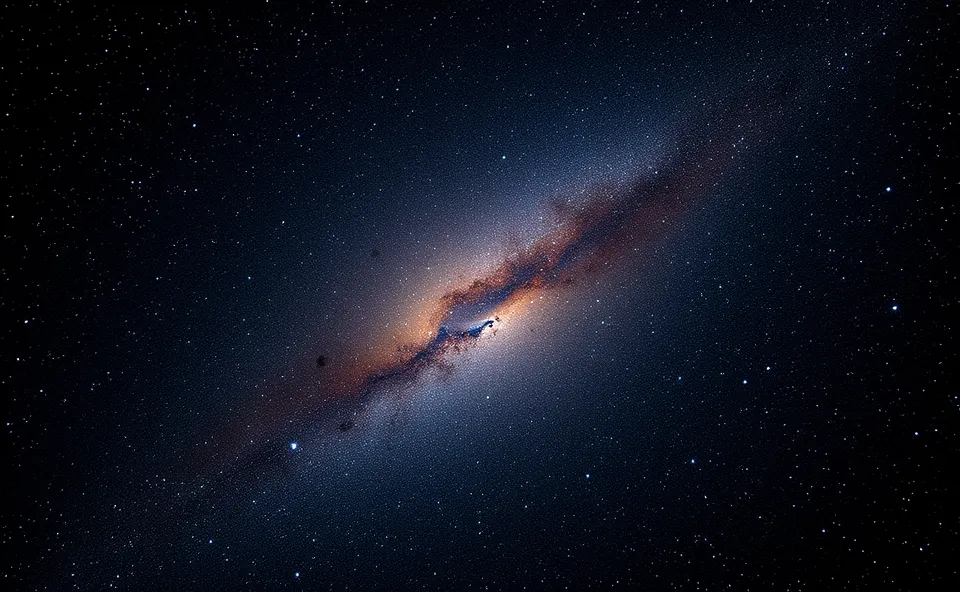
Imagine looking at a picture, but instead of just a few faces, you see 60 million of them. That’s essentially what the Euclid space telescope has just given us with its latest, breathtaking image of the Milky Way’s center. This isn’t just another pretty picture from space; it’s a massive leap forward in how we understand our own galaxy. Euclid, a mission led by the European Space Agency ESA Euclid, has managed to capture an unprecedented number of stars packed into the very heart of the Milky Way galaxy. This high-resolution astronomical imaging is providing scientists with a level of detail they’ve only dreamed of, allowing us to peer into the dense, dusty core of our cosmic neighborhood like never before.
Why All the Buzz About This Galactic Center Snapshot?
The reason this particular image is grabbing so much attention right now is its sheer scale and clarity. We’re talking about a deep space photography feat that resolves an astonishing 60 million stars in a single view. Before this, getting such a detailed look at the crowded Milky Way center was incredibly challenging due to the dust and gas that obscures our view in visible light. Euclid’s ability to see in infrared light cuts through that cosmic fog, revealing a bustling metropolis of stars that were previously hidden. This breakthrough makes the Milky Way center a hot topic in space exploration circles and for anyone fascinated by the universe.
Peering Back Through Time and Dust
To truly appreciate Euclid’s achievement, it helps to understand the history of observing our galactic core. For decades, astronomers have been trying to map and understand the Milky Way’s center, a region teeming with activity and mystery. Early observations were limited by the technology of the time and the very real barriers of interstellar dust. Telescopes like Hubble have given us amazing glimpses, but the sheer density of stars and the obscuring dust at the galactic center have always presented a formidable challenge. Infrared astronomy has been key to overcoming these hurdles, and Euclid represents the cutting edge of this technology. Its mission is specifically designed to map large parts of the universe with incredible precision, and this image is a testament to its capabilities, building on decades of progress in astronomical imaging.
More Than Just a Pretty Picture: The Impact of Euclid’s View
So, what does seeing 60 million stars in the Milky Way’s center actually mean? For starters, it’s a treasure trove for understanding stellar density and evolution. Scientists can now study how stars form, interact, and age in such an extreme environment. This data will help refine our models of star formation not just in our galaxy, but potentially in other galaxies too. For the field of space exploration, it highlights the power of dedicated missions like ESA Euclid and the importance of infrared astronomy. Businesses involved in space technology, data analysis, and scientific instrumentation will undoubtedly find new avenues for research and development. Essentially, this image is a powerful new tool that could rewrite chapters in our understanding of cosmic evolution. It’s a reminder that even our own cosmic backyard holds immense secrets waiting to be uncovered through advanced astronomical imaging.
What’s Next for Our Galactic Neighborhood?
This incredible image of the Milky Way’s center is just the beginning for Euclid. The telescope is on a much larger mission to survey billions of galaxies to understand dark energy and dark matter, two of the biggest mysteries in cosmology. However, this detailed look at our galactic core is crucial for context. By understanding our own galaxy’s structure and stellar populations better, scientists can make more accurate comparisons with distant galaxies. We can expect more groundbreaking images and data as Euclid continues its work, potentially revealing new types of stars, structures, and phenomena within the Milky Way galaxy. This will undoubtedly fuel further advancements in space exploration and our fundamental knowledge of the universe.
Frequently Asked Questions About the Milky Way Center and Euclid
What is the significance of Euclid’s latest image of the Milky Way center?
The significance lies in the unprecedented detail and the sheer number of stars, approximately 60 million, captured in high resolution. This allows astronomers to study the crowded galactic center with much greater clarity than ever before, revealing previously hidden features and aiding in understanding stellar density and evolution in extreme environments.
How does the Euclid space telescope image the Milky Way center differently from previous telescopes?
Euclid primarily uses infrared astronomy, which is crucial for seeing through the dust and gas that obscure the Milky Way center in visible light. This infrared capability, combined with its advanced astronomical imaging technology, allows it to resolve far more stars and finer details in this dense region of the galaxy compared to many previous instruments.
What can scientists learn from studying 60 million stars in the Milky Way galaxy’s core?
By studying such a large population of stars in a concentrated area, scientists can gain deeper insights into star formation processes, the dynamics of stellar clusters, the evolution of stars under high gravitational pressure, and the overall structure and history of the Milky Way galaxy. It’s a unique laboratory for astrophysics.
What is ESA Euclid’s main mission, and how does this image fit into it?
ESA Euclid’s primary mission is to map the geometry of the dark Universe by observing billions of galaxies. While this image focuses on our local Milky Way center, it demonstrates Euclid’s exceptional imaging capabilities and provides valuable reference data for understanding galactic structures, which is important for calibrating observations of distant galaxies and understanding the broader cosmic web.
How does this advanced astronomical imaging contribute to overall space exploration?
This kind of detailed celestial mapping and deep space photography pushes the boundaries of our technological capabilities. It showcases the effectiveness of international collaboration like ESA Euclid and drives innovation in optics, detectors, and data processing. Each new, high-resolution image like this expands our knowledge and inspires future generations of scientists and explorers, making space exploration more tangible and exciting for everyone.











