

Understanding the Connection Between Federal Reserve Hikes and Bond Yields
When the Federal Reserve initiates a cycle of interest rate increases, global capital markets often experience a period of revaluation. Specifically, bond yields—the return an investor receives on a bond—often react in ways that seem counterintuitive to casual observers. According to data from the Federal Reserve Bank of St. Louis, the relationship between monetary policy and long-term borrowing costs is driven by investor expectations of future inflation and economic growth rather than just the immediate policy decision.
The primary keyword of interest here is the bond yields, Fed rate hike dynamic. Historically, investors often assume that as the Federal Reserve raises the federal funds rate, long-term bond yields will move in lockstep. However, historical data suggests that the market often “prices in” these moves well before the official announcement, leading to complex fluctuations in the yield curve.
What Triggers Market Shifts During Tightening Cycles
The immediate catalyst for volatility following a Federal Reserve interest rate hike is usually the shift in investor sentiment regarding inflation. When the central bank raises rates, it is typically an attempt to cool down an overheating economy and temper rising prices. If the market perceives that the Federal Reserve is “behind the curve”—meaning they are not raising rates fast enough to combat inflation—long-term bond yields often climb rapidly as investors demand higher compensation for the risk of purchasing long-term debt.
Conversely, if the market believes the Federal Reserve is being too aggressive, it may trigger fears of a recession. In such cases, investors often rush to buy long-term government bonds as a safe haven, which drives prices up and pushes bond yields down. This phenomenon, known as a flattening or inverting yield curve, serves as a critical indicator of market sentiment and future economic trends.
Historical Context of Interest Rate Cycles
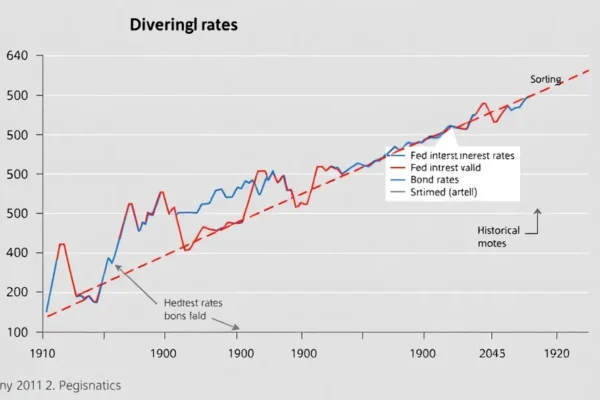
To understand the current environment, one must look at market history. Since the early 1990s, the Federal Reserve has engaged in multiple tightening cycles. During the 2004–2006 cycle, the Federal Reserve raised rates 17 consecutive times, yet long-term bond yields remained remarkably resilient, barely rising in tandem with short-term rates. This was famously referred to by then-Chairman Alan Greenspan as a “conundrum.”
In contrast, the tightening cycle that began in 2022 saw a more traditional reaction, where both short-term and long-term rates rose significantly. According to the U.S. Department of the Treasury, the 10-year Treasury note yield moved from approximately 1.5% at the start of 2022 to over 4% by the end of the year. This disparity highlights that while monetary policy is the primary driver, macroeconomic factors like global supply chain constraints and fiscal stimulus packages play a major role in how bond yields react to Fed rate hikes.
Analyzing the Effectiveness of Rate Hikes
Do Federal Reserve rate hikes actually succeed in slowing the increase of bond yields? Analysis of economic data indicates that while rate hikes are effective at raising the cost of borrowing for consumers and businesses, they are less effective at directly controlling long-term bond yields. Because long-term yields are determined by global market forces, the Federal Reserve has less direct influence over them compared to the federal funds rate.
Investors should monitor the spread between the 2-year and 10-year Treasury notes. This metric, often called the yield curve, provides a roadmap for market expectations. When the 2-year yield is higher than the 10-year yield, it suggests that the market anticipates a slowdown in economic activity. A key takeaway for any investment strategy is to recognize that bond yields are a reflection of the collective market outlook on economic trends rather than a direct mirror of Federal Reserve policy.
Broader Implications for Capital Markets
The movement of bond yields has a ripple effect across all capital markets. When yields rise, the present value of future earnings for growth stocks decreases, which often leads to a decline in stock prices. For example, technology and high-growth sectors are particularly sensitive to these shifts because their valuations rely heavily on earnings projected years into the future.
Furthermore, the competitive landscape changes when bond yields are high. High-quality corporate bonds become more attractive compared to dividend-paying stocks, leading to a reallocation of capital. Investors frequently shift assets from risk-on equity markets to fixed-income portfolios when bond yields provide a competitive risk-adjusted return. This rotation is a fundamental aspect of shifting market cycles and requires a disciplined approach to asset allocation.
Future Outlook and Factors to Watch
Moving forward, market participants should remain focused on incoming economic data, particularly the Consumer Price Index (CPI) and employment reports. These data points influence the Federal Reserve’s decision-making process and, by extension, the trajectory of future rate hikes. A trend of cooling inflation often signals a potential pause or pivot in monetary policy, which would likely stabilize bond yields.
Investors should also monitor the communication from the Federal Open Market Committee (FOMC). Their forward-looking guidance provides the best insight into how they view the balance between inflation and growth. A timeline for policy normalization typically depends on whether inflation trends return to the central bank’s target of 2%. Markets remain unpredictable, and a sudden change in global economic conditions could quickly alter the current outlook.
Risk Disclaimer
Past performance does not guarantee future results. Markets are volatile and subject to sudden changes based on economic data, geopolitical events, and policy shifts. This article is for informational purposes only and does not constitute financial, investment, or legal advice. All investors should consult with a qualified financial advisor before making any investment decisions to ensure they align with their specific risk tolerance and financial goals.
Frequently Asked Questions
How do bond yields move in relation to a Fed rate hike?
While short-term bond yields usually rise alongside a Federal Reserve interest rate hike, long-term bond yields are driven by broader economic expectations. Market history shows that if investors believe the Federal Reserve will successfully curb inflation without triggering a recession, long-term bond yields may rise. However, if the market fears an economic slowdown, bond yields may remain flat or even decline.
Is the relationship between a Fed rate hike and bond yields consistent?
No, the relationship is not always linear. As seen in the 2004-2006 period, long-term bond yields did not follow the upward trajectory of short-term interest rates. This inconsistency is typically caused by external factors such as global demand for U.S. debt, shifts in inflation expectations, and international economic conditions that fall outside of the direct control of the Federal Reserve.
What are the primary risks for investors during a tightening cycle?
The primary risks include price volatility in both equity and fixed-income markets. As interest rates rise, existing bonds with lower coupons lose value, impacting bond fund performance. Additionally, companies with high levels of debt may face increased interest expenses, which can negatively impact earnings growth and stock prices. Diversification and a long-term investment strategy are key methods for managing these risks.
How does the yield curve impact investment strategy?
The yield curve is a tool used by many to assess the economic climate. An inverted yield curve, where short-term rates exceed long-term rates, has historically been a reliable indicator of potential recession. Investors often adjust their portfolios by moving toward defensive sectors or high-quality fixed income when the curve inverts, as this signals a cooling of economic growth and potential market volatility.
How does this compare to previous interest rate cycles?
Comparing current economic trends to past cycles reveals that while the mechanics of a Fed rate hike remain consistent, the global macroeconomic environment is unique each time. Unlike the low-inflation environment of the 2010s, modern cycles must account for supply chain resilience and labor market shifts. By examining historical data from previous decades, investors can better understand that rate hikes serve as a tool for stabilization rather than an exact mechanism for controlling all bond yields.











