

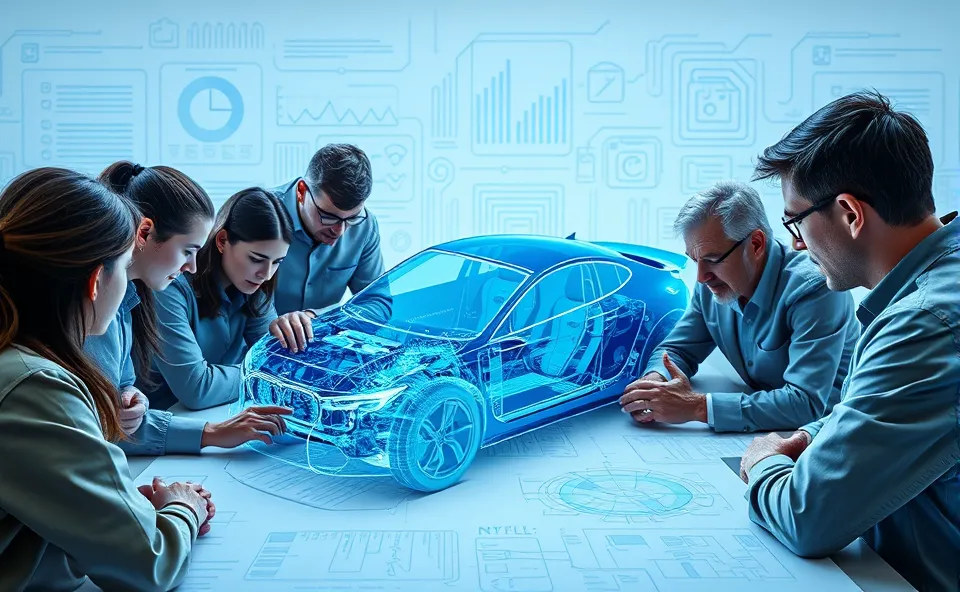
Ford’s Smart Move: Bridging Generations with AI and Wisdom
So, have you heard about what Ford is doing? It’s pretty neat. They’re taking a page out of the old playbook while embracing the new. Basically, they’re bringing back experienced engineers, the kind with decades of know-how, often called “gray beard” engineers, to work alongside their younger talent. But here’s the twist: they’re pairing this seasoned wisdom with cutting-edge AI to boost how they design and build cars. It’s a fascinating blend of human experience and artificial intelligence.
Why Is Everyone Talking About Ford AI and Gray Beard Engineers Now?
This whole strategy is really picking up steam because it taps into a few big trends happening all at once. Businesses everywhere are grappling with how to get the most out of AI productivity tools. At the same time, there’s a growing recognition of the value of experienced workers and the challenge of passing on their specialized knowledge. Ford’s approach is a direct answer to these questions. They’re showing a way to not just adopt new tech, but to integrate it with the invaluable human element, especially in complex fields like automotive AI. It’s a hot topic because it offers a potential solution for companies looking to stay competitive by leveraging both their existing tech talent and their seasoned workforce.
The Foundation: Decades of Design Secrets
To really get why Ford’s strategy is so smart, you need to understand what these “gray beard” engineers bring to the table. Think about someone who has been designing cars for 30 or 40 years. They’ve seen trends come and go, they’ve experienced countless engineering challenges, and they have an almost intuitive understanding of what makes a car great – not just in terms of performance, but also in terms of usability and durability. This is the kind of deep, nuanced knowledge that’s hard to capture in a manual or a software program. It’s the kind of wisdom gained through hands-on problem-solving, trial and error, and a keen eye for detail. This isn’t just about knowing how to tighten a bolt; it’s about understanding the subtle interplay of materials, aerodynamics, and human comfort that has evolved over generations of car making. This is the bedrock upon which Ford is building its future.
The Synergy: Wisdom Meets the Machine
Now, imagine taking all that incredible human experience and feeding it into AI systems. That’s where the magic happens. Ford is using AI not just to automate tasks, but to accelerate learning and innovation. These experienced engineers can guide AI models, teaching them to recognize patterns, optimize designs, and predict potential issues based on their lifetime of experience. This is way beyond simple AI integration. It’s about creating a feedback loop where AI can process vast amounts of data and simulations at speeds unimaginable to humans, but it’s the experienced engineers who provide the critical context, the “why” behind the data. This partnership is key to unlocking new levels of AI productivity in engineering.
Think about it this way:
- Accelerated Design Cycles: AI can run thousands of design variations in minutes, but a seasoned engineer can quickly identify which ones are worth pursuing based on years of practical knowledge.
- Enhanced Problem Solving: When a complex engineering challenge arises, AI can analyze potential solutions, but a “gray beard” engineer can provide the intuition and experience to steer the AI towards the most effective and efficient fix.
- Knowledge Transfer: This collaboration provides a structured way for younger engineers to learn from their senior colleagues, not just by watching, but by actively participating in projects where their mentor’s wisdom is directly informing AI driven processes.
- New Discoveries: By combining AI’s ability to spot anomalies and patterns with human insight, Ford can uncover novel solutions and design approaches that might have been missed otherwise.
This isn’t about replacing experienced engineers; it’s about augmenting their abilities and ensuring their invaluable knowledge is preserved and amplified. It’s a powerful model for workforce development in the tech sector and beyond.
What This Means for the Future of Driving and Work
The impact of this strategy ripples outwards. For car buyers, it could mean better designed, more reliable, and more innovative vehicles coming to market faster. Imagine cars that are not only safer and more efficient but also have that subtle touch of excellence that comes from deep engineering understanding. This is the promise of advanced automotive AI guided by human expertise.
For the automotive industry, Ford’s approach could set a new standard for how companies manage their talent and technology. It shows that the future of work doesn’t have to be a battle between humans and machines, but a collaboration. It highlights the critical importance of fostering an environment where experienced professionals feel valued and can actively contribute to shaping the next generation of innovation. This is crucial for retaining tech talent and ensuring continuous innovation.
For the broader tech landscape, this Ford AI initiative offers a compelling example of how to successfully integrate new technologies like AI with established human expertise. It’s a practical demonstration of how to achieve AI productivity gains without sacrificing the invaluable experience and intuition that only humans possess. It’s a win-win for innovation and workforce development.
What’s Next on the Road Ahead?
Looking forward, it’s logical to see other companies in the automotive sector, and indeed in other complex industries, exploring similar strategies. The success of Ford’s “gray beard” engineer and AI initiative could pave the way for more structured mentorship programs that explicitly integrate AI tools. We might see more specialized AI training programs developed in partnership with experienced professionals, focusing on imparting specific domain knowledge.
Expect to see more emphasis on creating platforms and processes that facilitate this kind of intergenerational collaboration. The future of work will likely involve more flexible roles for experienced professionals, allowing them to contribute their expertise in advisory or mentorship capacities, amplified by AI. This approach could become a key differentiator for companies looking to attract and retain top talent while driving cutting-edge innovation.
Frequently Asked Questions
How does Ford AI leverage gray beard engineers?
Ford AI uses experienced “gray beard” engineers to guide AI systems, teaching them design principles and problem-solving techniques based on decades of automotive expertise. This collaboration enhances AI productivity and ensures that deep human knowledge is integrated into the design process.
What are the benefits of engineering mentorship with AI integration?
The benefits include faster design cycles, improved problem-solving capabilities, effective knowledge transfer from seasoned professionals to younger engineers, and the potential for uncovering novel innovations. AI integration amplifies the impact of engineering mentorship.
How does AI productivity improve with experienced engineers?
AI productivity improves because experienced engineers provide crucial context and validation for AI outputs. They can direct AI towards more fruitful design paths and help interpret complex simulation results, leading to more efficient and effective use of AI tools.
What is the role of experienced engineers in the future of work at Ford?
Experienced engineers at Ford play a vital role in mentoring younger talent and guiding AI development. They are essential for preserving and transferring critical design wisdom, ensuring that innovation is built on a strong foundation of knowledge and experience.
How does workforce development benefit from Ford’s approach to automotive AI and talent?
Workforce development benefits by creating a dynamic learning environment where younger engineers gain invaluable insights from seasoned mentors, and experienced engineers’ knowledge is preserved and scaled through AI. This hybrid approach strengthens the entire engineering team.











