

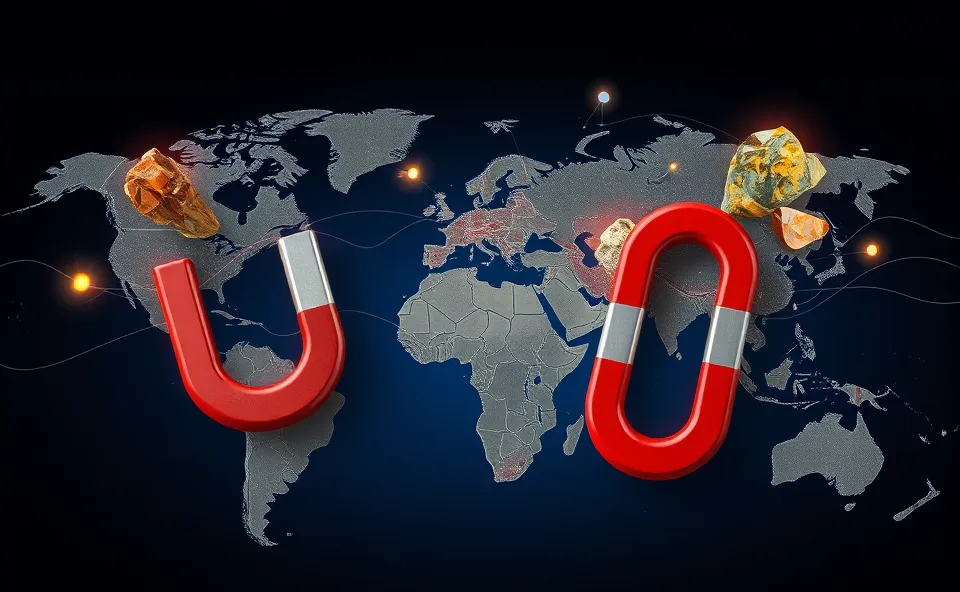
G7’s Ambitious Plan to Reshape the Rare Earth Landscape
Imagine this: a group of the world’s most powerful economies, the G7, getting together and saying, “We need to dial back China’s grip on something super important to our future.” That “something” is rare earth elements, and the G7 has set a goal to cap China’s dominance in this critical minerals market to 60% by 2030. This isn’t just about minerals; it’s a huge geopolitical play aiming for more resource independence for countries like the United States, Canada, Japan, and European nations. They’re essentially trying to build a more balanced global supply chain for these essential materials that power everything from your smartphone to the turbines in wind farms.
Why the Sudden Buzz Around Rare Earths and the G7?
You might be wondering why this is suddenly making waves. Well, the urgency stems from a growing realization that our modern world, especially the green energy transition and the advancement of high-tech industries like semiconductor manufacturing, is heavily reliant on these specific elements. China has, for decades, been the undisputed king of rare earth production and processing. This has given them significant leverage. As countries scramble to secure their own supply chains for everything from electric vehicle batteries to advanced defense systems, the G7’s proactive stance on diversifying the rare earth supply chain is capturing attention. It’s a clear signal that nations are waking up to the strategic importance of critical minerals and are ready to act.
A Look Back: How We Got Here with Rare Earths
To truly grasp the G7’s ambition, we need a little history lesson. For years, China has dominated the rare earth market. This dominance wasn’t accidental. They strategically invested in exploration, extraction, and, crucially, the complex processing needed to turn raw ore into usable materials. For a long time, it was simply cheaper and more efficient to get processed rare earths from China than to develop those capabilities elsewhere. Other countries, particularly Western nations, saw rare earths as just another commodity and didn’t prioritize building their own robust mining and processing infrastructure. This created a situation where, if China were to ever restrict exports, it could severely cripple industries worldwide. The ongoing global supply chain vulnerabilities exposed by recent events have only amplified the need to address this imbalance.
What This Means for Our Tech-Driven World
The G7’s goal has significant ripple effects. For consumers, it could eventually mean more stable pricing and availability for the gadgets we rely on daily. Think about the components inside your phone, laptop, or even your car’s navigation system; many contain rare earth elements. For businesses, especially those in semiconductor manufacturing and the battery metals sector, it’s about reducing risk. Relying on a single dominant supplier for critical minerals creates a vulnerability that can disrupt production and innovation.
This move by the G7 aims to foster a more resilient global supply chain, encouraging investment in new mining operations and processing facilities in other parts of the world. It’s a push for technological sovereignty and economic security. Imagine a future where your favorite tech products aren’t susceptible to geopolitical tensions affecting a single country’s output. This is the promise the G7 is chasing. It also fuels innovation in recycling rare earth elements, further reducing reliance on primary extraction.
Charting the Course Ahead: The Road to 60%
Achieving the G7’s 2030 goal is far from a done deal. It’s a marathon, not a sprint, and the challenges are substantial.
- Geopolitical Hurdles: Building new mines and processing plants takes time and significant investment. It also requires navigating complex environmental regulations and gaining local community support. Furthermore, China isn’t likely to simply accept a reduced market share without its own strategic responses. Trade policy will be a major battleground.
- Economic Realities: The cost of extracting and processing rare earths outside of China needs to become competitive. This means substantial subsidies, government backing, and private sector investment will be crucial. Developing the specialized expertise required for advanced processing is another hurdle.
- Supply Chain Creation: Establishing an entirely new, robust supply chain from mine to finished product is a massive undertaking. It involves securing permits, building infrastructure, training a workforce, and ensuring ethical and sustainable practices at every stage. This isn’t just about digging up rocks; it’s about building an entire industrial ecosystem.
The G7’s strategy will likely involve a multi-pronged approach:
- Investing in R&D: Focusing on new extraction and processing technologies that are more efficient and environmentally friendly.
- Supporting Domestic Production: Providing incentives and funding for companies looking to develop rare earth capabilities within G7 nations.
- Diversifying Partnerships: Working with other resource-rich countries to build alternative supply routes.
- Promoting Recycling: Enhancing capabilities to recover rare earth elements from end-of-life products.
The journey to cap China’s rare earth dominance at 60% is ambitious, but the strategic importance of these minerals for the green energy transition and future technologies makes it a goal worth pursuing.
Frequently Asked Questions About Rare Earths and the G7
What are rare earth elements and why are they important to the G7?
Rare earth elements are a group of 17 chemical elements vital for modern technologies, including magnets for wind turbines and electric cars, catalysts, and components in electronics. The G7 sees controlling their supply chain as crucial for resource independence and technological advancement.
How does China’s current rare earth dominance affect the global supply chain?
China’s significant control over the extraction and processing of rare earths means global supply chains are vulnerable to its trade policies and geopolitical decisions. This creates risks for countries aiming to expand their green energy transition and semiconductor manufacturing capabilities.
What challenges does the G7 face in reducing China’s rare earth influence?
Key challenges include the high cost of establishing new mining and processing facilities outside China, the lengthy timeframes for development, navigating complex environmental regulations, and competing with China’s established infrastructure and lower production costs.
Can the G7 realistically achieve its 2030 goal for rare earth supply?
Achieving the 60% cap is ambitious and requires substantial investment and coordinated international efforts. While a significant reduction is possible, reaching the precise target will depend on overcoming numerous economic, geopolitical, and supply chain hurdles.
What role do critical minerals play in the G7’s geopolitical strategy?
Critical minerals, including rare earths and battery metals, are central to the G7’s geopolitical strategy. Securing a stable and diverse supply chain for these resources is essential for economic security, national defense, and leading the global green energy transition.











