

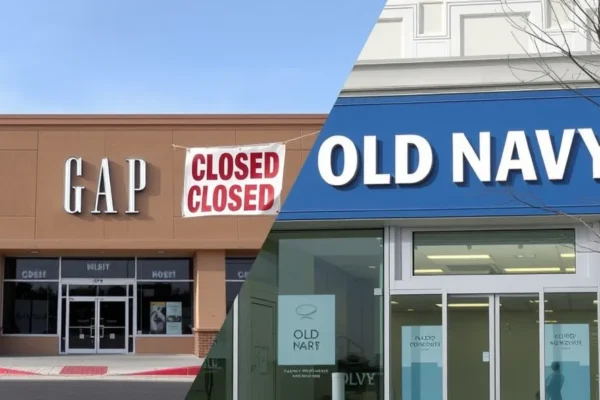
Gap Inc. Reshapes Its Footprint: Store Closures and Old Navy’s Evolving Position
Gap Inc., the parent company of iconic apparel brands like Gap, Old Navy, Banana Republic, and Athleta, is undertaking a significant restructuring of its physical retail presence. This strategic shift involves a wave of store closures across its portfolio, with a particular focus on addressing challenges and redefining the market position of its largest and most accessible brand, Old Navy. The company’s recent announcements signal a decisive move to adapt to changing consumer habits and the dynamic landscape of the apparel industry. These actions come amidst ongoing retail challenges that have impacted numerous legacy players.
The Strategic Imperative Behind the Closures
The decision to close stores is not merely about shrinking a physical footprint; it’s a calculated move driven by a confluence of factors. Chief among these is the relentless shift towards e-commerce, accelerated by recent global events. Consumers are increasingly comfortable and accustomed to shopping for apparel online, necessitating a recalibration of how retailers allocate their resources. For Gap Inc., this means optimizing its store portfolio to better align with current shopping patterns and reduce operational costs associated with underperforming physical locations.
Specifically for Old Navy, the largest revenue generator within Gap Inc., the store closures are part of a broader effort to revitalize its brand strategy. Old Navy, known for its affordable, family-friendly fashion, has faced increasing competition from fast-fashion retailers and a growing demand for both value and digital convenience. Gap Inc.’s leadership has stated that these closures are intended to streamline operations, improve profitability, and reinvest in areas that drive future growth, such as digital capabilities and curated store experiences where they remain. The company’s official announcements regarding store rationalization, often detailed in quarterly earnings reports and investor calls, underscore a commitment to fiscal discipline and strategic agility. For instance, the company has previously outlined plans to close a significant number of underperforming Gap and Banana Republic stores, and recent reports indicate a similar, albeit nuanced, approach for Old Navy. This is driven by the need to ensure each brand’s store presence is not only profitable but also contributes positively to the overall brand experience.
Navigating a Crowded Apparel Marketplace
The competitive landscape for apparel retailers is fiercer than ever. Gap Inc.’s strategic adjustments, particularly concerning Old Navy, must be viewed through this lens. Old Navy’s direct competitors include a wide array of retailers, from mass-market giants like Walmart and Target to specialized value apparel chains like TJ Maxx and Ross Stores, as well as agile online-only players. The rise of fast-fashion brands, offering rapid trend cycles and low price points, also poses a constant challenge.
By closing less productive stores, Gap Inc. aims to concentrate its resources on locations that offer the best return on investment and are strategically positioned to attract its target demographic. This could involve focusing on higher-traffic areas or areas with a strong online order fulfillment presence. For competitors, these moves by Gap Inc. create both opportunities and threats. Retailers that can effectively blend online and in-store experiences, offer compelling value propositions, and adapt quickly to fashion trends will be well-positioned to capture market share. Conversely, companies that are slow to adapt to e-commerce and fail to offer a differentiated customer experience risk being left behind. The overall competitive positioning of Gap Inc. hinges on its ability to successfully execute these strategic realignments across its brands, particularly in strengthening Old Navy’s connection with its core customer.
Shifting Sands in the Retail Sector
Gap Inc.’s store closure strategy is a microcosm of broader trends sweeping through the retail industry. The ongoing digital transformation, coupled with evolving consumer expectations for convenience, sustainability, and personalized experiences, is fundamentally reshaping how people shop for apparel. This is leading to a significant “retail shakeout,” where companies that fail to innovate and adapt are struggling to survive. The apparel industry, in particular, is highly susceptible to changing fashion cycles and economic shifts, making agility a crucial competitive advantage.
The strategic implications of these store closures extend beyond Gap Inc. They signal a growing acceptance within the industry that a vast physical store footprint is no longer a prerequisite for success. Instead, retailers are increasingly prioritizing “right-sizing” their brick-and-mortar presence and investing in robust e-commerce platforms and supply chain efficiencies. This trend is likely to encourage other legacy retailers to re-evaluate their own store portfolios and consider similar rationalization strategies. The competitive landscape will likely become more polarized, with dominant online players and highly curated physical retail experiences coexisting, while those caught in the middle may struggle to maintain relevance. The focus for many in the apparel industry is shifting from sheer scale to strategic agility and customer-centric innovation.
Financial and Operational Realities of Restructuring
The financial implications of Gap Inc.’s store closures are multifaceted. In the short term, the company will incur costs associated with lease terminations, severance packages, and inventory liquidation. However, the long-term objective is to improve profitability by reducing overheads, optimizing inventory management, and reallocating capital to more productive channels, such as e-commerce and more efficient store formats. Closing underperforming stores directly impacts revenue streams from those locations, but the aim is to offset this by driving sales through digital channels and the remaining, more strategic physical stores.
Operationally, these closures necessitate a significant overhaul of supply chain and logistics networks. The company must ensure seamless fulfillment of online orders, potentially leveraging remaining stores as mini-distribution hubs. This restructuring can lead to a more streamlined organizational structure, with a greater emphasis on digital marketing, data analytics, and agile product development. While specific financial targets for these initiatives are often communicated during earnings calls, the general expectation is a gradual improvement in profit margins and a more resilient financial performance over the medium to long term, assuming successful execution. Metrics such as comparable store sales, online conversion rates, and inventory turnover will be key indicators of success.
Navigating the Pitfalls of Strategic Change
Despite the strategic rationale, executing a large-scale store closure plan is fraught with challenges. One of the primary risks is the potential for alienating loyal customers who relied on those specific locations. If the transition to digital channels or alternative physical stores is not smooth, these customers may seek out competitors. Furthermore, the cost savings from closures can be offset by unforeseen expenses related to lease breaks or severance packages. There’s also the risk of cannibalizing sales from nearby remaining stores if customers shift their purchasing habits without an overall increase in spending.
Historically, Gap Inc. has faced its own execution challenges. Past attempts to revitalize brands or streamline operations have met with mixed success. The company needs to ensure that the reinvestment in digital capabilities and marketing is effective and that the remaining physical stores offer a compelling enough experience to retain foot traffic. Organizational inertia can also be a hurdle, with resistance to change from employees or management. Market risks, such as unexpected shifts in consumer spending or increased competition, could further complicate these efforts. The effectiveness of Gap Inc.’s leadership in navigating these complexities will be critical to the success of this strategy.
Impact on Those Involved
The ramifications of Gap Inc.’s store closure strategy will be felt by various stakeholders. Employees in affected stores will face job displacement, necessitating support for retraining or transitioning to new roles within the company where possible. Customers may experience reduced accessibility to physical stores, particularly in areas where closures are concentrated. This could lead to a shift in their shopping habits and potentially a change in brand loyalty if alternative options are more convenient or appealing.
Investors, while generally supportive of moves aimed at improving profitability, will be closely watching the financial performance and the execution timeline. Positive momentum in online sales and a clear path to improved margins will be crucial for maintaining investor confidence. The company’s brand partners and suppliers will also be impacted by changes in order volumes and distribution strategies. Culturally, this period of restructuring can create uncertainty within the organization, underscoring the importance of clear communication and strong leadership to maintain morale and focus on strategic objectives. For Old Navy, maintaining its connection with value-conscious families while adapting to a changing retail environment is paramount.
Looking Ahead: Milestones and Expectations
If Gap Inc.’s store closure strategy is successful, the company should see a gradual improvement in its financial performance, characterized by increased profitability and a more efficient use of capital. Key milestones to watch will include the company’s reported e-commerce growth rates, improvements in comparable store sales for its remaining locations, and overall margin expansion. Investors will be looking for evidence that the cost savings from store closures are being effectively reinvested in growth initiatives, particularly in digital channels and brand marketing.
Measurable outcomes might include a stabilization or increase in overall revenue despite a reduced store count, and a demonstrably improved return on invested capital. The timeline for these results will likely be gradual, with significant impacts expected over the next 18-36 months as the restructuring takes full effect. Monitoring Gap Inc.’s investor presentations and quarterly earnings reports will provide crucial insights into the progress and ongoing challenges of this strategic pivot. The continued evolution of Old Navy’s brand strategy within this new operational framework will be a key indicator of broader success.
Frequently Asked Questions About Gap and Old Navy’s Strategy
Will these store closures ultimately benefit Gap and Old Navy?
The closures are designed to improve financial performance by reducing costs and focusing resources on more profitable areas, like e-commerce. Success hinges on effective execution and market adaptation.
Why is Old Navy facing challenges despite being Gap’s largest brand?
Old Navy, while large, operates in a highly competitive value segment and faces pressure from both online retailers and other brick-and-mortar chains adapting to new market trends.
What are the main risks associated with these store closures?
Key risks include alienating existing customers, incurring unexpected costs from lease terminations, and failing to adequately reinvest savings into growth areas like digital sales.
How long will it take to see the impact of these store closures?
Significant financial and operational impacts are expected to materialize over the next 18 to 36 months as the restructuring plan is fully implemented.
What are the alternatives Gap Inc. could have pursued instead of store closures?
Alternatives might include radical redesigns of existing stores, aggressive expansion into new markets, or significant divestitures of underperforming brands, but these carry their own substantial risks.
How do these Gap store closures reflect broader apparel industry trends?
They highlight the widespread shift towards e-commerce, the need for retailers to optimize physical footprints, and the increasing importance of agility and digital investment in the apparel industry.
This business analysis acknowledges that all business outcomes are subject to execution risk and the unpredictable nature of market dynamics.











