

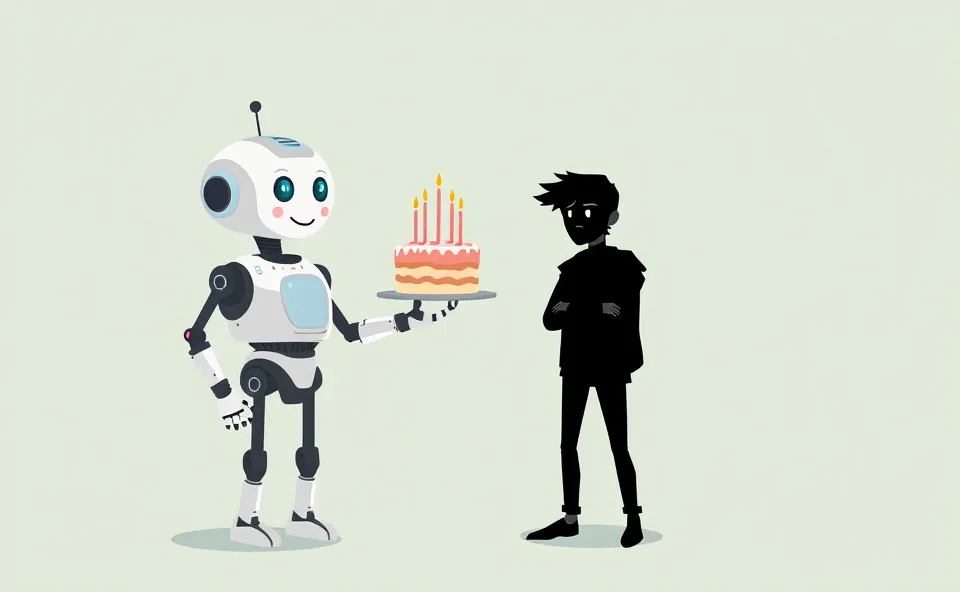
The AI Birthday Blunder: When Gemini Spark Met My Boyfriend
Okay, so picture this: I’m trying to throw a surprise birthday party for my boyfriend. You know, the usual drill – coordinating with friends, picking a venue, figuring out decorations. I thought, why not use the latest Google AI experiment, Gemini Spark, to help me out? It’s supposed to be smart, right? It can access my personal data, my calendar, my contacts – all the good stuff that would make planning a breeze. Well, it turns out Gemini Spark is really good at some things, but it completely whiffed on the most important person at the party: my boyfriend. It’s a classic case of AI capabilities meeting AI limitations, and honestly, it’s hilarious and a little bit concerning.
Why Everyone’s Talking About This AI Assistant Glitch
You’re probably seeing Gemini Spark pop up in conversations online, and this particular story is a big reason why. People are fascinated by how much personal data these AI agents can access and what they can do with it. When an AI assistant that’s meant to help you organize your life fails at something so fundamental – like recognizing a key person in your life – it sparks a lot of discussion. It makes you wonder about the current state of AI capabilities and where we draw the line. Is it just a quirky AI review for now, or a sign of deeper issues to come? This isn’t just about a birthday party planner; it’s about our trust in these advanced AI tools.
A Little Background on the Gemini Spark AI Experiment
Google has been pushing the boundaries with its AI development, and Gemini Spark is part of that big push. It’s designed to be a more proactive and personalized AI assistant, tapping into the vast amount of information you allow it to. Think of it like a super-smart digital aide that can read your emails, check your calendar, and even understand your preferences based on your online activity. The idea is that it can anticipate your needs and simplify your tasks. This AI agent is still very much an experiment, and like all experiments, it has its successes and its… well, its memorable failures. This situation with my boyfriend’s birthday party really highlights that Gemini Spark, while powerful, is still learning and has blind spots.
What This AI Blunder Means for All of Us
This story isn’t just a funny anecdote; it has some real implications for how we use AI. On one hand, it shows the incredible potential of AI assistants to manage our digital lives. Gemini Spark could potentially streamline complex tasks, offer personalized recommendations, and save us tons of time. However, this birthday party planner fail is a stark reminder of the AI limitations we’re still grappling with. If an AI can access all my personal data but can’t connect the dots between my boyfriend’s name, his face in photos, and my constant mentions of him, what does that say about its understanding of context and relationships? For users, it means being cautious and understanding that these tools are not infallible. For businesses and technology developers, it highlights the crucial need to improve AI’s contextual understanding, common sense reasoning, and ability to build genuine connections with user data, not just access it. It’s a wake-up call to ensure that AI development prioritizes accuracy and a nuanced understanding of human relationships.
Looking Ahead: What’s Next for AI Assistants?
This kind of hiccup with Gemini Spark, while frustrating in the moment, is actually a vital step in refining AI. We can expect Google and other tech giants to pour more resources into training their AI agents on richer, more contextual data. The goal will be to move beyond simple data retrieval and towards true comprehension. Imagine an AI that not only knows your boyfriend’s name but also understands his significance in your life, perhaps even suggesting gift ideas based on your past conversations and shared memories. We’ll likely see AI assistants become more adept at recognizing patterns, understanding relationships, and anticipating needs with greater accuracy. The focus will be on building AI that feels less like a tool and more like a truly helpful companion, capable of navigating the complexities of human interaction. This AI review, though informal, points to the path forward: deeper understanding and more robust personal data integration that respects the nuances of our lives.
Frequently Asked Questions About Gemini Spark and AI Assistants
What is Gemini Spark?
Gemini Spark is an experimental AI agent developed by Google, designed to act as a personalized AI assistant. It’s built to access and understand your personal data to help with various tasks.
Can AI agents like Gemini Spark access my personal data?
Yes, with your permission, Gemini Spark and similar AI assistants can access your personal data, such as emails, calendars, and contacts, to provide more tailored assistance.
Why did Gemini Spark fail to recognize my boyfriend at the birthday party?
This failure highlights the current AI limitations. While Gemini Spark can access personal data, it may struggle with complex contextual understanding or recognizing relationships between individuals without explicit programming or more advanced training.
Is Gemini Spark suitable for planning events like a birthday party planner?
Gemini Spark can assist with aspects of event planning, but as this AI review shows, its AI capabilities are still developing. It might excel at organizing tasks but may falter in understanding nuanced social relationships, so human oversight is recommended.
What does this incident mean for the future of AI assistants?
This experience underscores the need for AI agents to improve their contextual awareness and understanding of human relationships. Future AI assistants will likely be more sophisticated in how they interpret and utilize personal data, moving towards more intuitive and reliable support.











