

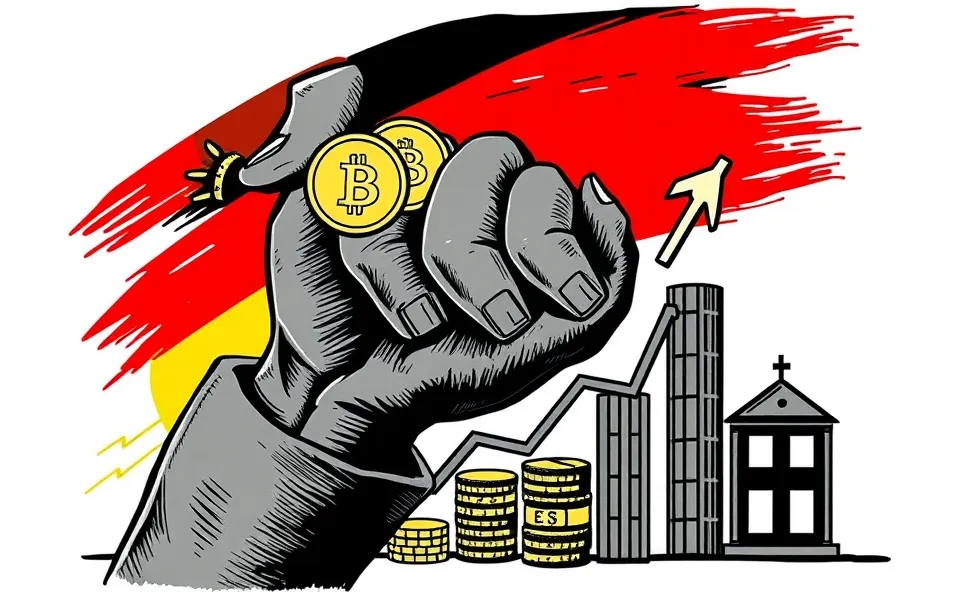
Germany’s Economic Tightrope Walk
Right now, Germany’s economy is in a bit of a balancing act. Think of it like a tightrope walker. On one side, there are forces pushing the economy down, threatening a dip or even a contraction. But on the other side, there’s a strong hand holding the pole steady – and that hand belongs to the German government, with its spending. This government spending is proving to be the crucial factor keeping the economy from falling into a downturn. It’s a significant story in the world of business and economics, especially when we look at the German GDP.
Why All the Buzz About Government Spending Now?
You might be wondering why this is a hot topic right now. Well, recent reports, including those from the Bundesbank, have highlighted the delicate state of the Germany economy. Every bit of data, every economic forecast, is being scrutinized. When you see signs that the economy could be slowing, and then you see how much the government is putting into the system through its fiscal policy, people naturally connect the dots. They want to understand if this spending is just a temporary fix or a sustainable strategy. The question is: can government spending really fend off a recession risk?
A Little History to Set the Scene
To really get what’s happening with German GDP and government spending today, it helps to rewind a bit. For years, Germany has been known for its strong export sector and a generally healthy economy within the eurozone. However, global shifts, supply chain issues, and changing energy markets have put pressure on this traditional strength. In the past, Germany often focused on fiscal prudence, sometimes even running budget surpluses. But as the economic winds have changed, so has the approach. The government has had to step in more actively to support key industries and households, shifting its fiscal policy to meet new challenges. This isn’t a completely new playbook, but the scale and necessity of it are more pronounced now. The central bank report confirms this shift in strategy.
What Does This Mean for You and Me?
So, what’s the big deal for businesses, for the markets, and even for everyday people? Firstly, this government spending is acting like a buffer. For businesses, it can mean continued demand for their products and services, even if overseas markets are weak. It can translate into support for investment, job security, and a generally more stable business environment. Think about infrastructure projects, energy subsidies, or support for certain industries. These are direct injections that keep the wheels of the economy turning. For the broader eurozone stability, Germany’s economic health is paramount. If Europe’s largest economy falters, it sends ripples across the entire bloc. This government intervention is, in essence, an effort to prevent that domino effect.
From a technology perspective, this sustained economic activity, even if propped up by government spending, can continue to fuel innovation and investment in new tech. Companies are more likely to invest in R&D and adopt new technologies when they have a degree of economic certainty. On the flip side, there are always questions about the long-term implications. Is this level of public debt sustainable? Are we creating an economy that’s overly reliant on government handouts? These are crucial conversations happening within economic circles.
Here’s a quick look at some potential impacts:
- Business Resilience: Government spending can provide a much needed lifeline, helping businesses navigate uncertain times and avoid significant cutbacks.
- Consumer Confidence: Stability in the economy can translate into more confidence for consumers, encouraging spending and further economic growth.
- Investment Flows: A stable economic outlook, bolstered by government action, can attract and retain investment, both domestic and foreign.
- Innovation Engine: Continued economic activity supports ongoing investment in research and development, keeping the technology sector vibrant.
Looking Ahead: What Comes Next?
The million-dollar question is, how long can this continue, and what’s the endgame? The current strategy is clearly working to prevent an immediate economic contraction, but it’s not a magic wand. The Bundesbank and other economic observers are keenly watching how sustainable this level of government spending is. A key factor will be how effectively these funds are deployed. Are they boosting productive capacity, or are they simply delaying the inevitable?
The future trajectory will likely depend on a few things. Firstly, global economic recovery will play a huge role. If international demand picks up, Germany’s powerful export engine can regain its footing, reducing reliance on domestic stimulus. Secondly, the success of targeted government investments is critical. If the spending goes towards future-oriented sectors like renewable energy or digitalization, it could lay the groundwork for stronger, more sustainable economic growth in the long run.
There’s also the ongoing discussion about fiscal policy adjustments. As the economy potentially stabilizes, governments will eventually need to consider how to manage public debt. This doesn’t mean immediate austerity, but rather a gradual shift towards a more balanced approach. The aim will be to foster genuine economic growth, rather than relying solely on government spending to keep the numbers looking good. The risk is that if government spending alone props up German GDP without addressing underlying structural issues, the long-term economic forecast might still hold challenges.
Common Questions Answered
What is the current state of the German GDP?
The German GDP is currently being supported by significant government spending, which is helping to prevent a decline or contraction. While there are pressures that could lead to a slowdown, current fiscal policy is acting as a crucial stabilizer.
How does government spending impact the Germany economy?
Government spending injects money into the economy through various channels, such as public investment, subsidies, and social programs. This boosts demand, supports businesses, and helps maintain employment, thereby preventing a potential recession risk.
What is the Bundesbank’s view on the current economic situation and fiscal policy?
The Bundesbank, as Germany’s central bank, closely monitors economic trends. Recent central bank reports have acknowledged the role of government spending in supporting the Germany economy, while also likely pointing out the need for sustainable fiscal policy in the long term.
What are the implications of this fiscal policy for the eurozone stability?
Germany’s economic health is vital for the eurozone. By preventing a contraction in its own economy through government spending, Germany contributes to overall eurozone stability and helps mitigate the risk of wider economic contagion.
What are the potential risks associated with this level of government spending on German public debt?
Sustained high government spending can lead to an increase in public debt. The key challenge is to ensure that this spending is productive and fosters long-term economic growth, so that the debt remains manageable and does not hinder future economic flexibility.











