

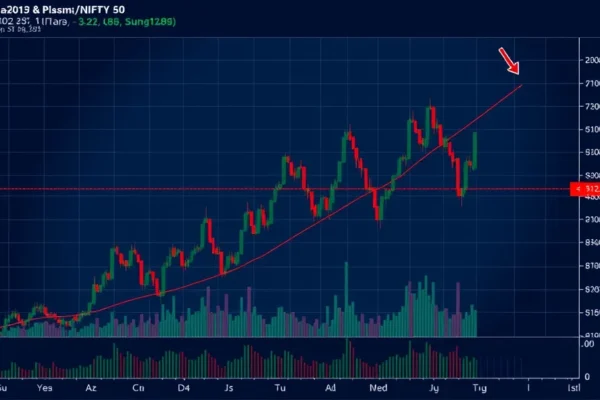
The Shift in Global Trading Dynamics for the Gift Nifty 50
In a move to integrate Indian equity markets more deeply with global liquidity pools, the National Stock Exchange of India (NSE) launched the GIFT Nifty 50 derivatives trading platform in collaboration with the Singapore Exchange (SGX). This development, which transitioned from its pilot phase to full operation in mid-2023, reflects a strategic shift in how international investors access the Indian stock market. By moving the trading of Nifty 50 futures from Singapore to the Gujarat International Finance Tec-City (GIFT City), the NSE has effectively brought offshore activity back under its regulatory umbrella.
This transition was triggered by the need to streamline market access, reduce fragmentation, and enhance the oversight of foreign capital flows. For traders, this means the Gift Nifty 50 now serves as the primary gateway for assessing early-morning market trends before the domestic Indian exchanges open at 9:15 AM IST. With the platform operating for nearly 21 hours a day, it provides a crucial barometer for global sentiment regarding Indian economic growth.
Strategic Rationale Behind Centralized Trading
The strategic intent behind the Gift Nifty 50 platform is to capture the trading volume that previously migrated offshore to avoid domestic regulatory constraints. By creating a unified marketplace in GIFT City, the NSE is solving a fragmentation problem. Previously, investors had to navigate multiple platforms, leading to liquidity disparities and pricing inefficiencies.
Market analysts note that the consolidation into GIFT City allows the NSE to offer a competitive tax regime and a world-class financial infrastructure. The decision is driven by a broader ambition to position India as a global financial hub. From a technical perspective, traders use the Gift Nifty 50 to gauge potential opening gaps in the local Indian indices. The current focus on Fibonacci support at 24,123 highlights the role of technical indicators in guiding institutional strategies during periods of high volatility.
Competitive Context and Global Positioning
The establishment of the Gift Nifty 50 places India in direct competition with other Asian financial centers, such as Singapore and Hong Kong. For years, the SGX Nifty served as the primary instrument for global funds to hedge their Indian exposure. By bringing this liquidity to Gujarat, the NSE has effectively reclaimed control over the price discovery process of its flagship index.
This move disadvantages firms that relied on the offshore SGX model for arbitrage opportunities, as the new structure increases transparency and regulatory alignment. However, it creates an advantage for institutional investors who now benefit from a cohesive, regulated, and tax-efficient ecosystem. Competitors in the region must now assess whether they can offer similar incentives to retain the interest of global asset managers who are increasingly looking toward India’s emerging market stability.
Industry Implications for Market Infrastructure
The success of the Gift Nifty 50 signals a broader trend toward the centralization of emerging market derivatives. As India continues to gain weight in global benchmarks like the MSCI Emerging Markets Index, the demand for sophisticated, accessible hedging tools grows. Industry peers are likely to watch this development as a case study for how to repatriate offshore trading volumes.
This shift forces a transformation in how brokerage firms operate. They are no longer just servicing domestic Indian investors; they are becoming conduits for international capital within the Gift City framework. This could lead to a ripple effect where other Indian exchanges launch similar international platforms to attract further foreign institutional investment and improve market liquidity across various asset classes.
Financial and Operational Impacts
From a financial standpoint, the platform facilitates increased trade volumes for the NSE, leading to higher transaction fee revenue. In the long term, the migration of liquidity is expected to narrow the bid-ask spreads, which refers to the difference between the buying and selling price of an asset. This reduction in transaction costs makes the market more attractive for high-frequency traders and institutional players alike.
Operationally, the platform requires robust technology to handle near-continuous trading sessions. The NSE has invested heavily in ensuring that its infrastructure can support the high data loads associated with global 21-hour trading. While the short-term costs involve significant capital expenditure for tech integration, the long-term impact is a more resilient and integrated financial market structure.
Execution Risks and Market Challenges
Despite the strategic benefits, the Gift Nifty 50 faces notable execution risks. The primary challenge lies in convincing global liquidity providers to maintain their volume levels within a newer regulatory framework. Historical precedents suggest that migration of trading liquidity is not always seamless, as participants often prefer established, legacy systems.
Furthermore, external market risks, such as shifts in global interest rates and geopolitical instability, could impact the attractiveness of Indian equities. If the Gift Nifty 50 platform experiences technical downtime or regulatory hurdles, it could lead to a temporary loss of investor confidence. Maintaining the balance between aggressive market growth and cautious risk management remains the central challenge for the NSE and the GIFT City regulators.
Stakeholder Implications and Sentiment
For investors, the availability of the Gift Nifty 50 provides a more reliable tool for technical analysis. Understanding levels like the Fibonacci support at 24,123 allows individual and institutional traders to better time their entries. Employees and partners within the financial services sector are seeing a shift toward a more internationalized work environment, necessitating expertise in cross-border regulatory compliance and global market dynamics.
Market sentiment is generally optimistic, as the platform represents a vote of confidence in the maturity of the Indian financial system. However, participants remain vigilant regarding how the platform interacts with the domestic Nifty 50 during times of extreme market stress, when liquidity often dries up across all channels.
Outlook and Key Milestones to Watch
If the strategy succeeds, we should see a steady rise in the open interest—the total number of outstanding derivative contracts—on the Gift Nifty 50 platform. A key milestone will be the integration of more diverse financial products beyond index futures, such as options and sector-specific derivatives. Investors should monitor the trading volume consistency; a steady growth in volume during the non-Indian market hours would indicate deep institutional adoption.
Analysts suggest that successful execution will lead to India’s further inclusion in global fixed-income and equity indices. Continued monitoring of the Fibonacci support levels and resistance zones will remain critical, as these technical indicators continue to drive the short-term trading strategies of global desks.
Strategic Questions and Answers
How does the Gift Nifty 50 impact daily live trading strategies?
The Gift Nifty 50 acts as a leading indicator, allowing traders to adjust their positions based on global sentiment before the local Indian market opens. By analyzing technical indicators like Fibonacci support at 24,123, traders can anticipate market reversals and volatility shifts early in the session.
Why is Fibonacci support at 24,123 a critical level to watch?
Fibonacci levels are used by traders to identify areas where an asset might experience a bounce in price. When a major index approaches a key level like 24,123, it often signals an influx of buying interest, making it a critical point for assessing market trends and risk management.
What are the primary investment insights provided by this platform?
The platform provides insights into how international investors view India’s economic performance in real-time. By tracking the spread between the Gift Nifty and the domestic index, investors gain a deeper understanding of market sentiment and the potential for arbitrage opportunities.
What is the biggest risk to the Gift Nifty 50 model?
The biggest risk is liquidity fragmentation if traders fail to fully migrate from legacy offshore platforms. Additionally, regulatory changes or unexpected shifts in the global macroeconomic landscape could alter the attractiveness of the Gift City environment compared to other Asian hubs.
How long will it take to see the full impact of this shift?
The full strategic impact is a multi-year process. While immediate trading volumes have been positive, the long-term goal of positioning India as a global financial powerhouse requires consistent regulatory stability and continued infrastructure investment over the coming decade.
Disclaimer: All business and investment strategies discussed in this analysis are subject to execution risk, market volatility, and macroeconomic uncertainties. Past market performance is not indicative of future results, and all investment decisions should be made based on individual risk assessment and professional financial advice.











