

Unearthing Earth’s Secret Internet: The Global Fungal Network Map
Imagine a vast, hidden network pulsing beneath our feet, a biological internet connecting the roots of plants across entire continents. Scientists have just released something incredible: the first comprehensive map of this global fungal network. It’s a groundbreaking scientific discovery that’s changing how we see our planet’s underground ecosystem. This isn’t just about mushrooms popping up after rain; it’s about the intricate web of life that underpins so much of what we take for granted.
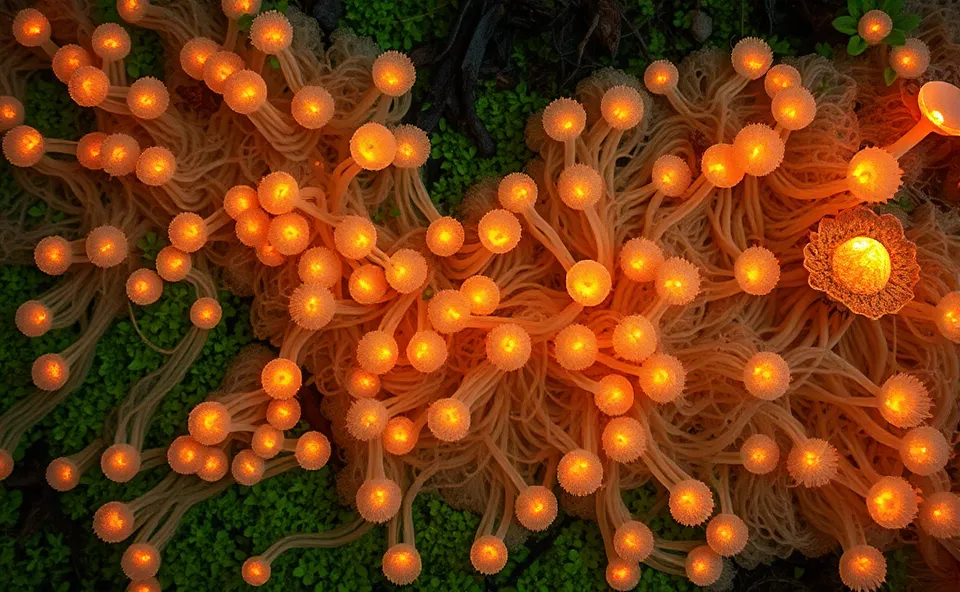
This fungal network map shows us where these vital connections are concentrated, highlighting areas with high activity and density. Think of it as charting out the major fiber optic cables and the bustling hubs of a global communication system, but made of living fungal threads. The sheer scale and detail of this map are what make it so significant, revealing patterns of fungal life that were previously just educated guesses. It’s like finally getting a clear satellite image of a landscape we only knew from scattered ground reports.
Why the Buzz About Fungi Now?
You might be wondering why this fungal network map is suddenly a hot topic. It’s trending because this research offers a crucial new perspective on how our planet works, especially concerning plant life and climate regulation. In a world increasingly focused on environmental challenges, understanding these fundamental biological systems is more important than ever. This map provides hard data and a visual representation that makes complex ecological processes easier to grasp and discuss.
The findings directly address big questions about sustainability, biodiversity, and the health of our soils. It’s a timely reminder that beneath the surface, incredible natural systems are at work, quietly supporting life. This scientific discovery gives us tangible insights into the hidden infrastructure of Earth’s ecosystems, making it a fascinating subject for anyone interested in the environment, biology, or even just how nature keeps itself running.
A Deeper Look at the Hidden Connections
To truly appreciate the fungal network map, we need a little background. For a long time, scientists have known that fungi play a vital role in forests and soils. Specifically, a type of fungi called mycorrhizal fungi forms partnerships with plant roots. These fungi extend far beyond the reach of plant roots, acting like an extension cord, helping plants absorb water and nutrients from the soil that they otherwise couldn’t access. In return, the plants provide the fungi with sugars produced during photosynthesis.
This relationship is so fundamental that many plants simply couldn’t survive without it. It’s an ancient partnership, present in most terrestrial plants. Beyond this direct plant support, these mycelial networks, the vast underground bodies of fungi composed of thread-like hyphae, act like a complex communication system. Plants can even send signals to each other through this network, warning of pests or sharing resources. This underground ecosystem is a bustling metropolis of biological activity.
The development of advanced DNA sequencing and sophisticated modeling techniques has allowed researchers to piece together this global picture. Previously, mapping such a widespread and intricate biological system was incredibly challenging, relying on localized studies. This new approach synthesizes data from numerous sources, allowing for a large-scale, comprehensive view of the fungal network map.
What This Means for Our World
The implications of this global fungal network map are immense, touching on everything from how we manage our farmland to how we understand climate change. For plant life, it reinforces just how interconnected ecosystems are. Understanding where these dense fungal networks are located can help us better protect and restore natural habitats. It highlights the critical importance of soil health, recognizing that healthy soil means a healthy fungal network, which in turn means healthier plants.
Furthermore, this discovery offers new insights into climate regulation. Soils rich in fungal networks are often better at storing carbon. These fungi help break down organic matter and lock carbon away in the soil for long periods. By mapping these networks, scientists can identify key areas for carbon sequestration and inform strategies for mitigating climate change. It’s a powerful reminder that nature itself holds many of the solutions to our environmental problems, and sometimes, the most important ones are hidden underground.
For earth science, this fungal network map is a paradigm shift. It provides a new layer of understanding to our planet’s systems. It emphasizes that the Earth is not just a collection of individual organisms but a deeply interconnected web of life, where even the smallest organisms, like fungi, play outsized roles.
This breakthrough could also spur innovation in various fields:
- Agriculture: Farmers could use this knowledge to adopt practices that foster healthier fungal networks, potentially reducing the need for artificial fertilizers and pesticides, leading to more sustainable farming.
- Ecology and Conservation: Conservation efforts can be more targeted, focusing on protecting areas with critical fungal network infrastructure essential for biodiversity.
- Biotechnology: Understanding the biochemical processes of fungi could lead to new discoveries in areas like bioremediation or the development of new biomaterials.
Looking Ahead: The Future of Fungal Insights
What happens next with this groundbreaking fungal network map? The immediate future likely involves more detailed research building upon this global overview. Scientists will aim to understand the functional differences between various fungal networks and how they respond to environmental changes like deforestation, pollution, or shifts in climate.
We can expect to see more efforts to integrate this data into ecological models, providing more accurate predictions about ecosystem health and carbon cycles. This could also lead to the development of new tools and technologies for monitoring and managing these underground ecosystems. As our understanding of the mycelial network deepens, it will undoubtedly lead to a more holistic approach to environmental stewardship, recognizing the profound contributions of soil fungi.
The ongoing mapping and analysis of the fungal network map will likely reveal even more surprising connections and functions, pushing the boundaries of our knowledge in earth science and biology. It’s a journey into the hidden heart of our planet, one that promises to reveal even more about the delicate balance of life on Earth.
Frequently Asked Questions About the Fungal Network Map
What is a fungal network map?
A fungal network map is a detailed visualization and analysis of the vast underground web of fungi, primarily the mycelial networks that connect plant roots. It shows where these networks are concentrated and how they are distributed globally, revealing the hidden infrastructure of soil fungi supporting plant life.
Why is the fungal network map considered a major scientific discovery?
This fungal network map represents the first comprehensive global overview of these crucial underground connections. It provides a new level of understanding for earth science, highlighting the integral role of fungi in supporting plant life and contributing to climate regulation, which were previously understood at a more localized level.
How do soil fungi help plant life?
Soil fungi, especially mycorrhizal fungi, form symbiotic relationships with plant roots. They extend far into the soil, helping plants absorb essential nutrients and water that would otherwise be inaccessible. In return, plants provide sugars to the fungi, demonstrating a vital partnership for plant survival and growth.
What is the connection between the fungal network map and climate regulation?
The fungal network map is important for climate regulation because healthy and extensive mycelial networks are crucial for carbon sequestration in soils. Fungi help break down organic matter and lock carbon away, making soils a significant carbon sink. Understanding these networks helps us manage landscapes for better carbon storage.
What are the broader implications of studying the underground ecosystem, especially the fungal network?
Studying the underground ecosystem, particularly the fungal network, offers profound implications for our understanding of Earth’s interconnectedness. It reveals how seemingly small organisms create a complex support system for entire ecosystems, influencing plant biodiversity, soil health, and climate regulation. This knowledge is essential for effective conservation and sustainable practices.











