

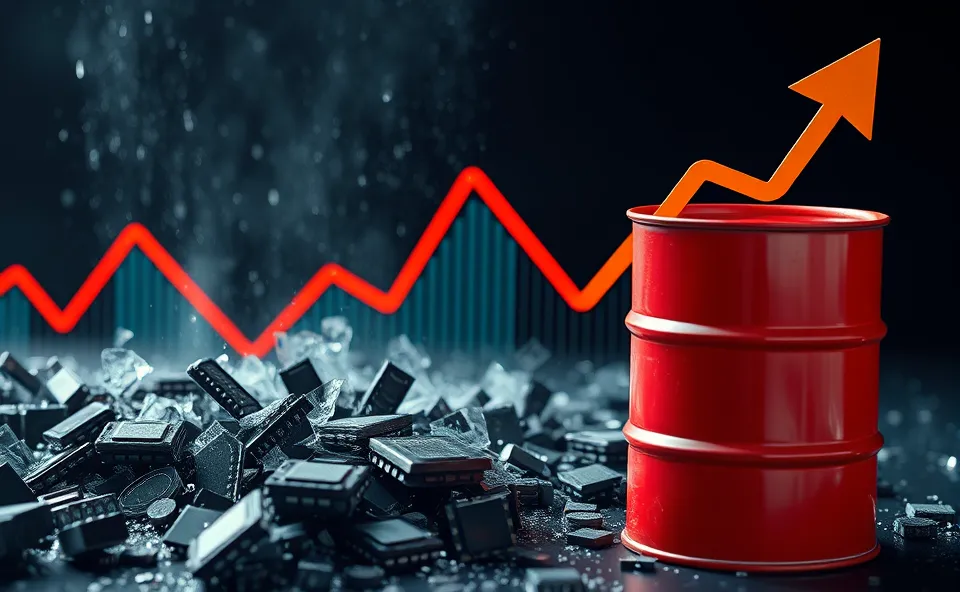
Why the markets are currently on edge
If you have been checking your investment apps or scanning the news lately, you have probably noticed a lot of red. Global stocks fall, and there is a palpable sense of anxiety moving through trading floors from New York to Tokyo. It is one of those moments where the world feels smaller and more fragile. When major markets start to slide simultaneously, it usually points to a few specific, high-stakes events unfolding at the same time.
Right now, we are seeing a perfect storm of rising geopolitical risk and cooling excitement in the tech sector. Investors are shifting into what experts call risk-off mode. This is basically the financial version of hitting the eject button. People are pulling their money out of companies they view as risky and moving it into safer, boring assets. This collective movement is exactly what causes the sudden dips we see across international exchanges.
The reason everyone is talking about this now
Market volatility does not happen in a vacuum. People are searching for answers because the speed of these changes feels unprecedented. When we see major indexes drop, it creates a ripple effect of uncertainty that touches everyone from retail investors to corporate leaders.
The current conversation is driven by two distinct but connected problems. First, the tension between the US and Iran has suddenly moved from a simmering regional issue to a front-page concern for the global economy. Second, the tech sector, which has been the engine of growth for years, is hitting a speed bump. When you combine the threat of an oil price surge with the sudden vulnerability of semiconductor industry giants, you get a market environment that feels unstable and difficult to predict.
Connecting the dots on recent history
To understand why this is happening today, we have to look at how we arrived here. For a long time, the global economy was riding a wave of tech-led growth. Memory chipmakers were the rockstars of the stock market. Because almost every modern device from smartphones to electric vehicles needs these components, companies in this space were seen as a guaranteed bet. Investors piled in, pushing valuations to historic highs.
However, the semiconductor industry is highly sensitive to the global economy. When consumer confidence drops or businesses stop spending on new infrastructure, demand for these chips cools off fast. We saw this cycle before, but this time it is being complicated by energy costs. Crude oil prices have historically acted as a tax on the global economy. When energy gets expensive, everything from shipping goods to manufacturing those same memory chips becomes pricier. The current US-Iran tensions have reminded traders just how quickly energy supply chains can be disrupted, dragging the market down alongside the cooling tech sector.
How this impacts our daily lives and business
You might be wondering why a drop in stock prices matters if you are not a professional trader. The truth is that these market shifts act like a thermometer for the global economy. When the outlook turns negative, businesses tighten their belts. They hire fewer people, delay new projects, and slow down innovation.
Here is what this means for the current landscape:
- Tech Stock Pressures: As memory chipmakers face lower demand, their stocks take a hit. Since these companies are often major components of popular index funds, their performance directly affects the retirement savings of millions.
- Higher Costs for Everyone: An oil price surge does not just affect the pump. It ripples through the entire supply chain. When it costs more to transport raw materials, the price of the final product you buy at the store usually goes up.
- A Cautious Business Environment: When companies fear a downturn, they stop spending on research and development. This can slow down the pace of technological progress in the short term.
- Changing Investor Sentiment: Fear is contagious. When professional investors turn pessimistic, it changes how capital is allocated. Projects that were easy to fund last year might find themselves ignored today.
What could happen as we move forward
Looking ahead, the market is likely to remain in a state of high sensitivity until we see more clarity on the international front. It is important to remember that markets generally dislike uncertainty more than they dislike bad news. Once a situation is defined, even if the news is not great, investors can usually adjust their plans accordingly.
If geopolitical tensions de-escalate, we could see a quick stabilization in energy prices. This would provide immediate relief to businesses and consumers alike. However, the semiconductor industry will likely need more time to find its footing. It is undergoing a transition where supply and demand must find a new balance after a period of massive expansion. The economic outlook remains somewhat clouded, but history suggests that markets eventually correct themselves once the fear factor subsides and fundamental growth takes over again.
Frequently Asked Questions
Why do global stocks fall when tensions rise in the Middle East?
Markets hate uncertainty, especially regarding oil. Because the Middle East is a major producer, US-Iran tensions create fear that energy supplies could be cut off, which would hurt the global economy and cause an oil price surge.
How does market volatility affect the average person?
While you might not trade stocks daily, market volatility influences your pension plans, the cost of goods due to inflation, and even the hiring plans of your own employer. It reflects the general mood of the global economy.
Why are memory chipmakers struggling right now?
The semiconductor industry is currently dealing with a cooling in demand after a period of over-production. When combined with general economic worries and higher manufacturing costs, investors have become more cautious about tech stocks.
What does it mean to be in risk-off mode?
Risk-off mode happens when investors stop buying high-growth or volatile assets like tech stocks and instead move their money into safer investments like government bonds or cash to protect their wealth during uncertain times.
Is the current economic outlook likely to improve soon?
The economic outlook depends heavily on whether geopolitical tensions stabilize and if the semiconductor industry can align its supply with actual market demand. While short-term volatility is common, the long-term trend usually tracks with actual technological and business productivity.











