

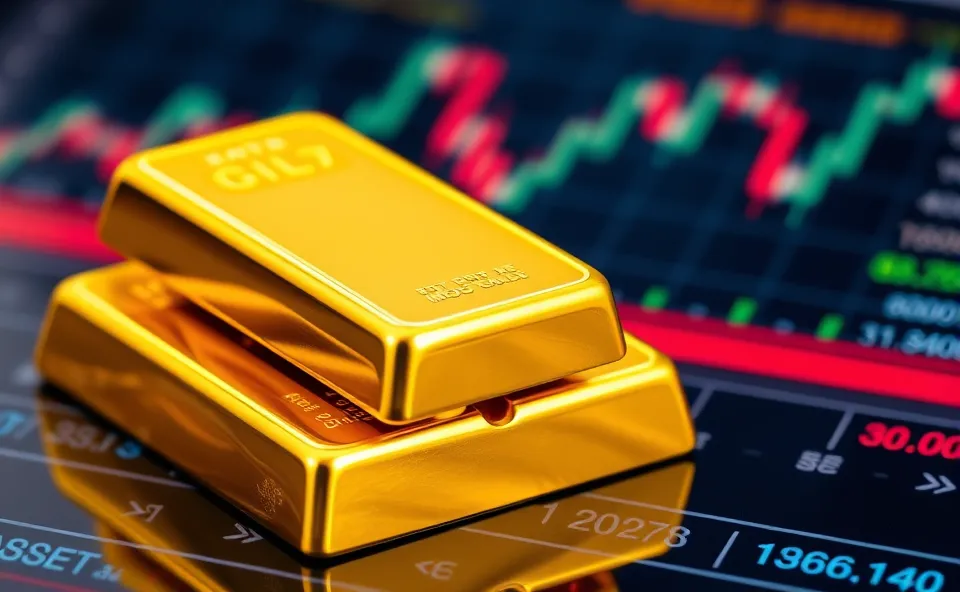
A Major Change in How the World Saves Money
Imagine you are running a massive savings account for an entire country. For decades, the smartest move was simple. You would take your extra cash and buy US Treasuries. These are essentially IOUs from the United States government. They are widely considered the safest place to park money because the US economy is so massive and powerful. For a long time, this was the standard playbook for every major economy in the world.
However, something is changing in the way the world’s biggest players manage their wealth. Recent data from the ECB shows a significant shift in behavior. Instead of just stacking up US Treasuries, central banks are increasingly looking toward gold. We are seeing a transition where physical gold is becoming a more prominent part of central bank reserves. This is not just a small adjustment in a portfolio. It is a fundamental change in how nations protect their financial futures.
When we talk about this movement, we are looking at a shift from paper-based assets to tangible ones. While US Treasuries are easy to trade and move around digitally, they still rely on the stability and political decisions of a single nation. Gold, on the other hand, is a physical asset that has no single owner and no single government. This distinction is driving the current movement in the global financial system.
Why the Shift to Gold is Capturing Global Attention
If you have been following the news lately, you have likely heard the term de-dollarization. This might sound like a complex academic concept, but it is actually quite simple. It refers to the effort by many countries to reduce their reliance on the US dollar for international trade and savings. As countries look for ways to protect themselves from the influence of US policy, they look for alternatives. Gold is the most obvious and time tested alternative available.
There are several reasons why this is trending right now:
- The Bullion Rally: As demand for gold increases, we have seen a significant bullion rally. This means the price of gold has been climbing, which attracts even more interest from investors and institutions.
- Geopolitical Tension: When the world feels unstable, people run to assets that cannot be frozen or turned off by a government. Because gold is a physical commodity, it offers a level of security that digital assets cannot match.
- Economic Uncertainty: High inflation and fluctuating interest rates make it hard to predict the value of paper currency. Gold acts as a natural hedge against these macroeconomic trends.
People are searching for this topic because it touches on the very foundation of how money works. If the world moves away from the dollar, every business, investor, and consumer will feel the ripples. The current interest in gold is a reaction to a world that feels increasingly unpredictable.
The History of the Dollar as a Global Safe Haven
To understand why this shift is such a big deal, we have to look back at how we got here. For much of the last century, the US dollar has been the undisputed king of the financial world. After the second world war, a system was put in place that made the dollar the primary reserve asset for almost every nation. If a country wanted to trade oil, buy technology, or settle debts, they almost always needed dollars.
Buying US Treasuries became the default way for central banks to keep their reserves. It was convenient, it was liquid, and it was seen as risk free. For a very long time, there was no real reason to look elsewhere. The US Treasury market is one of the largest and most efficient in existence, providing a massive pool of safety for any nation with extra capital.
But the landscape has changed. In recent years, the use of financial sanctions has shown countries that their access to US-based assets can be restricted if they fall out of favor with Western political interests. This realization has been a massive catalyst. Countries that want to maintain their sovereignty are realizing that being too dependent on a single currency or a single country’s debt comes with significant risks. They are looking to diversify their holdings to ensure they are never caught off guard.
The Real World Impact of Changing Reserve Assets
This trend is about much more than just gold bars sitting in a vault. The move toward currency diversification has deep implications for the global financial system and the markets we all participate in.
First, let’s talk about the US dollar. If central banks continue to pull money out of US Treasuries and put it into gold, it could change the demand for the dollar. Lower demand for US debt can sometimes lead to higher interest rates or a weaker currency value. While the dollar is unlikely to lose its status overnight, the era of absolute dominance is facing its first real challenge in decades.
For businesses and markets, this means a few things:
- Market Volatility: As the world transitions between different types of reserve assets, we may see more frequent swings in currency values.
- Shifting Investment Patterns: Large-scale movements by central banks often signal where the smart money is going. This can influence everything from commodity prices to stock market trends.
- Changes in Global Trade: As de-dollarization progresses, more countries may look to settle trades in different currencies or even through different asset classes, which changes how global logistics and finance operate.
This is not just a concern for high level bankers. It affects the cost of imports, the value of pensions, and the general stability of the economy. When the way the world stores value changes, the cost of everything changes with it.
What We Can Expect in the Coming Years
Predicting the future of the global economy is never easy, but we can look at the current trajectory to make some logical guesses. We are likely entering a period of a multipolar financial world. Instead of one single currency acting as the sun around which everything else orbits, we may see a system where multiple assets hold significant weight.
Gold will likely continue to play a central role. It is not just a relic of the past; it is a tool for the future. As central banks continue to prioritize security and sovereignty, the demand for gold will probably remain high. This supports the ongoing bullion rally and keeps gold at the forefront of macroeconomic trends.
We should also expect to see more experiments with currency diversification. Countries may move toward a more balanced mix of gold, various national currencies, and perhaps even digital assets. The goal for these nations is to create a safety net that is not tied to the political or economic health of any single country. While the US dollar will remain a massive player for a long time, the diversification we are seeing today is a sign that the world is preparing for a new way of managing global wealth.
Frequently Asked Questions
Why are central bank reserves moving toward gold?
Many central banks are moving toward gold to increase their security and reduce their reliance on a single country. Gold provides a way to hold value that is not tied to the political decisions or the debt levels of any one nation, which is a key part of currency diversification.
How does de-dollarization affect US Treasuries?
As countries seek to reduce their dependence on the dollar, they may buy fewer US Treasuries. This change in demand can impact the stability of the US debt market and may influence interest rates or the overall strength of the US dollar in the global financial system.
What caused the recent bullion rally?
The recent bullion rally is driven by a combination of factors including high inflation, geopolitical uncertainty, and increased buying from central banks. As more institutions look for safe havens, the increased demand naturally pushes the price of gold higher.
Is the ECB data significant for the global financial system?
Yes, the data from the ECB is significant because it provides concrete evidence that major economies are actually changing their behavior. It shows that the shift from US Treasuries to gold is a real and measurable trend rather than just a theory.
How does currency diversification impact macroeconomic trends?
Currency diversification can lead to more complex and potentially volatile macroeconomic trends. When nations move away from a single dominant currency, it can change how global trade is conducted, how inflation is managed, and how capital flows between different parts of the world.











