

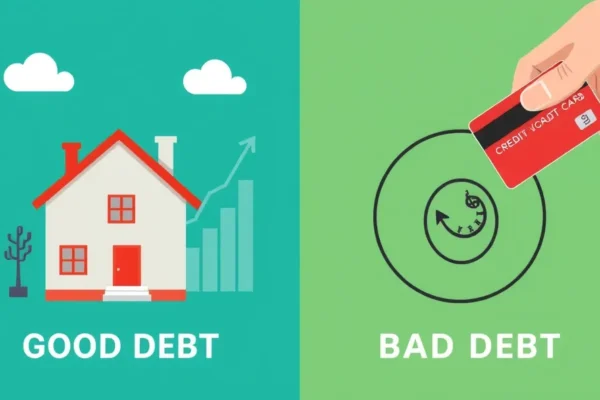
Understanding the Balance of Debt for Financial Health
The goal of this guide is to provide you with the financial literacy needed to distinguish between good debt and bad debt. By the end of this article, you will know how to evaluate your current liabilities, understand which debts help you grow wealth, and identify which ones are draining your savings. Mastering this skill is the cornerstone of effective financial planning and long-term debt management.
Before You Start Your Financial Audit
To follow this guide, you will need a few simple tools and a bit of time to look at your personal financial data. Expect to spend about 45 to 60 minutes on this assessment.
- Required Tools: Access to your recent credit card statements, loan documents, and a notebook or spreadsheet software like Microsoft Excel or Google Sheets.
- Prerequisite Knowledge: A basic understanding of what a monthly budget looks like.
- Difficulty Level: Beginner. This is an educational assessment of your financial habits.
- Safety Disclaimer: This guide provides general educational information for personal finance. If you are struggling with severe debt or insolvency, please consult a certified financial advisor or a credit counselor, as this guide is not a substitute for professional legal or financial advice.
Preparing Your Financial Data
Before you classify your debts, you need to see the full picture. Follow these steps to prepare for your audit.
- Gather Your Records: Collect the most recent statement for every debt you currently owe. This includes student loans, auto loans, credit cards, and personal loans.
- Organize Your Workspace: Open a spreadsheet or take a sheet of paper. Create three columns: Debt Name, Interest Rate, and Purpose of Loan.
- Verify Your Totals: Ensure you have the current outstanding balance for each debt. This creates a clear snapshot of your financial reality.
How to Identify and Classify Your Debt
Not all borrowing is created equal. Use these steps to categorize your liabilities into good debt and bad debt.
Section A: Identifying Good Debt
- Look for Value Appreciation: Ask yourself: “Does this debt help me acquire an asset that is likely to increase in value?” For example, a mortgage for a home or a student loan for a degree that increases your earning potential are considered good debt.
- Check the Interest Rate: Good debt usually comes with lower interest rates. If your debt is helping you earn more than the interest costs you, it is generally beneficial for your financial planning.
- Confirm Long-Term Utility: These debts serve a purpose that lasts for years. By paying these down, you are essentially buying a future benefit or higher income.
Section B: Identifying Bad Debt
- Check for Depreciating Assets: If the debt is used to purchase something that loses value as soon as you buy it, such as a luxury car or a vacation, it is generally bad debt.
- Evaluate Interest Costs: High-interest debt, such as credit card balances that carry 20% to 30% APR, is the definition of bad debt. It costs you more money than you can reasonably make by investing that same cash.
- Assess Consumer Spending: If you are borrowing money just to maintain a lifestyle you cannot afford, you are building consumer debt that provides no long-term financial return.
Common Mistakes and How to Avoid Them
It is easy to misclassify debt if you are not careful. Watch out for these traps:
- Mistake: Treating “Low Monthly Payments” as Good Debt. A loan might have a low payment, but if the interest rate is high and the item bought is a luxury, it is still bad debt. Focus on the total cost of the loan, not just the monthly outflow.
- Mistake: Ignoring Credit Scores. Carrying bad debt often hurts your credit score, making it harder to get good debt later. If you see your score dropping, investigate your debt types immediately.
- Mistake: Failing to Plan for Emergencies. People often use credit cards for emergencies because they have no savings. This turns a life event into bad debt. Aim to build an emergency fund so you stop relying on high-interest plastic.
Tips for Better Debt Management
Use these strategies to optimize your financial life:
- Prioritize High-Interest Debt: Always put extra money toward the debt with the highest interest rate first, regardless of the balance amount. This is known as the avalanche method and saves the most money.
- Leverage Investment Debt Carefully: If you take out a loan for an investment, ensure the return on the investment consistently outperforms the interest rate on the loan. If it does not, pay the loan off early.
- Build Credit Responsibly: Keep your credit utilization below 30% to maintain a strong score, which will eventually allow you to qualify for lower interest rates on “good” loans.
Alternative Approaches to Debt Reduction
There are two primary ways to approach paying off debt:
- The Debt Avalanche: You pay off the debt with the highest interest rate first. This is mathematically the most efficient way to save money on interest.
- The Debt Snowball: You pay off the smallest balance first. This is best for those who need psychological wins to stay motivated. Both approaches are valid; choose the one that keeps you consistent.
Troubleshooting Common Financial Issues
If you feel overwhelmed by your findings, do not panic. Follow these steps:
- “I have too much high-interest debt to pay off.” Contact your creditors to ask for an interest rate reduction, or look into a balance transfer card with a 0% introductory APR.
- “I am missing payments.” Stop all non-essential spending immediately and contact a non-profit credit counseling agency. They can help you set up a debt management plan.
- “I don’t know where to start.” Focus on one debt at a time. It is better to make progress on one account than to do nothing because you are overwhelmed by the total sum.
Next Steps in Your Financial Literacy Journey
Now that you have categorized your debt, take these actions to solidify your progress:
- Automate Your Payments: Set up autopay for all your debts to ensure you never miss a payment, which protects your credit score.
- Build a Budget: Use your debt audit to inform your monthly spending plan. Allocate a specific amount each month strictly to debt reduction.
- Increase Your Knowledge: Research the concepts of “compounding interest” and “emergency funds.” These are the next logical steps in your path to financial independence.
Frequently Asked Questions
Is all credit card debt bad debt?
Generally, yes. Because credit cards typically carry very high interest rates and are often used for consumer goods that lose value, they are considered bad debt. If you pay off the full balance every month, you avoid the interest, but it remains a high-risk tool.
How does good debt affect my credit scores?
Good debt, like a mortgage or a student loan, can improve your credit score by demonstrating that you can handle large, long-term financial commitments responsibly. Consistent, on-time payments are the most important factor in your credit profile.
Can I turn bad debt into good debt?
No, the classification is based on the nature of the asset purchased and the cost of the interest. However, you can eliminate bad debt, which frees up your cash flow to invest in assets that grow your wealth.
How long does it take to clean up a bad debt situation?
This depends on your income, the amount of debt, and your lifestyle. For most people, a focused debt reduction plan takes anywhere from 1 to 5 years. Consistency is more important than speed.
Is it ever okay to have bad debt?
While you should aim to minimize it, sometimes life happens. If you must use bad debt to cover a survival necessity, do so, but create a rigid plan to pay it off as quickly as possible so it does not derail your long-term financial planning.
Last updated August 2026.











