

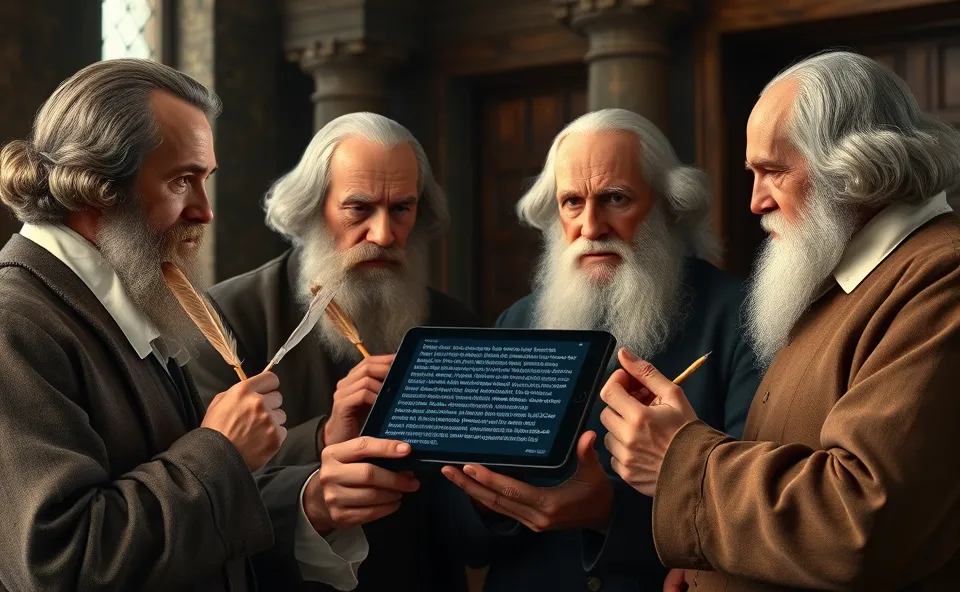
When History Meets the Future: Google’s Founding Fathers AI Ad
So, picture this: you’re back in 1776, the air is thick with revolutionary fervor, and Thomas Jefferson, Benjamin Franklin, and John Adams are huddled around a table, trying to get that all-important document just right. But instead of quill pens and parchment, they’re using something a little different. Google just dropped a commercial that imagines the Founding Fathers using Google AI and Google Workspace tools to draft the Declaration of Independence. It’s a clever, slightly cheeky way to show how far technology has come, and how some fundamental tasks, like crafting a world-changing document, could potentially be aided by AI today.
Why Are We Talking About This Now?
The buzz around this Google AI commercial is happening for a few big reasons. First, generative AI is everywhere in the news and conversations. People are curious, amazed, and sometimes a bit nervous about what these AI tools can do. Seeing historical figures, especially such iconic ones as the Founding Fathers, interact with this modern tech sparks immediate interest. It’s a perfect blend of old and new, making complex technology feel more accessible and relatable. Plus, with the Declaration of Independence’s 250th anniversary approaching, this marketing campaign couldn’t be more timely. It taps into a moment of historical reflection and frames Google’s AI and Workspace products as tools that can empower collaboration and creation, even on the grandest historical scale.
A Peek Back: The Original Declaration Story
To really get this commercial, it helps to remember the actual process. Drafting the Declaration of Independence was no small feat. It involved intense debate, careful wording, and a whole lot of collaboration among brilliant minds. Thomas Jefferson was the primary author, but he wasn’t working in a vacuum. He consulted with Benjamin Franklin, John Adams, and others on the Committee of Five. They debated every phrase, every idea. It was a monumental effort to articulate the ideals of liberty, equality, and self-governance. Think about the sheer amount of back-and-forth, the revisions, and the pressure of the moment. It was a human endeavor driven by conviction and intellect, a product of its time and the unique circumstances of the American Revolution. This historical context makes the AI reimagining even more striking.
What This Means for Us and Tech
This AI commercial from Google isn’t just a cute historical reimagining; it’s a smart marketing campaign with deeper implications. For everyday users, it highlights how Google Workspace, powered by Google AI, can streamline workflows and boost creativity. Imagine using AI tools to brainstorm ideas, draft initial text, or even organize research for a project. It shows AI not as a replacement for human thought, but as a powerful assistant. For businesses, it underscores the increasing integration of AI into productivity suites. Companies are looking for ways to make their teams more efficient and innovative, and tools that can help with tasks like drafting documents or summarizing information are incredibly valuable. This marketing campaign positions Google Workspace as a leader in this evolving space, hinting at future advancements where AI plays an even bigger role in how we work and create. It’s a peek into how technology can augment human capabilities, making even monumental tasks seem more manageable. It also speaks volumes about the direction of AI in advertising, moving beyond simple product features to create engaging narratives that connect with audiences on a more profound level, blending tech and history in a compelling way.
What Could Come Next?
This commercial opens the door to some exciting possibilities. We’re likely to see more tech companies leverage historical narratives or other creative scenarios to showcase the power of their AI tools. Expect to see AI integrated even more deeply into everyday applications, making them more intuitive and helpful. For Google Workspace, this could mean more advanced AI features that assist with writing, editing, data analysis, and even creative brainstorming. We might see AI that can adapt its tone and style, help research complex topics, or even generate different versions of a document based on specific requirements. The focus will likely remain on AI as a collaborator, enhancing human productivity and creativity rather than replacing it. As we approach significant historical milestones like the Declaration 250th, expect more such blends of technology and historical context in marketing and product development. It’s a trend that shows no signs of slowing down, as companies find innovative ways to demonstrate the real-world impact of AI.
Frequently Asked Questions About AI and History
Can Google AI really help draft important documents like the Declaration of Independence?
While the commercial is a creative portrayal, Google AI and Google Workspace tools can certainly assist in the drafting process. They can help with research, brainstorming, writing initial drafts, and editing, making the process more efficient. However, the original thought, conviction, and human judgment of individuals remain crucial for such significant historical documents.
How does this AI commercial relate to the Declaration’s 250th anniversary?
The commercial cleverly ties into the upcoming Declaration 250th anniversary by using the iconic document as a backdrop to showcase modern technology. It’s a marketing campaign designed to resonate with people reflecting on American history while also highlighting the advancements in AI tools like Google AI and Google Workspace.
What kind of AI tools were imagined in the Google AI commercial?
The commercial implies the Founding Fathers are using generative AI for content creation and Google Workspace for collaboration. This suggests AI tools that could help brainstorm ideas, write text, organize information, and facilitate seamless teamwork, much like current AI tools integrated into productivity platforms.
Is this AI in advertising trend new, or is Google AI leading the way?
The trend of using AI in advertising is growing, with many companies exploring how to showcase their AI capabilities. Google’s approach with this AI commercial, using a historical reimagining, is a particularly engaging way to demonstrate the potential of Google AI and its applications within Google Workspace. It stands out as a strong example of this marketing campaign strategy.
What does this historical reimagining mean for the future of AI tools?
This type of historical reimagining shows how AI tools can be presented as aids for complex tasks, not just simple conveniences. It suggests a future where AI becomes an even more integrated partner in creative and intellectual pursuits, helping users tackle ambitious projects with greater ease and efficiency, powered by advanced Google AI functionalities.











