

Google just hit a massive milestone in how we find information
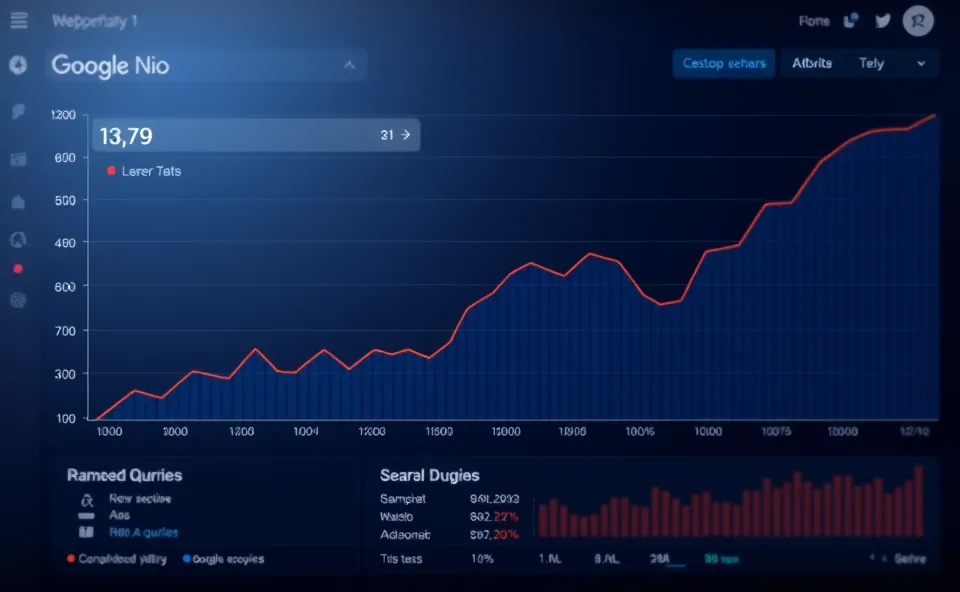
Imagine a world where the internet is busier than it has ever been. For most of us, that world is already here. In the first quarter of 2026, Google Search reached a record breaking volume of search queries. We are not just talking about a small bump in numbers. We are talking about an all time high that shows people are interacting with the web more than ever before.
For years, some critics wondered if AI would kill the traditional search engine. They thought people would stop searching and just ask a chatbot for a single answer. But the data from Q1 2026 shows the opposite is happening. Instead of replacing search, AI is actually fueling it. More people are using Google Search because the experience has become more helpful, faster, and much more intuitive.
This surge in activity is not just a win for the users. It is a massive win for the company. This increase in volume has led to significant revenue growth for Alphabet, the parent company of Google. By turning AI from a laboratory experiment into a tool that billions of people use daily, Google has managed to keep its crown as the king of the internet.
Why everyone is searching more than ever
So, what changed? Why are we suddenly typing more into that familiar search bar? The answer lies in the seamless integration of Gemini. Google did not just add a chatbot to the side of the page. They wove the Gemini App and its AI capabilities directly into the fabric of the search experience.
In the past, a search query was usually a few keywords. You would type “best hiking boots” and scroll through a list of links. Now, the process is conversational. Users are asking complex, multi step questions. Instead of searching for “weather in Tokyo” and then “hotels in Tokyo” and then “things to do in Tokyo,” people are now asking Gemini to plan an entire three day itinerary based on their specific interests.
This shift toward consumer AI has changed the way we interact with information. We are no longer just looking for a website. We are looking for solutions, summaries, and creative ideas. This makes the search process more addictive and useful, which naturally leads to a higher volume of search queries. People are discovering that the more they interact with the AI, the better the results become.
Some of the key drivers include:
- Complex Problem Solving: Users are using search to debug code, write emails, or plan meals in real time.
- Natural Language: People feel more comfortable speaking or typing naturally, which leads to longer and more frequent sessions.
- Multimodal Search: The ability to search using images, voice, and text simultaneously has opened new doors for how we find things.
The road to the AI era
This success did not happen overnight. It is the result of a calculated and aggressive strategy led by Sundar Pichai. A few years ago, the tech world was in a race. Everyone was scrambling to figure out how Large Language Models would change the business of the internet. Google had the technology, but they had to be careful about how they deployed it.
Alphabet earnings reports from previous years showed a heavy focus on AI investments. The company spent billions on specialized chips and massive data centers to ensure that Gemini could handle billions of requests without slowing down. They knew that for AI to be successful in search, it had to be instant. Any lag in response time would drive users away.
There was also a strategic shift in how they viewed their products. Google stopped seeing search as a standalone tool and started seeing it as an ecosystem. They began connecting the dots between the Gemini App, YouTube, and Google One. By creating a unified AI experience, they ensured that no matter where a user started their journey, they stayed within the Google ecosystem.
How this translates to business success
When search queries go up, the business side of things usually follows. But the impact in Q1 2026 is more interesting than just more ad clicks. Google has diversified how it makes money from its AI efforts.
First, there is the traditional side. More queries mean more opportunities for ads. As AI makes searches more specific, the ads that appear are more relevant. This means businesses are more likely to get a lead, and Google can charge more for those high value placements. This has contributed heavily to the overall revenue growth seen in the latest reports.
Second, we are seeing the rise of paid subscriptions. Through Google One, the company is offering advanced AI features to users who are willing to pay a monthly fee. This gives them access to more powerful versions of Gemini and deeper integration across their documents and emails. This move toward a subscription model provides a steady stream of income that does not rely solely on advertising.
YouTube has also played a massive role. With AI helping users find the exact moment in a video that answers their question, video search has become a powerhouse. This keeps users on the platform longer and increases the value of the ad space.
Where we go from here
Looking ahead, it is clear that the relationship between humans and search engines will continue to evolve. We are moving away from the era of the search result page and into the era of the AI assistant. We can expect Google to make search even more predictive. Instead of you asking a question, Google might anticipate what you need based on your current activity and provide the answer before you even type.
The focus will likely shift toward even deeper personalization. Your search experience will be tailored to your specific knowledge level, your preferences, and your past behavior. This will make the tool feel less like a library and more like a personal researcher who knows exactly how you like your information delivered.
We will also likely see more integration between the physical and digital worlds. With AI becoming more efficient, the gap between searching for something on your phone and interacting with it in your home or car will disappear. The record breaking volume of search queries in Q1 2026 is just the beginning of this transition.
Common questions about Google and AI
Why did Google Search queries increase so much in Q1 2026?
The increase was primarily driven by the integration of Gemini. By making search more conversational and capable of handling complex tasks, Google encouraged users to interact with the platform more frequently and for longer periods.
How are AI investments affecting Alphabet earnings?
The massive AI investments have paid off by increasing user engagement and creating new revenue streams. This includes both higher ad efficiency and the growth of paid subscriptions through services like Google One.
What is the role of the Gemini App in this growth?
The Gemini App acts as a gateway for consumer AI. It allows users to experience advanced reasoning and creativity, which then leads them back to Google Search to verify information, find products, or explore topics in more depth.
Does the growth in search queries help YouTube?
Yes. Because AI can now index video content more accurately, more people are using Google Search to find specific answers within YouTube videos, which increases viewership and ad revenue for the platform.
What does revenue growth in Q1 2026 tell us about consumer AI?
It shows that people are not only open to using AI in their daily lives but are also willing to pay for premium AI features. It proves that AI is a tool for productivity and discovery, not just a novelty.











